Search
To search for an exact match, type the word or phrase you want in quotation marks.
A*DESK has been offering since 2002 contents about criticism and contemporary art. A*DESK has become consolidated thanks to all those who have believed in the project, all those who have followed us, debating, participating and collaborating. Many people have collaborated with A*DESK, and continue to do so. Their efforts, knowledge and belief in the project are what make it grow internationally. At A*DESK we have also generated work for over one hundred professionals in culture, from small collaborations with reviews and classes, to more prolonged and intense collaborations.
At A*DESK we believe in the need for free and universal access to culture and knowledge. We want to carry on being independent, remaining open to more ideas and opinions. If you believe in A*DESK, we need your backing to be able to continue. You can now participate in the project by supporting it. You can choose how much you want to contribute to the project.
You can decide how much you want to bring to the project.
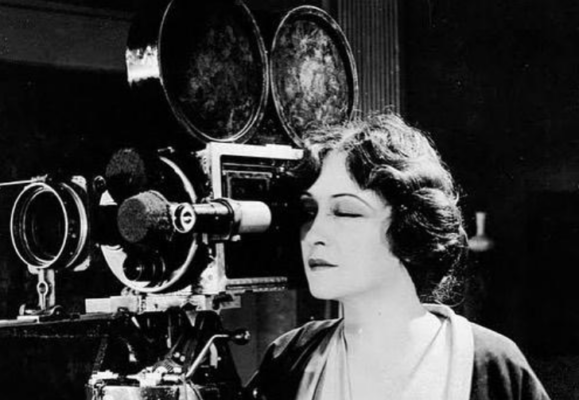
From her beginning as an assistant (running errands on film sets and learning by observing), Rosa Vergés explores her diverse cinematic journey, a journey that has taken shape through practice and curiosity. She worked as a script supervisor, assistant director, and finally, as a director. In our conversation, we also delve into the experiences of other women in film (actresses, editors, producers, and directors) who have given their all for film and have built their careers amidst obstacles, silence, and small victories that have marked the history of cinema.
Marisol Galdón: Some consider you an early pioneer since you achieved great recognition with your first feature film, Boom Boom, and you were the first woman filmmaker to win the Goya Award for Best New Director.
Rosa Vergés: There weren’t as many women filmmakers before as there are now. That is, there weren’t as many women directors. There were always many women filmmakers, that is, producers and especially editors, but fewer women held the position of director and they weren’t very recognized.
MG: In Spain, people always talk about Pilar Miró and Josefina Molina, but they don’t mention Ana Mariscal, for example, who directed eleven feature films and was also an actress, teacher, and producer.
RV: That’s true, and there are even more. There was a Catalan woman named Rosario Pi. There’s always a lot more women to discover. It was a different time.
MG: You started from the bottom, doing everything, including scriptwriting.
RV: I used to be an intern.
MG: What does it mean to be an intern?
RV: That role doesn’t exist anymore. It comes from the vertical union. The intern worked doing “go and tell”, that is, go find the actor and bring the coffee. My first film was La oscura historia de la Prima Montse, where I was the one who was in charge of bringing coffee to Ovidi Montllor, and I began a good relationship with her there. I took the job so seriously that, since Ana Belén was alone in Barcelona, I felt I had to treat her to hot chocolate every Saturday and look after her on weekends. Sometimes it happens that people with very different career paths end up getting along very well.
MG: You were also an assistant director. Is that where your passion began?
RV: I’ve had a passion for cinema since I was young. They used to call me a “film buff.” Speaking of pioneers, my mother’s sister was Silvia Morgan, a very important actress. She made many films and retired young. She was really beautiful. In those days, being an actress was frowned upon. I was fascinated by film and I’d go around with a little notebook and jot down my thoughts on movies, but I never dared imagine I could make a living from it. I went to university and studied Art History just because there was a History of Cinema course taught by Miquel Porter i Moix.
MG: Just last year you received the Gaudí Honorary Award/Miquel Porter.
RV: That was funny because in one of the first days of class, in the main lecture hall of the University of Barcelona, he asked for someone to help him. He was setting up what would become the Generalitat’s film directorate. I raised my hand. His office was in the basement of the Palau Güell, it was beautiful. I spent a year filing photos, thinking I’d reached the top. Back then you couldn’t study film here. Josep Maixenchs hadn’t yet had the idea of creating ESCAC. I was with him from the beginning. I’ve always felt connected to film education precisely because I couldn’t study film. I had to learn by doing and observing.
MG: Like Orson Welles, who learned by watching John Ford’s The Stagecoach over and over to understand how shots were made.
RV: I’m not like him, he was a genius. I haven’t had that kind of cinephile drive. My thing is observing. For example, right now, on this terrace, I’d like to know what that girl over there is writing or what those people are talking about. I’ve been more inclined to narrate the life I see and feel. It’s a different style, more basic.
MG: I want to focus on the theme of “late-blooming pioneers,” women who are recognized late in life or even after they die. Jane Campion was the first woman to win the Palme d’Or at Cannes with The Piano, when she was 39. Kathryn Bigelow was the first woman to win the Oscar for Best Director with The Hurt Locker in 2009, when she was already over 50. Is it still difficult for women to achieve recognition as a director?
RV: Jane Campion was already very well-known in Australia. The difficult thing is for a film to break through and become an international phenomenon, to get into a festival, to be appreciated by the jury. The films you mention are good, but if they don’t transcend borders, nobody sees them. That’s what festivals are for, they’re a showcase. Reaching an audience is incredibly difficult, no matter who’s directing.
MG: Do you consider yourself a pioneer?
RV: No, I have too much respect for that word. Alice Guy was a film pioneer, the first person in the world to have the idea of making fiction rather than documentary. She was Gaumont’s secretary. Gaumont was a French inventor and industrialist, one of the pioneers of the film industry. One day, the Lumière brothers came to show their invention. She saw the first film projected, of workers leaving the factory, of a train that seems to be heading toward the audience. As she left, she said to her boss, “This is interesting, but why don’t we get some short plays and actors and stage some scenes? I’d like to try that.” And he said, “You can, but don’t forget your work as a secretary.”
MG: For many years, that was the handicap for women, keeping a job or a family and doing everything else later.
RV: In terms of pioneers, I think women are especially suited to film. Directing a film is like running a family, full of emotions, psychology, food, clothes. All those centuries of listening without being able to speak created a culture of teamwork and of sustaining the spirit. It’s very similar. Women have always been able to express emotions, to cry if necessary. Cinema transmits emotions. In another life, I would like to be a woman and dedicate myself to cinema again.
MG: You’ve directed four feature films but in recent years you’ve been more interested in documentaries, as well as theatrical productions and teaching.
RV: I taught for many years, at Pompeu Fabra University, Ramon Llull University, the University of Barcelona, ESCAC. I love keeping in touch with people who are starting out and help maintain their curiosity. What interested me most about cinema has been learning and fueling my curiosity. That’s why my work is so limited, I can’t tell a story I don’t believe in. I can only do what I really believe in.
MG: Like all creators.
RV: Well, there are very gifted people who can make films under many constraints. To overcome obstacles and make you believe, I have to believe it myself first. I don’t know if that’s a good thing or a bad thing. Billy Wilder said the same thing. It’s a way of building trust with those who work with you, which is the most important thing.
MG: Do you do commissioned work?
RV: I’ve done a lot of advertising, but it never felt very comfortable. I always wanted to do more. In advertising you have to do exactly what they ask of you, and that’s as it should be. It’s a luxury to be able to do what you truly believe in. Nobody is waiting for you anywhere, you have to fight.
MG: A lot. And find the money.
RV: In every filmmaker’s biography, there are moments of discouragement and unproduced screenplays.
MG: Financing has always been problematic. Directors like Alexander Mackendrick stopped directing because they didn’t know how to ask for money.
RV: That’s where the producer comes in. I’m the daughter of an editor and I understood that a book was a manuscript on my father’s desk. If one day it became a Delibes or a Matute it was because a publisher saw the potential. Filmmakers also need a producer who believes in them. These days, there are online platforms, big streaming studios, they all have the same business model, and it’s hard to see the creative side. McLuhan said in 1964 that information overload makes you ignorant. Today, there’s so much content and so much access to movies. The problem is no longer funding, because you can make a film with a phone. The challenge is reaching an audience, communicating, connecting those who want to film with those who want to watch.
MG: Are you going to direct another feature film?
RV: I’m currently working on a documentary about a guitar. Yesterday I presented a music documentary that’s part of a NUIC project about composing through mathematics. It brings together different disciplines.
MG: Music and mathematics have always been close.
RV: Of course, science and art always flirt.
MG: And teaching?
RV: Not anymore. There’s a gap between my cinematic influences and those of 17- or 18-year-olds.
MG: But, as in literature, there are classic works that will always be there.
RV: Yes, but there are films that no longer stand the test of time, for example Kubrick’s A Clockwork Orange, Lolita, because of how women are treated. The portrayal of women in film is what has changed the most.
MG: Is it appropriate to judge from a current perspective?
RV: I didn’t say that. I focus on what is being done, how it’s being done, and what is being seen. There’s a gap between what an 18-year-old sees and what I see, although there are still curious people who are earning a place in the industry.
MG: Is there anything you want to add?
RV: Right now, there are many very talented women in film who are beginning to be recognized. You can choose from several films in theaters (it’s better to see them in a theater than on a streaming service). I think it’s time to say: “I saw it in a cinema,” “I was at the theater,” “I was at the concert.” We need to share emotions with other viewers.
MG: Socializing. Thank you very much and good luck with your projects!
(Featured Image: Alice Guy-Blaché. Source: @efemeridefotografica)
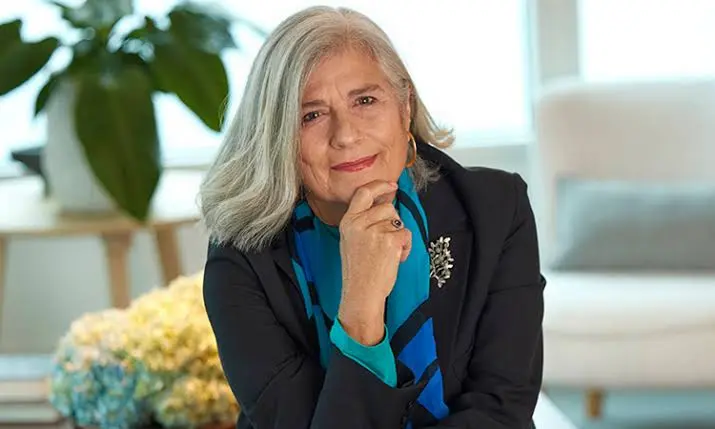
Rosa Vergés is a film director, documentary filmmaker, educator, teacher and screenwriter; she is many things, and they all converge in cinema. Originally trained in anthropology and theatre, she burst onto the scene with Boom Boom (1990) with which she won the Goya Award for Best New Director. She was a professor of film directing at ESCAC and an associate professor at Ramon Llull, Menéndez Pelayo and Pompeu Fabra universities. She was vice-president of the Spanish Film Academy (1994–1998) and a member of the National Council for Culture and the Arts of Catalonia (2009–2011). In 2024, she received the Gaudí Honorary Award in recognition of a career that paved the way for female authorship in Spanish cinema.
Portrait ©
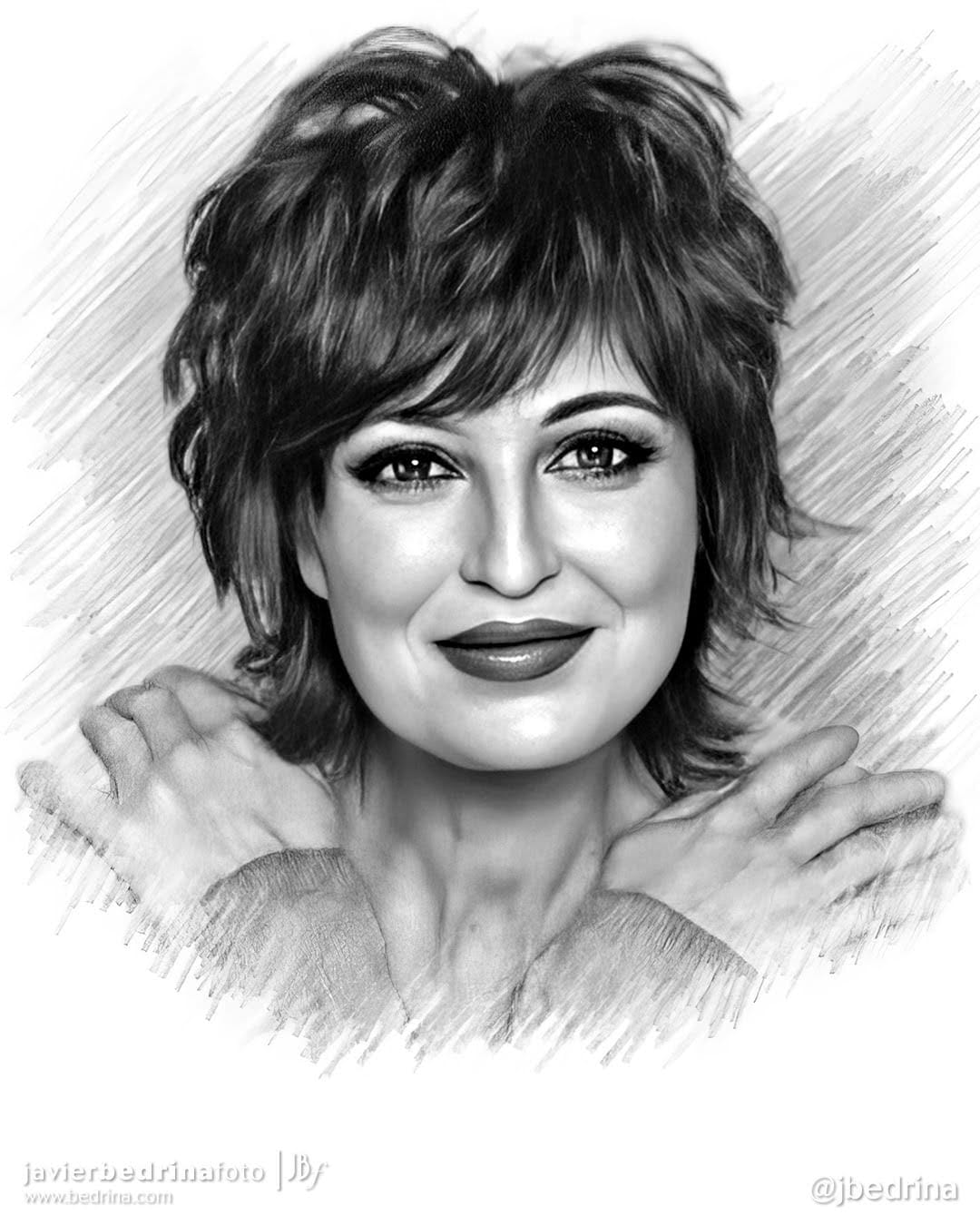
Marisol Galdón has a degree in Information Sciences from the UAB and has a solid track record as a journalist, communicator and presenter in audiovisual and radio media. She has published irreverent interviews in Rolling Stone and articles on cinema in various collective publications. As a writer, she has penned three psychological thrillers: ¡Mátame! (2010), Psicoputa (2018) y Cumbres Tenebrosas (2021). Creative and multifaceted, she has also worked as a disc jockey, occasional actress and is the author of the monologue #MeRíoPorNoFollar. She teaches communication courses and works as a master of ceremonies and presenter, always driven by her direct connection with the audience.
Portrait by Javier Bedrina from a photo by Olivia Peña.
Media Partners:






"A desk is a dangerous place from which to watch the world" (John Le Carré)