Search
To search for an exact match, type the word or phrase you want in quotation marks.
A*DESK has been offering since 2002 contents about criticism and contemporary art. A*DESK has become consolidated thanks to all those who have believed in the project, all those who have followed us, debating, participating and collaborating. Many people have collaborated with A*DESK, and continue to do so. Their efforts, knowledge and belief in the project are what make it grow internationally. At A*DESK we have also generated work for over one hundred professionals in culture, from small collaborations with reviews and classes, to more prolonged and intense collaborations.
At A*DESK we believe in the need for free and universal access to culture and knowledge. We want to carry on being independent, remaining open to more ideas and opinions. If you believe in A*DESK, we need your backing to be able to continue. You can now participate in the project by supporting it. You can choose how much you want to contribute to the project.
You can decide how much you want to bring to the project.
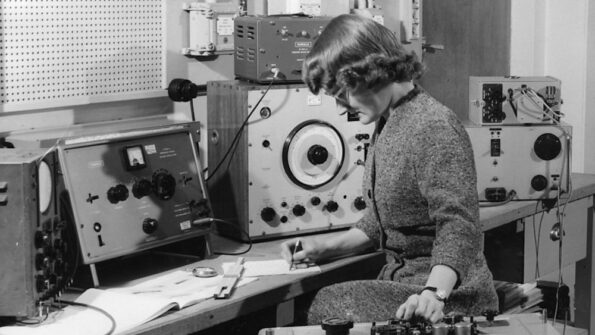
Boing peng boom tschak peng boing peng boom tschak tscha-tschak [1]An extract of the lyrics of the song Boing Boom Tschak by Kraftwerk (Kling Klang, EMI, 1986).
In 1958, electronic sounds began to fill the British airwaves. At that time, a senior BBC executive received a warning from an apprehensive doctor: the Radiophonic Workshop’s work shifts would have to be rotated due to the risk of mental illness that the new sounds could cause.
The BBC’s Radiophonic Workshop had been established to produce the special effects and incidental music for its radio and television programs. It is now considered to have had a decisive influence on British music, specifically on the advancement and dissemination of electronic music. Almost seventy years later, there are no more alarmist news reports about the effects of such music on the listener’s ears, brain, or heart, and electronic music is now practically mainstream.
Experimentation with electronic music had begun two centuries earlier with the appearance of several prototypes of outlandish instruments that used electricity to produce musical sounds. Their inventors presented them in their living rooms amidst party games and jokes to pass the time. Experimentation continued throughout the 19th century, marked by frustrations and failures. Entering the 20th century, the experiments, patents, and scores using electricity to create music constituted an unstoppable wave. Even appliance manufacturers invested in patents for electronic instruments. Theremin, made in 1922, and the Ondes Martenot, made in 1928, are still in use today. During the 1960s, 70s, and 80s, synthesizers, drum machines, and sequencers emerged from their experimental phase and became fully integrated into summer hits, disco music, funk, soul, and rock. Japanese and Korean manufacturers lowered costs and simplified what had previously been a scientific, prohibitively expensive, and practically artisanal movement.
Boing peng boom tschak peng boing peng boom tschak tscha-tschak.
The BBC Radiophonic Workshop’s most celebrated and timeless creation is the theme song for the Doctor Who series, which featured a time-traveling alien battling dangerous and terrifying villains. The score, composed by Ron Grainer, was performed by the Workshop’s machines under the direction of Delia Derbyshire. BBC internal regulations did not allow her credit to appear alongside Grainer’s and her co-authorship was only officially recognized in 2013 to celebrate the series’ 50th anniversary.
There is abundant information online about the laborious process involved in creating the two-and-a-half-minute theme. Delia had to record individual notes from various real instruments onto magnetic tape and compile a sound bank using white noise and different waveforms. One by one, the notes and sounds were sped up, slowed down, or manipulated according to the score. Finally, the tapes had to be cut and assembled by hand to follow the melody. The same meticulous task was performed with the bass lines and all the counterpoints, arrangements, and effects. All these collages were stored analogically on different magnetic tapes and then transferred to a master tape, and this is how all the themes, effects, and transitions were worked on daily. Perhaps the cumbersome nature of the process is what led the women on the team to be given the responsibility of bringing it to fruition.
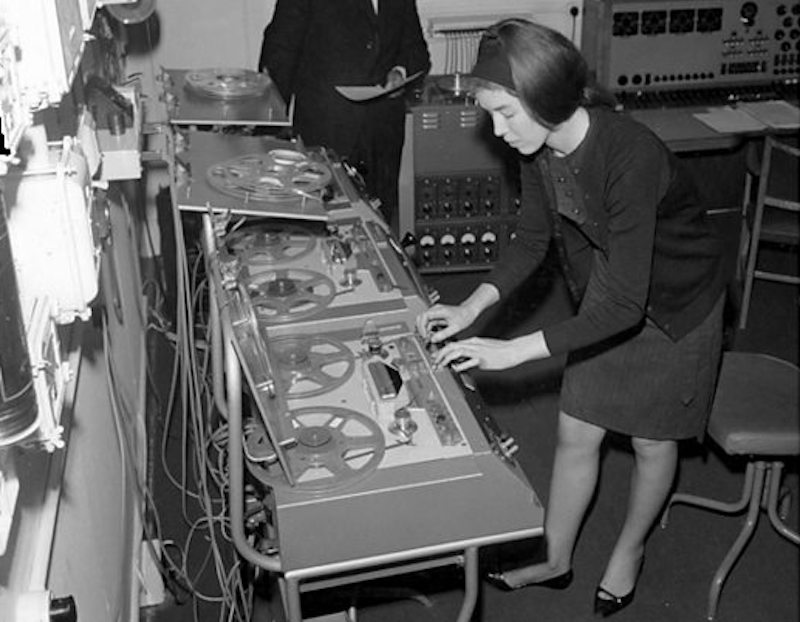
Delia Derbyshire at the BBC Radiophonic Workshop, 1965
Delia Derbyshire was a precocious child who started playing piano at the age of eight. She won a scholarship to study mathematics but abandoned it to pursue music, the perfect training ground for a future researcher in electroacoustic music. She was rejected by Decca, which did not accept women for technical positions and instead, in 1960, she wound up at the BBC, where she worked in the Radio Workshop for twelve years.
Despite the forced anonymity of her work, Paul McCartney asked her for an electronic accompaniment for his song Yesterday, which unfortunately was never realized. Her music for the series Inventions for Radio was credited to the program’s scriptwriter, but she collaborated with Yoko Ono and Luciano Berio, participated in fairs and avant-garde events, and launched experimental ensembles. White Noise, the name of one of these groups, has been acknowledged as a major influence by artists such as Aphex Twin, Orbital, and Chemical Brothers. She composed film and theater scores, but left the music world (except for a few minor exceptions) when commercial synthesizers eliminated the meticulous, mathematical work she loved.
Delia met a tragic end due to alcoholism and perhaps the lack of recognition for her work played a role. Times have changed and today her work is properly preserved in the BBC archives and at the University of Manchester. Two documentaries are dedicated to disseminating her legacy: Kara Blake’s The Delian Mode (2009) and Caroline Catz’s Delia Derbyshire: The Myths and the Legendary Tapes (2020).
Boing peng boom tschak peng boing peng boom tschak tscha-tschak.
During World War II, the BBC was required to have recordings of its broadcasts on-hand to avoid interruptions in the event of a German attack. The person responsible for preparing the recordings for release was a seventeen-year-old pianist, organist, and composer named Daphne Oram, who also prepared special effects for theatrical programs and equalized broadcasts.
Creator of the BBC’s first completely electronic soundtrack, she witnessed the premiere of Edgard Varèse’s Poème électronique at the Brussels Expo in 1958. Upon her return, she proposed the creation of a Broadcasting Workshop but failed to convince management to use electronics beyond special effects and jingles. A year later, she left the station and became the first woman to open and run her own recording studio, Oramics Studios for Electronic Composition, where she continued working on new sounds. For a living, she composed music for film, television, theater, and other media.
Oramics was also the registered trademark of a device she invented for composing music that made drawings on 35mm film, a technique designed to give the composer a visual representation of their work. The original, complex device has been housed in the Science Museum in London since 2011. She composed the electronic part of the soundtrack for the horror film The Innocents [2]The Innocents, a 1961 psychological horror classic directed and produced by Jack Clayton, with a screenplay by Truman Capote based on the novel The Turn of the Screw by Henry James (1898) and its … Continue reading, but never managed to perform her most personal creations in public during her lifetime.
In wasn’t until 2016 that the London Contemporary Orchestra premiered her work Still Point, the first and perhaps only composition for a full orchestra and turntable, composed almost forty years before turntables were considered a musical instrument, an example of how justice can often be slow in coming.
Boing peng boom tschak peng boing peng boom tscha ktscha-tschak.
It’s incredible that Delia and Daphne remained anonymous for so many years. Their names are now synonymous with the Radiophonic Workshop, but the code of silence surrounding women’s work and merit has erased other female creators who worked there.
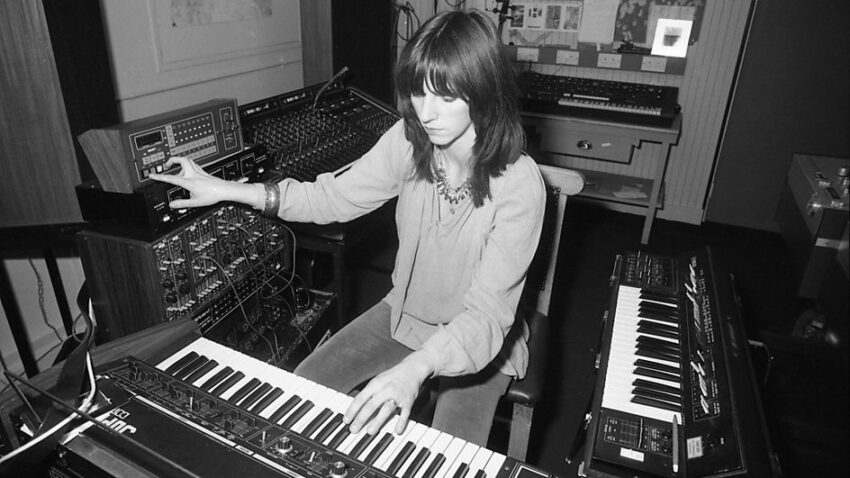
Elizabeth Parker, at the BBC Radiophonic Workshop, 1982
Maddalena Fagandini came from the BBC’s Italian operation. She joined the Radiophonic Workshop in 1959 thanks to her knowledge of electroacoustics and concrete music. Later, she was in charge of the television station’s Italian language teaching services. In 1962, she recorded two electronic albums with George Martin under the pseudonym Ray Cathode. Glinys Johns [3]Not to be confused with the English actress Glinys Johns was also part of the Workshop during the 1970s and was responsible for some of the commercial albums released using its archive of sounds and music. Unlike her predecessors, Elizabeth Parker didn’t need to discover what electronic music, for by the 1970s it was already possible to study it in the university. She was part of the final team of the Workshop, which ended in 1998.
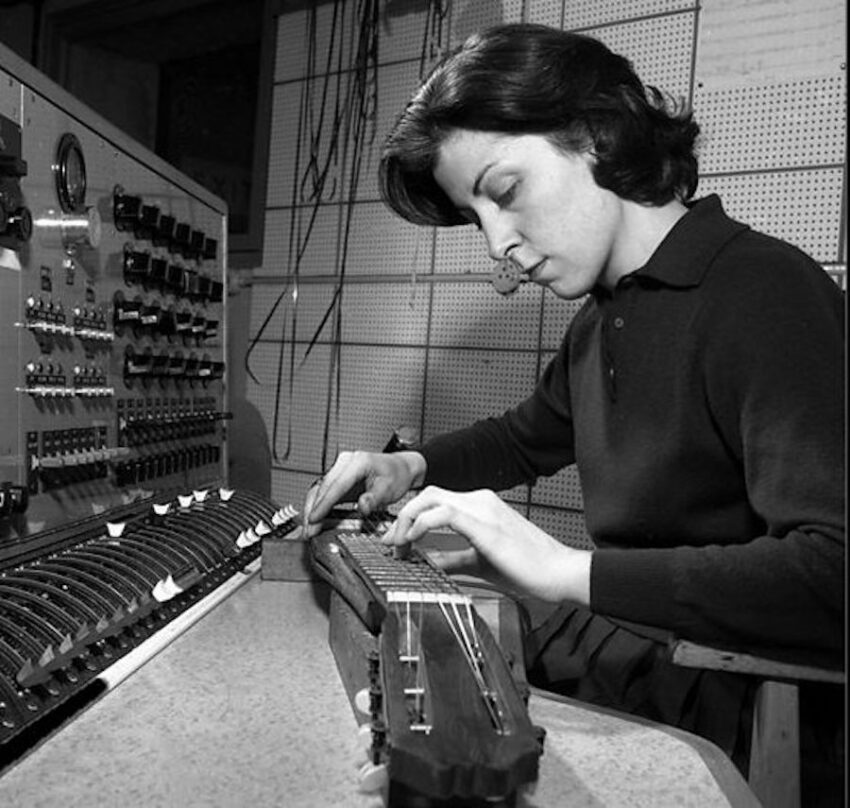
Maddalena Fagandini at the Radiophonic Workshop, 1962
[Featured Image: Daphne Oram at the BBC Radiophonic Workshop, 1958]
| ↑1 | An extract of the lyrics of the song Boing Boom Tschak by Kraftwerk (Kling Klang, EMI, 1986). |
|---|---|
| ↑2 | The Innocents, a 1961 psychological horror classic directed and produced by Jack Clayton, with a screenplay by Truman Capote based on the novel The Turn of the Screw by Henry James (1898) and its stage adaptation (William Archibald, 1950), and starring Deborah Kerr. With music by George Auric and W. Lambert Williamson and electronic music by Daphne Oram. |
| ↑3 | Not to be confused with the English actress Glinys Johns |
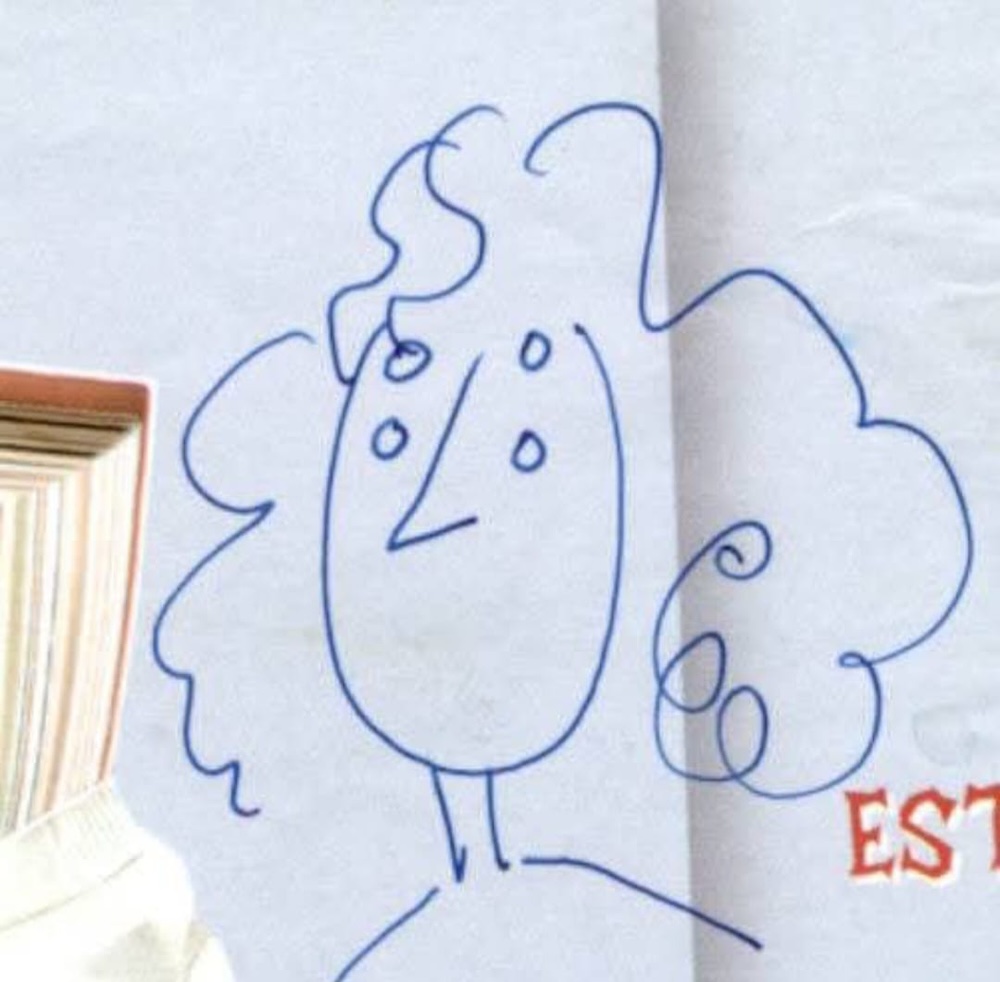
Patricia Godes is a journalist, cultural manager, translator, and lecturer. She began publishing as a teenager to defend African American and Afro-Caribbean music, which was then undervalued by critics. She has been a pioneer in bringing attention and respect to humble and vilified genres such as various dance music, melodramatic popular song (later called world music), and in reclaiming the leading role of women and African Americans in popular music. (Caricature by Manolo Campoamor, 2001).
Media Partners:








"A desk is a dangerous place from which to watch the world" (John Le Carré)