Search
To search for an exact match, type the word or phrase you want in quotation marks.
A*DESK has been offering since 2002 contents about criticism and contemporary art. A*DESK has become consolidated thanks to all those who have believed in the project, all those who have followed us, debating, participating and collaborating. Many people have collaborated with A*DESK, and continue to do so. Their efforts, knowledge and belief in the project are what make it grow internationally. At A*DESK we have also generated work for over one hundred professionals in culture, from small collaborations with reviews and classes, to more prolonged and intense collaborations.
At A*DESK we believe in the need for free and universal access to culture and knowledge. We want to carry on being independent, remaining open to more ideas and opinions. If you believe in A*DESK, we need your backing to be able to continue. You can now participate in the project by supporting it. You can choose how much you want to contribute to the project.
You can decide how much you want to bring to the project.
Theory, here, is a discourse embedded in academic institutions that might be seen as inaccessible – at best daunting, at worst hostile and violent – to certain publics, including those that are neurodivergent, are living with mental illness, are survivors of sexual violence, or are unable to access higher education due to class- and race-based discrimination. And yet, like Young, kc understands autotheory – a different way of practicing “theory” in para-institutional and embodied ways – to be a fundamentally politicized mode of feminist writing that makes space for those have been inordinately marginalized to engage in the practice of theorizing and to redefine what it means to theorize. (Fournier 25-26)
The day I finish the final revision of this editorial text marks the anniversary of my departure from Spain. I have now spent thirteen years living abroad.
In this extended time, I have experienced various educational institutions across multiple countries. I have been part of student bodies and teaching teams at public universities, state universities, Ivy League programs, social justice programs, and art schools. However, it wasn’t until I arrived in the Netherlands that my teaching methodologies—and my way of understanding our bodies within a classroom setting—began to change.
July 3, 2020 · 09:00 – 09:45
COVID-19 began a few months ago, and many places around the world are at the peak of the pandemic. I have an interview with the Social Practices department at the University of Applied Sciences Rotterdam. Still, I do not know if my profile fits
After a 30-minute delay, I am finally able to log into Teams and join the online interview. I feel ashamed of being late to my first “serious” interview in Dutch higher education, yet I am put at ease when the people on the other side of the screen welcome me with an empathetic greeting. They acknowledge that this is the new reality: technology is necessary to connect, yet it doesn’t always work.
I am interviewed by several different people sharing the screen; I am not entirely sure who is who, even though their names appear in the bottom corner of their windows. I set aside all the information I had prepared for the interview, letting my body simply sink into the process and follow along.
After a very organic introduction of everyone present, we dive into the content. I am asked about my pedagogical values, methodologies, and references. Right after that, I am asked a rhetorical question: “Do you realize that in our classes, we create content out of our experiences?”
At that moment, I was unable to grasp the weight or the importance that question would come to have in my development as an educator, an artist, and a person. Until that point, I had never truly considered that my experience, my body, and my identity could be the crucial elements used to generate the content of my classes. And so, it happened. That interview was rewarded with a position to teach.
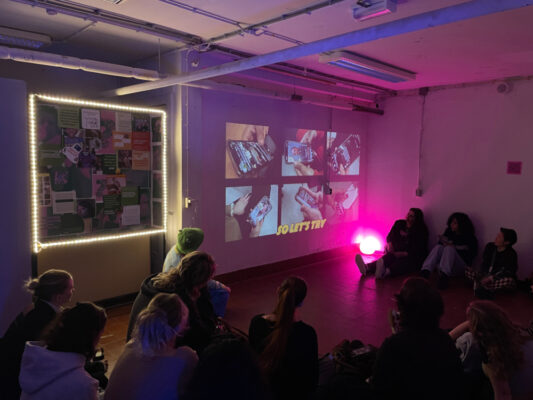
For the last six years, I have brought my body and my experiences to the different classes I taught alongside a singular group of colleagues, friends, and allies:
We embodied who we are, unapologetically, and brought that into our lessons, our classes, and our programs.
Where is my body? Who is my body? What does my body remember? [1] Initial prompt exercise shared with my colleague Fyn van Ast in our intro classes, “The Body as an Archive”
Reference
Fournier, Lauren. Autotheory as Feminist Practice in Art, Writing, and Criticism. MIT Press, 2022.
[Featured Image: Presentation Minor Cultural Diversity]
| ↑1 | Initial prompt exercise shared with my colleague Fyn van Ast in our intro classes, “The Body as an Archive” |
|---|
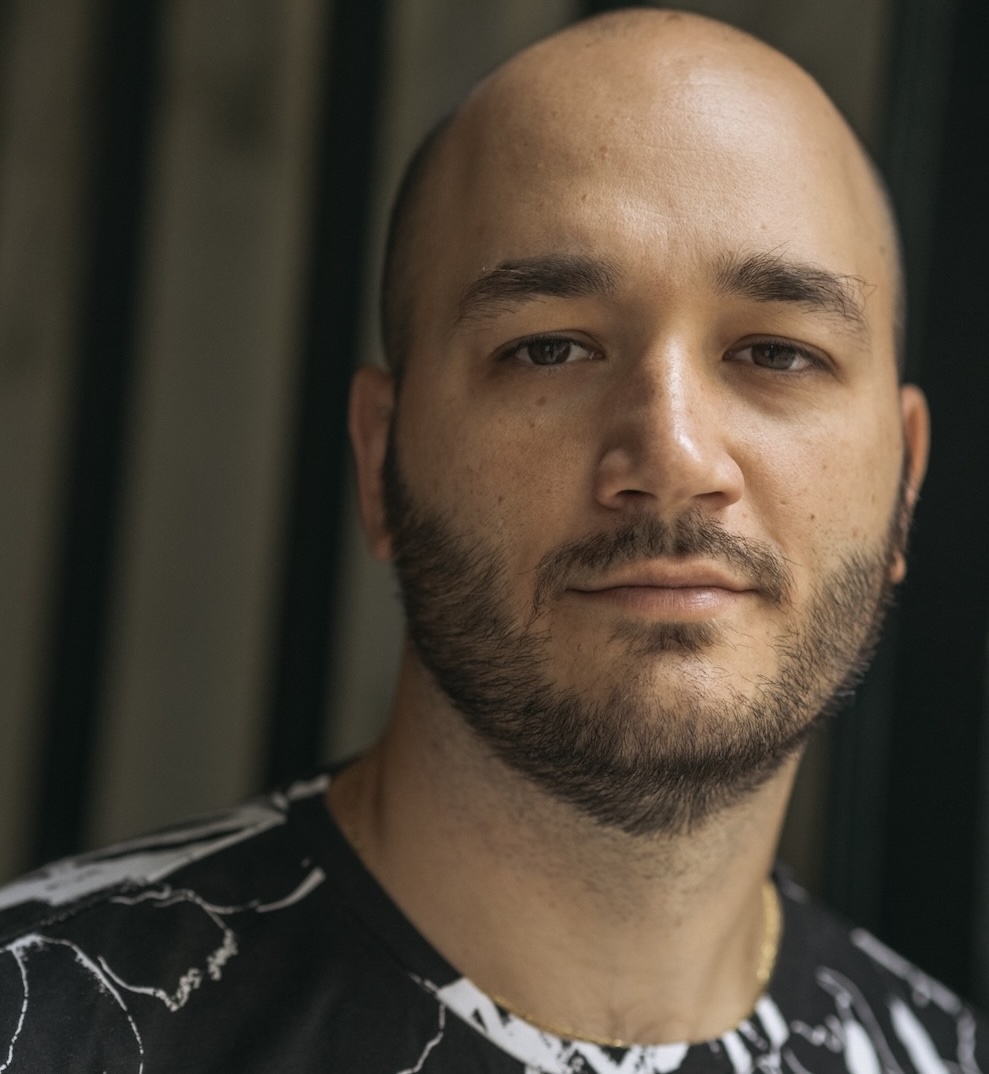
Pablo Lerma is a hispanic queer research-based artist, educator and publisher based in Amsterdam, The Netherlands. His artistic practice is developed at the intersection of image & text with a focus in visual archives and vernacular materials dealing with notions of collective memory, representation and queerness. His work takes various forms from photographic installations to publications. His writing practice is developed on multiple textual forms around its embodied knowledge and experiences, generating streams of words in the shape of auto-theory that pair with his research and artistic projects. Currently, he is a lecturer in theory and head of the Social Practices department in the BA programs at Willem de Kooning Academy, University of Applied Sciences in Rotterdam. In the last decade, he served as a faculty member in Photography & Social Justice at the International Center of Photography in New York (US). He runs the publishing project Meteoro Editions, a publishing platform exploring book forms connected to archival practices and vernacular materials.
Media Partners:




"A desk is a dangerous place from which to watch the world" (John Le Carré)