Search
To search for an exact match, type the word or phrase you want in quotation marks.
A*DESK has been offering since 2002 contents about criticism and contemporary art. A*DESK has become consolidated thanks to all those who have believed in the project, all those who have followed us, debating, participating and collaborating. Many people have collaborated with A*DESK, and continue to do so. Their efforts, knowledge and belief in the project are what make it grow internationally. At A*DESK we have also generated work for over one hundred professionals in culture, from small collaborations with reviews and classes, to more prolonged and intense collaborations.
At A*DESK we believe in the need for free and universal access to culture and knowledge. We want to carry on being independent, remaining open to more ideas and opinions. If you believe in A*DESK, we need your backing to be able to continue. You can now participate in the project by supporting it. You can choose how much you want to contribute to the project.
You can decide how much you want to bring to the project.
Vincenzo Latronico’s novel Perfection (originally published in Italy as Le perfezioni by Bompiani in 2022) has become a bestseller in English on both sides of the Atlantic and shortlisted for the International Man Booker Prize. The novel follows a young couple from an unnamed Mediterranean country as they navigate the vivid ‘cool but sexy’ Berlin, managing to tell a collective story of post-2008 millennial existence that has won the author plaudits, prizes and critics alike. A translator himself, Latronico represents the European contemporary novelist, that is an artist who must excel in one particular language, while working toward universal or recognizable truths, such that they can exist today. This tension is a good place to start when thinking about the discursive power of English in the present.
John Holten: I’d love to get your thoughts on the role of the English language as a non-native speaker, novelist and translator. To quote yourself back to you, you ended the piece that I read in the Guardian with: “Our peripheries are closer to each other than the long way through the center makes it seem.” I was wondering: is that “center” the English language and is it European literature’s lingua franca?
Vincenzo Latronico: The answer is yes. We are literally having this conversation in English as a lingua franca, right?
I’ll give you another example. I was speaking today to a writer, Ana Schnabl, who I have quite a bit of admiration for. She is Slovenian and has never been translated, but one of her books just came out in English. Now she’s been invited to Milan to meet some potential Italian publishers. The English publication is having a big effect because it acts as a gateway.
Most of my publishers are very small operations. Even an extraordinarily successful one like Fitzcarraldo employs only 11 people; my Greek publisher is just two people. How could they possibly read a book in Hungarian, in Slovenian, in Thai? Of course, they can rely on a trusted advisor, but if you’re small, would you really spend money just because a trusted advisor said the book is good?
Holten: The article you wrote was celebrating that English language literature wasn’t the foremost reference for you and your peers.
Latronico: The idea that my article started from was that in my formative years in the ’90s and the early 2000s the contemporary literature that I was reading was almost exclusively English language. It was say David Foster Wallace, Thomas Pinchon, or Philip Roth, it was Zadie Smith or Joan Didion. And this was not considered American literature. This was considered international literature. Whereas today, one would say that young literary readers are more likely to be reading Roberto Bolaño, Han Kang or Emmanuel Carrère.
English language literature has somehow lost part of its centrality. But on the other hand, if you look a little bit closer, you realize that all of these books are internationally successful because they have been successful in English. Their translations into say Italian have only been made possible after their translation into English. So while anglophone literature is no longer so central, anglophone publishing is still paradoxically maybe even more so because now it acts as an arbiter between close peripheries. Like Slovenia is two hours drive away from where I am: why does Ana’s literature have to pass through London before reaching me?
Holten: The Yugoslavian writer Danilo Kiš is an important writer for me when thinking about a ‘periphery’ of Europe, being somehow outside the center of the metropole of Paris or London, and that being a good thing for its literature.
Latronico: You know it’s interesting because rereading an essay by Milan Kundera in his collection The Curtain, he says that it is an abstraction to consider the history of the novel as happening only within one language. Actually translation is an integral part of the history of the novel as a discipline in a way that isn’t the case with any other art.
Holten: There is a paradox with the English language in contemporary culture: writers want to celebrate language, but at the same time they want to communicate beyond the closed community of a nation state. So nationalism as a political project is rarely attractive, right, but at the same time we don’t want to say let’s transcend ethno-nationalism and all write in English, that’d be sacrilegious.
Latronico: No of course not but it’s interesting that literary citizenship has to do with the language you’re writing and not with your actual citizenship. It would be insane to consider Kafka a Czechoslovakian writer. I mean if he had been a Czechoslovakian writer his work wouldn’t have been so influential, unfortunately. There’s an example that Kundera makes that is really eye opening. If the Icelandic sagas had been written in ancient French we would consider them to be the starting point of the art of modern literature, instead we consider them a quaint curiosity from a far away island.
Holten: Maybe it’s that classic point about the English language: you’re most threatened by it if you don’t believe in your own language to begin with?
Latronico: If you consider Poland and France, two countries that have similar sizes and similar populations, but France’s very existence was never cast into question. France assumes that France will always exist whereas Poland’s existence has been much more fragile throughout history. And you can see it in the way that for instance we understand Gombrowicz, who is undoubtedly one of the greatest writers of the 20th century, and I think in many ways his literature is much more contemporary today than Joyce’s is. Well, Gombrovich is nowhere near that position in the canon. He is like a niche interest. And I think that the two things are related.
Holten: Yeah. That’s a really good point. I think that there’s something about also coming out from under the yoke of the power structures of empire. Smaller countries used literature at first to foster independence, reaching for the universal after solidifying the national. Irish writing for example is a case in point because on one hand it was used to bolster the national project and help in the liberation from British culture and rule. Yeah maybe it doesn’t always fit but Poland, I mean that poor country was constantly changing hands but the language persisted.
Latronico: But the Irish example, I find interesting, You could legitimately say that Irish literature, even though it comes from a much smaller country, is much more thriving today than its British counterpart. And it’s kind of doing it by claiming as its tool the very instrument of occupation, which is the language. But this association is complicated because of course as a writer you would veer towards not really believing in nationalism. But then your tool is so inextricably linked with nationalism. My press person at my Italian publishing house told me when I was shortlisted for the International Booker Prize to get ready because if I won I might get a call from the minister and the minister is a friend of Meloni. He is a literal Nazi that speaks about the mythology of the sun.
Holten: Yeah. Suddenly literature and language can be co-opted into this kind of quite constraining double dance. The Academie Francaise is fairly well known, is there a group of people who make new Italian words?
Latronico: I mean, there is, but they’re not taken as seriously as in France. But Italian is really permeable to foreign influences. Italy is kind of a strange country. Before the middle of the 19th century, it didn’t exist as such. It was a conglomerate of little fiefdoms. And even before it unified there was a debate within the Italian academy about whether we should welcome foreign influences or not. The biggest such debate took place between the end of the 18th and the beginning of the 19th century after a lot of words were imported from French.
There’s an academic whose research I follow, Eleonora Gallitelli. She’s a computational linguist and she did a study of the language of young Italian writers on the one hand and the language of young Italian translators from English into Italian. And she analyzed those two groups for metrics of English influence. So for words or constructs that are adopted by English or by American or you know average sentence length and so on. And what she found is that the writers are much more influenced by English than those who are translating from English.
Holten: Mhm. Wow.
Latronico: I don’t know what to make of this, but I find this very interesting.
To be continued… The conversation between Vincenzo Latronico and John Holten continues next week in Part 2: The Translator’s Authority
(Featured image: © Juliet Barbieri)

Vincenzo Latronico is a writer and translator. His latest novel, Perfection, has been translated in 43 languages; it has been shortlisted for the International Booker Prize, longlisted for the National Book Award and the Strega Prize, and awarded the first Tom Wolfe Air Mail Prize. He lives in Milan.
Portrait © Marcus Lieder
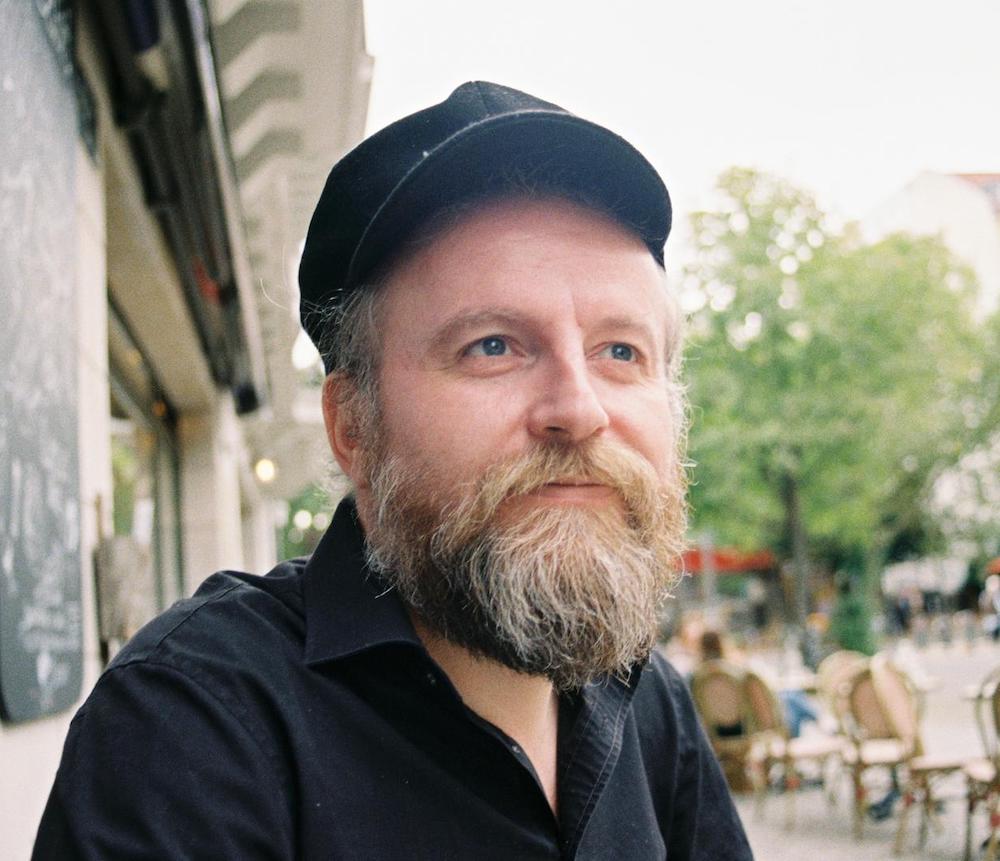
John Holten is an Irish born, Berlin-based novelist and publisher, whose most recent novel is The Trains of Europe (2024). www.johnholten.eu
Portrait © Juliet Barbieri
Media Partners:






"A desk is a dangerous place from which to watch the world" (John Le Carré)