Search
To search for an exact match, type the word or phrase you want in quotation marks.
A*DESK has been offering since 2002 contents about criticism and contemporary art. A*DESK has become consolidated thanks to all those who have believed in the project, all those who have followed us, debating, participating and collaborating. Many people have collaborated with A*DESK, and continue to do so. Their efforts, knowledge and belief in the project are what make it grow internationally. At A*DESK we have also generated work for over one hundred professionals in culture, from small collaborations with reviews and classes, to more prolonged and intense collaborations.
At A*DESK we believe in the need for free and universal access to culture and knowledge. We want to carry on being independent, remaining open to more ideas and opinions. If you believe in A*DESK, we need your backing to be able to continue. You can now participate in the project by supporting it. You can choose how much you want to contribute to the project.
You can decide how much you want to bring to the project.

This podcast is dedicated to pioneering female writers who overcame great difficulties to make their work known. From great works widely recognized today, but reviled in their time, such as Emily Brontë’s Wuthering Heights, to our own Rosalía de Castro, a woman who was not only a pioneer of Spanish poetry, but also of bringing the Galician language to the forefront of literature.
Here you can find a summary of the podcast content:
It is a fact that women read and write more than men. According to recent studies, in Spain in 2021, women authors represented less than 30% of published writers. This situation persists for several reasons, including a lack of publishing opportunities, persistent inequality in literary prizes, and the burden of gender stereotypes. Although many more women dedicate themselves to writing, we publish and edit less, and we have access to fewer positions in the publishing world. There is an oppressive, age-old centrifugal male force that makes the number of women who can exhibit or publish their work proportionally minuscule.
If things are like this now, they were worse centuries ago. In early 19th-century England, in the town of Haworth, Yorkshire, the Brontë sisters, along with their brother Patrick (whom they called Branwell in honor of their mother’s maiden name), grew up in inhospitable and unhealthy moors. Their mother died when they were very young (Emily was three years old and Anne only a few months old). Four years later, their two older sisters, Maria and Elizabeth, died of tuberculosis. This physical and emotional environment filled their short lives with illness, suffering, and loss.
Their only solace was the love of literature that their father, Reverend Patrick Brontë, instilled in them. Publications such as Blackwood’s Magazine were to be found in their home, allowing them to admire writers such as Lord Byron and Walter Scott. Reading and writing were their great escape, unusual among Victorian women whose highest aspiration was usually to marry and dedicate themselves to domestic duties.
Perhaps for this reason, the Brontë sisters were considered ‘reclusive women.’ Emily, described as ‘hermetic,’ hardly spoke to anyone outside her family (which has led to speculation about a possible Asperger’s syndrome). They were also considered unattractive by the standards of the time and, as the daughters of a modest clergyman, had no dowry. Their father sent only his son to school, and the sisters dedicated themselves to working as teachers or tutors, making it clear that marriage meant nothing to them.
One day, at a literary gathering, they decided to publish their poems to earn some money. In England at that time, however, only male writers could aspire to this as women were not considered capable of such intellectual pursuits. To overcome prejudice and ensure that attention was focused on the work and not on the author’s gender, many were forced to use male pseudonyms.
This was not the case for Jane Austen (who died in 1817, when the Brontë sisters were born), who published her novels Sense and Sensibility and Pride and Prejudice under the pseudonym ‘By A Lady,’ a generic name that did not conceal her gender but did conceal her name (her authorship was not revealed until after her death). Mary Shelley published the first version of Frankenstein under the name of her husband, Percy Shelley, up until 1831, when the revised and definitive version was published under her own name. The great pioneer was the Englishwoman Margaret Cavendish, who in the 17th century published her philosophical, scientific, and fictional works under her own name.
The Brontë Sisters signed their poetry collection with the names Currer, Ellis, and Acton Bell. The reviews weren’t bad, but sales were, so they each decided to write a novel. In 1847, Charlotte (30 years old) published Jane Eyre as Currer Bell, Anne (27) published Agnes Grey as Acton Bell, and Emily (29) published Wuthering Heights as Ellis Bell.
“I don’t know if it be a peculiarity in me, but I am seldom otherwise than happy while watching in the chamber of death, should no frenzied or despairing mourner share the duty with me. I see a repose that neither earth nor hell can break, and I feel an assurance of the endless and shadowless hereafter—the Eternity they have entered—where life is boundless in its duration, and love in its sympathy, and joy in its fulness.”
(Excerpt from Wuthering Heights, 1847)
The writing of the ‘Bell brothers’ aroused interest and morbid curiosity. They were much talked about, especially for their “foul language, violence and brutality” and their “rudeness and indecency,” although their writing was also recognized for its strength and originality, especially in regards to the female characters, who were not passive but rather complex, intelligent, and rebellious. Charlotte fared quite well with Jane Eyre, but Wuthering Heights was heavily criticized for its darkness and amorality, with some (male) critics suggesting its author must be a depraved man. Many years passed before Emily’s novel was considered a masterpiece. She never got to enjoy her success as one year after its publication her brother Branwell died, destroyed by alcohol and opium. Three months later, Emily, deeply affected, died of tuberculosis, the same disease that took Anne the following May.
“Oh, I will not be bound by the rules of art! My thoughts wander, my wandering imagination and my soul are only satisfied by impressions. The hope of glory has never held sway in my soul, nor have I ever dreamed of laurel crowns to oppress my forehead. Only songs of independence and freedom have come from my lips, though all around me, from the cradle on, I have felt the clanking of the chains that were to bind me forever, for a woman’s inheritance is the shackles of slavery.”
These were the words of Rosalía de Castro, a 19th-century writer not widely recognized until the mid-20th century. Rosalía was a pioneer of Hispanic literature, a champion of the Galician language and a defender of the underprivileged. The illegitimate daughter of a young woman of a noble past and a priest, she was born in 1837 and raised by her paternal aunts until adolescence. Being aware of her origins filled her with profound sadness, compounded by delicate health, the loss of a few of her seven children, and a precarious financial situation with her husband, the writer and journalist Manuel Murguía, who always supported her and published her poems. These difficulties forced them to move frequently, which is why her work is tinged with sadness, pessimism, and melancholy.
Rosalía drew her literary inspiration from the books her mother provided and, before that, from the rich Galician oral tradition (including folk songs) she heard in her childhood. This inspired her to write verses in Galician at a time when the language was associated only with a rural, illiterate world.
Her most important works are Cantares gallegos, the first major book written entirely in Galician, Follas novas, in which she portrays the reality of poor, excluded, and abandoned women, and En las orillas del Sar, which contains an environmental protest against the destruction of the natural environment.
Rosalía was way ahead of her time, a bold and sensitive writer when expressing her feelings and always very compassionate. In her poems, she showed concern for the harsh conditions of fishermen and farmers. Social protest against classism and exclusion was always present in her work, with special emphasis on the discrimination suffered by women. She was not a feminist in the activist sense, but her life and work are a coherent manifesto of intellectual independence and a creative criticism of the era and the repressive treatment of women. In newspaper articles, she denounced sexist attitudes and Galician traditions that belittled women.
Rosalía was categorized as an existentialist for her original and complex style of speaking about her inner self, pain, and loneliness. In Spain, along with Bécquer, she was a precursor of modern poetry and her verses influenced Rubén Darío, Juan Ramón Jiménez, and Antonio Machado. She was the great female voice of the 19th century, a writer whose depth and commitment make her eternally relevant and a touchstone for contemporary authors.
Her last words before dying were: “Open the window, I want to see the sea.”
(Featured Image: Portrait of Rosalía de Castro, IanDagnall Computing / Alamy vía Aci)
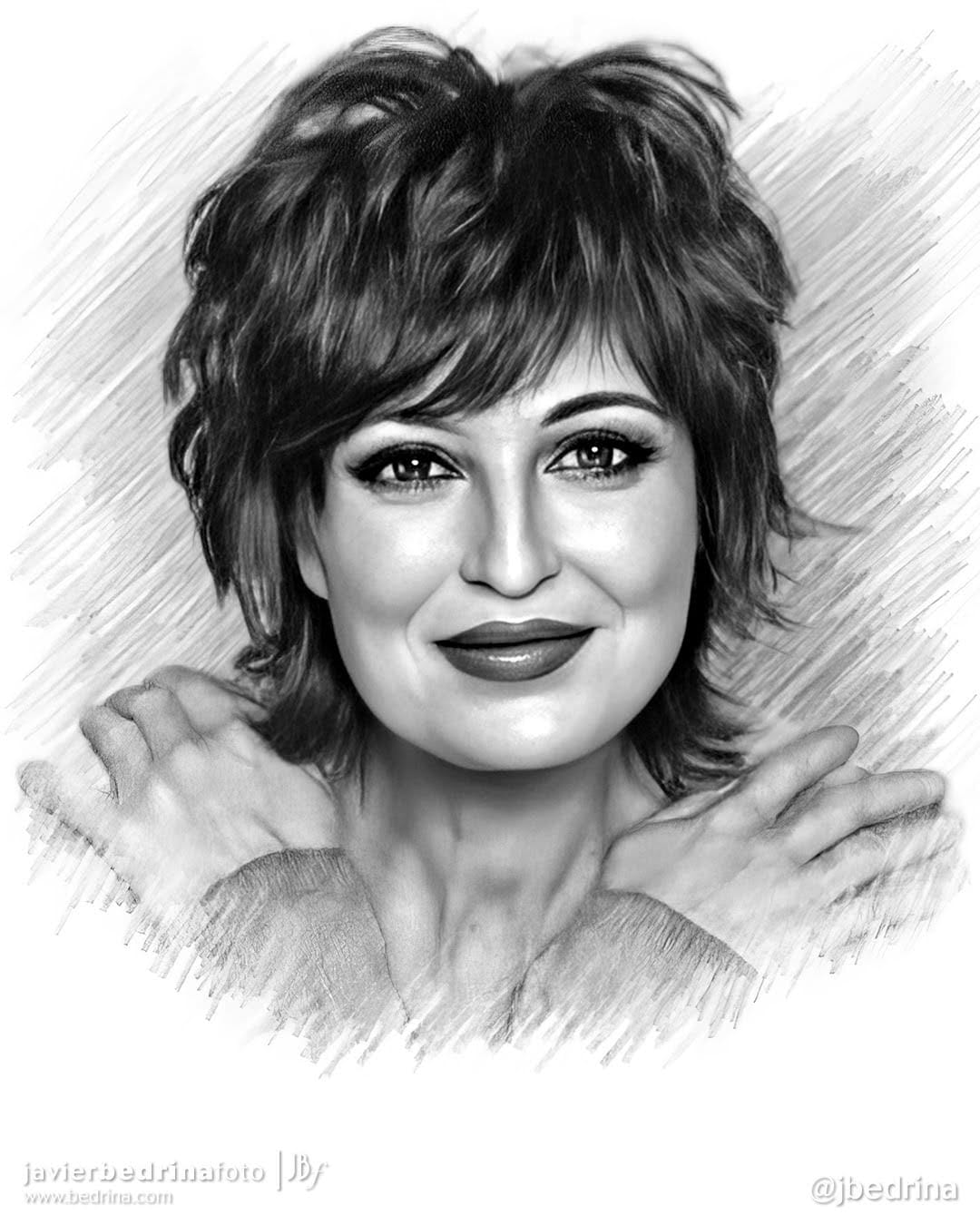
Marisol Galdón has a degree in Information Sciences from the UAB and has a solid track record as a journalist, communicator and presenter in audiovisual and radio media. She has published irreverent interviews in Rolling Stone and articles on cinema in various collective publications. As a writer, she has penned three psychological thrillers: ¡Mátame! (2010), Psicoputa (2018) y Cumbres Tenebrosas (2021). Creative and multifaceted, she has also worked as a disc jockey, occasional actress and is the author of the monologue #MeRíoPorNoFollar. She teaches communication courses and works as a master of ceremonies and presenter, always driven by her direct connection with the audience.
Portrait by Javier Bedrina from a photo by Olivia Peña.
Media Partners:







"A desk is a dangerous place from which to watch the world" (John Le Carré)