Search
To search for an exact match, type the word or phrase you want in quotation marks.
A*DESK has been offering since 2002 contents about criticism and contemporary art. A*DESK has become consolidated thanks to all those who have believed in the project, all those who have followed us, debating, participating and collaborating. Many people have collaborated with A*DESK, and continue to do so. Their efforts, knowledge and belief in the project are what make it grow internationally. At A*DESK we have also generated work for over one hundred professionals in culture, from small collaborations with reviews and classes, to more prolonged and intense collaborations.
At A*DESK we believe in the need for free and universal access to culture and knowledge. We want to carry on being independent, remaining open to more ideas and opinions. If you believe in A*DESK, we need your backing to be able to continue. You can now participate in the project by supporting it. You can choose how much you want to contribute to the project.
You can decide how much you want to bring to the project.
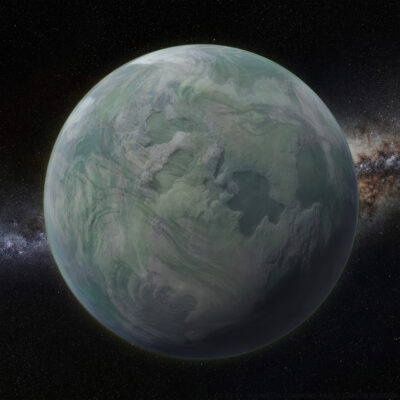
In a headline for Esquire magazine, climate fiction writer Jeff VanderMeer, author of Annihilation, stated that “climate fiction won’t save us.” This statement touches on a fundamental issue, which is that no literary or artistic genre can, on its own, transform the material conditions that have led to the contemporary environmental crisis. However, reducing climate fiction to a merely speculative or aesthetic exercise would mean ignoring the role that imagination plays in the production of political, social, and environmental horizons.
Imagining worlds is not simply about projecting hypothetical scenarios but about opening up a field of possibilities from which to reconfigure our ways of thinking, inhabiting, and relating to one another. Imagination thus becomes a critical tool capable of disrupting the epistemological frameworks that have sustained the modern Western order which is based on the exploitation of territories, the separation between nature and culture, and the centrality of the human subject. In this context, contemporary environmental thought offers new narratives that can act as tools for mediation, healing, and repair in a world in crisis.
Thinkers such as Denise Ferreira da Silva, Judith Butler, Marta Segarra, and Emanuele Coccia have pointed out that there is a political need for imagination. We are human because we tell stories, and these stories are not cultural ornaments but rather technologies that mediate our relationship with the world. Through these stories, we remember, transmit, and reorient ourselves. However, in the current convergence of crises (environmental, racial, economic, and geopolitical), many inherited narratives have ceased to be sufficient. When crises become full blown, imagination can be paralyzed. Faced with linear and teleological visions of progress, climate fiction opens up the possibility of imagining other temporalities and forms of coexistence between species and territories. To understand its political potential, it is necessary to question one of the central narrative structures of modernity, that is, utopia.
Traditionally, utopia has been conceived of as the projection of a perfect society into an imaginary future or place. While it has allowed us to imagine alternatives, it has also reproduced a linear conception of history, one in which humanity progresses toward an ideal. In the contemporary context, this idea is problematic, naive and also politically limiting. By proposing a final state of perfection, utopia tends to stifle imagination, reducing the contingency and diversity inherent in living systems. Furthermore, it reproduces the logic of progress that has underpinned colonial, industrial, and extractive projects. Thinking about contemporary ecology, therefore, requires displacing utopia as the sole horizon and opening ourselves to multiplicity and to constant transformation. In this sense, climate fiction acquires a significant role. Unlike classical utopias, these narratives do not propose perfect worlds but rather unstable scenarios where ecosystems, relationships, and ways of life are continually being reconfigured.
In N. K. Jemisin’s The Fifth Season, the opening line (“Let’s start with the end of the world”) functions as a provocation, imagining the end of one world in order to envision other worlds. In dialogue with Jack Halberstam’s concept of unworlding, a key question arises: is it necessary to dismantle the current world before imagining others? Deconstruction can be understood here not as violent destruction but as a creative process that allows for the fertilization of new forms of existence.
The relationship between ruin and utopia is equally relevant. The political, economic, and social architecture of neoliberal capitalism conditions our climate imagination. Remaining within these structures implies perpetuating the violence that sustains a restricted idea of progress, hence the need to question of who imagines utopias and for whom, as well as their inevitable anthropocentric bias.
From a decolonial perspective, questioning the temporal linearity of modernity is fundamental. The construction of narratives has historically been linked to processes of domination. In The Future is the Root of a Plant, the artist UYRA analyzes how colonial imagination shaped the perception of the Amazon, producing fictions that legitimized violence and dispossession. Narrative dehumanization facilitated the imposition of power structures on bodies and territories.
Recognizing that all fiction is a political practice implies assuming that narratives shape worlds. Climate fiction presents itself as a fertile space for exploring alternative temporalities, pasts that return, futures that are present, and environmental cycles that destabilize the logic of linear development. This plurality allows us to conceive of history as an open field of interaction between human and non-human forces. Likewise, these narratives broaden the notion of agency. Transformation does not arise from individual heroes or technological solutions, but rather from networks of care and forms of collective organization. By including territories, species, and ecosystems as agents, the focus shifts from human exceptionalism to a relational understanding of life.
If the world is composed of dynamic relationships, stories must reflect this complexity. Climate fiction doesn’t offer definitive answers but instead frameworks that allow us to reconsider our way of inhabiting the Earth. Working within it involves activating processes of collective imagination that raise questions and destabilize inherited narratives. Between imagination and fiction, an intermediate space of practice emerges, one in which speculation is articulated with concrete processes of research and creation. Integrating fiction into academic and educational contexts can reactivate the dialogue between critical thinking and imagination, recognizing its epistemological value.
The central question then shifts to methodology: how to incorporate imagination as a tool for collective work? Through programs, seminars, and experimental methodologies, the Institute for Postnatural Studies explores forms of speculative thinking and situated learning. Initiatives such as the Postnatural Independent Program (PIP) or the new postgraduate program Alternative Ecologies seek to challenge dominant epistemologies and amplify voices committed to environmental thought. In this dialogue between theory and practice, the aim is not to impose closed theoretical frameworks but to recognize the potential of imaginative space within research. The ultimate question points to the transformative capacities of these practices: what worlds can be built (or dismantled) from them?
It is in this open and collective space that new methodologies of cultural production can emerge, not as closed utopias but as experimental laboratories from which to imagine and recompose our ways of inhabiting a planet in transformation. In the end, climate fiction is not an escape but a critical practice that intervenes in the present. Imagining other worlds is the first step to making them possible.
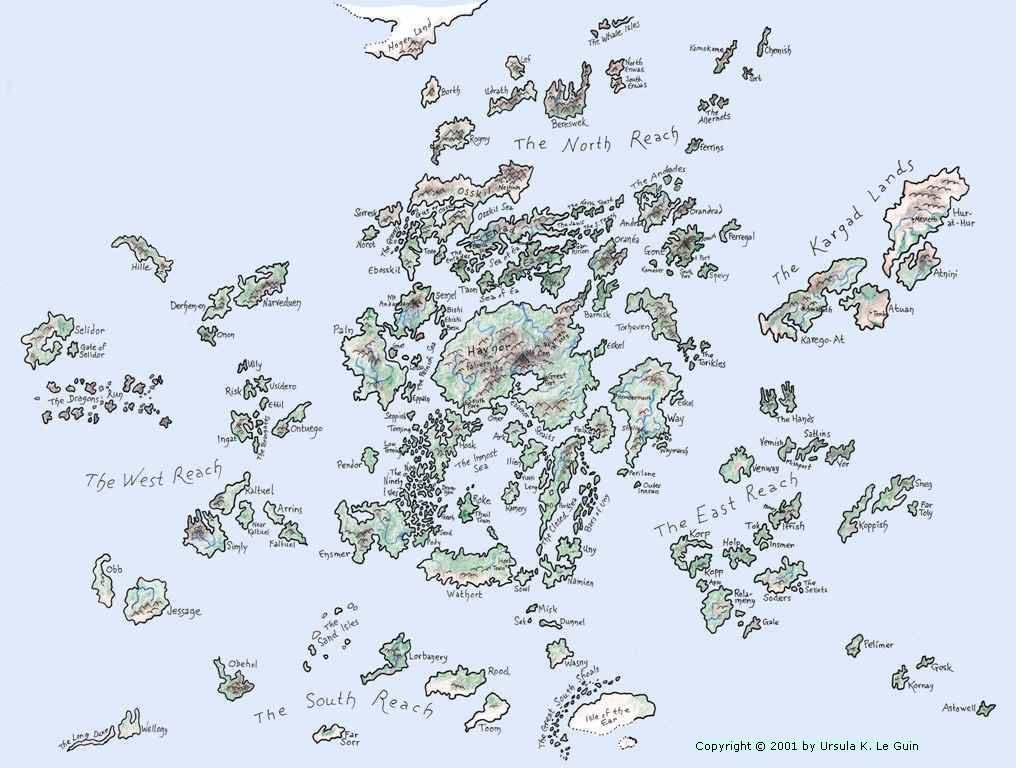
Ursula K. Le Guin. (1968). Map of EarthSea [map]. A Wizard of Earthsea.
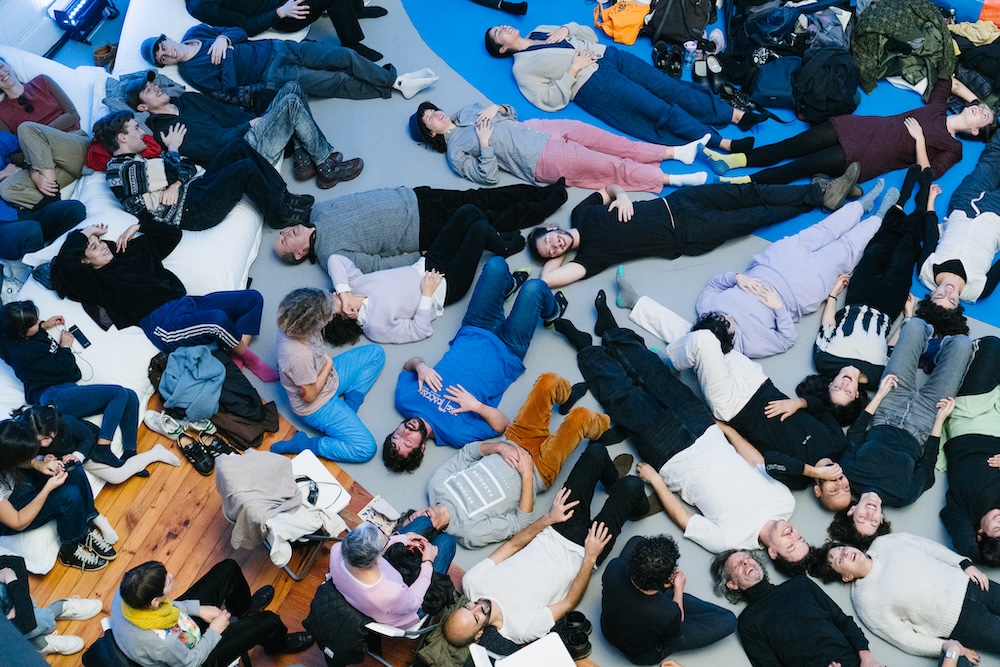
The Institute for Postnatural Studies (IPS), founded in 2020, is a space for artistic experimentation and critical research focused on the postnatural as a framework for contemporary creation. Through transdisciplinary practices, it questions narratives about nature, technology, and culture, promoting new forms of political imagination. IPS fosters collective learning, critical thinking, and experimental methodologies that challenge dominant epistemologies, developing projects at the intersection of ecology, politics, and territory, materialized in exhibitions, curatorial programs, and audiovisual productions. It also has its own publishing platform, Cthulhu Books. www.instituteforpostnaturalstudies.org (Photo courtesy Galeria Municipal Oporto)
Media Partners:






"A desk is a dangerous place from which to watch the world" (John Le Carré)