Search
To search for an exact match, type the word or phrase you want in quotation marks.
A*DESK has been offering since 2002 contents about criticism and contemporary art. A*DESK has become consolidated thanks to all those who have believed in the project, all those who have followed us, debating, participating and collaborating. Many people have collaborated with A*DESK, and continue to do so. Their efforts, knowledge and belief in the project are what make it grow internationally. At A*DESK we have also generated work for over one hundred professionals in culture, from small collaborations with reviews and classes, to more prolonged and intense collaborations.
At A*DESK we believe in the need for free and universal access to culture and knowledge. We want to carry on being independent, remaining open to more ideas and opinions. If you believe in A*DESK, we need your backing to be able to continue. You can now participate in the project by supporting it. You can choose how much you want to contribute to the project.
You can decide how much you want to bring to the project.
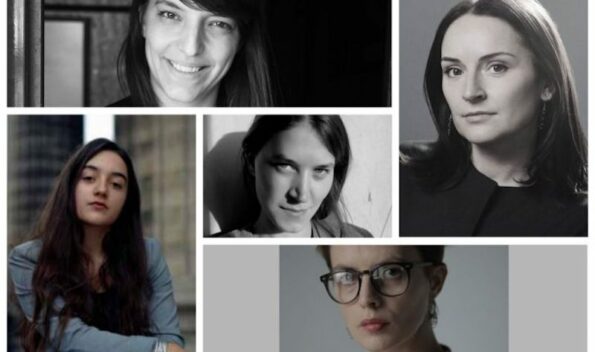
Something has shifted over the last decade in the experience of watching Kosovo’s national cinema. The change is not simply a matter of improved production values or growing international visibility. It is felt more viscerally—not only in what appears on screen, but in what lingers after the lights come back on. Leaving the cinema no longer feels like a passive act. You step outside unsettled, carrying a pressure that refuses to dissipate. These films do not offer closure. They expose. They provoke discussion, disagreement, discomfort. They compel reflection—not only on what has been shown, but on why it took so long for these stories to appear on screen at all. They insist that what is wrong in society be seen clearly, unsoftened. And then they leave you alone with the consequences of that seeing.
This sensation will be familiar to anyone who has watched a film that quietly reorganizes their moral landscape. For some, that shock arrived in 2005 with Brokeback Mountain, when a love story between two men unsettled not only heterosexual certainties but the very grammar of masculinity. In Kosovo, a similar rupture occurs when watching Marriage (Martesa), Blerta Zeqiri’s intimate and quietly subversive film about two longtime friends in Prishtina, which premiered at the Tallinn Black Nights Film Festival (PÖFF) in Estonia in 2017. One scene in particular—a tender, unadorned moment of closeness—stands among the most emotionally and politically charged in Kosovar cinema. It is neither sensational nor explanatory. It simply exists. And in its existence, it demands recognition. Zeqiri’s short film The Return (Kthimi, 2012) was the first film from Kosovo to screen at the Sundance Film Festival, where it won the Jury Prize for International Fiction Short.
That demand—to be seen without justification—is a defining feature of Kosovo’s new wave of female filmmakers.
For decades, Kosovo’s cinema was shaped almost entirely by men educated within the cultural and ideological framework of former Yugoslavia. Film schools, studios, and artistic networks were male-dominated, and the cinematic gaze they produced was similarly constrained. When women appeared on screen, they were rarely treated as subjects; more often, they functioned as symbols, their presence narrowly framed by male authorship. That authorship, in turn, remained overwhelmingly male.
The 1990s did little to disrupt this pattern. As Yugoslavia dissolved and Kosovo entered a decade marked by repression and war, cinema—where it existed at all—gravitated toward nationalist narratives and heroic masculinities.
After the war, in the early 2000s, Kosovo’s film industry began to rebuild, but largely as a continuation of patterns established in the 1990s. Old hierarchies persisted, and films continued to center male sacrifice and resistance, while women were once again rendered symbolic rather than complex subjects—mothers of the nation, silent bearers of suffering, moral anchors for male protagonists. Even when wartime sexual violence was addressed, it was often framed through male shame and dishonor rather than women’s lived experience.
Although opportunities to study filmmaking slowly opened, women who aspired to direct were frequently discouraged. Professors warned them that cinema was “too demanding,” that they would eventually abandon their careers for marriage or motherhood. Others were simply invisible within institutions that continued to reproduce a male-centered worldview.
Some women nevertheless persisted, studying film locally or at respected universities abroad. What ultimately shaped their work, however, was less the prestige of those institutions than an awareness of marginalization—and a conscious effort to work from within it. Their films reveal a sensitivity to social complexity that had long been absent from Kosovo’s cinema, attentive to lives shaped by inequality, constraint, and negotiation. This shift was not unique to Kosovo; across contexts, filmmaking has often been dominated by privileged male perspectives that overlooked stories beyond their own experience. In a small, post-war society, the impact of this reorientation was especially visible.
What distinguishes the films that have emerged over the last decade is not only who made them, but how they reconfigure cinematic attention. These films are not interested in narrating the nation from above. They remain grounded in the everyday: living rooms, kitchens, courtyards, workplaces, bedrooms. Rather than attempting ambitious war spectacles—often constrained by limited budgets and resulting in melodrama—these filmmakers turn inward, toward the intimate spaces where power is lived rather than declared.
Consider Hive (Zgjoi), directed by Blerta Basholli—shortlisted for an Oscar in the 2022 awards cycle in the Best International Feature Film category and a historic triple winner at Sundance. The film follows a woman whose husband has been missing since the war, in a society that expects her to wait, to mourn quietly, and to remain economically and emotionally dependent. When she begins building a small business with other widows, resistance emerges on every level: bureaucratic obstruction, community shunning, and the persistent threat of sexual violence. More broadly, this response points to a defining function of feminist cinema, which does not reassure audiences but interrogates the conditions that have long been taken for granted.
Kaltrina Krasniqi’s Vera Dreams of the Sea (Vera Andrron Detin)—which had its world premiere at the Venice International Film Festival in September 2021—sharpens this exposure by focusing on property, one of patriarchy’s most enduring instruments. After her husband’s suicide, Vera discovers that the apartment she shared with him is not legally hers. His male relatives move quickly to claim it, invoking custom, law, and entitlement. The film’s power lies in its refusal to dramatize this as an anomaly. There are no villains, only systems: inheritance laws, social expectations, gendered assumptions about ownership.
Antoneta Kastrati’s Zana confronts a different but equally brutal logic: the expectation that women’s bodies exist to repair collective loss. The protagonist, haunted by the wartime killing of her daughter—an experience drawn from the filmmaker’s own family history—is pressured by her husband’s family to become pregnant again. Grief, in this logic, must be productive. These films mark a decisive shift in how wartime trauma is represented. For years, Kosovo’s cinema returned to the war as a masculine narrative of resistance and heroism. Here, trauma is intimate, gendered, unresolved. It does not culminate in redemption.
From a feminist film-theoretical perspective, this new wave marks a decisive reorientation of the cinematic gaze. Laura Mulvey’s formulation of classical cinema—which argues that film language has historically been organized around a masculine way of seeing—helps illuminate what is at stake here, though Kosovo’s female filmmakers do not simply invert inherited structures.
Their characters resist idealization—they are ambivalent, conflicted, sometimes difficult—and, above all, are granted interiority. In response, some critics have suggested that these films foreground queer relationships or patriarchal violence in order to appeal to international audiences. Yet such readings miss the intervention at work. Rather than catering to external expectations, these filmmakers expand the representational field of Kosovo’s cinema, challenging long-standing orientalist conventions shaped by earlier, male-authored narratives—from hypermasculine, hard-drinking Balkan archetypes to the instrumentalization of Roma characters as exotic embellishment. In doing so, they replace inherited spectacle with complexity, and caricature with lived experience.
Kosovo’s new wave of female filmmakers has done more than place the country on the global festival map; it has expanded the very terms of what national cinema can be. In reclaiming narrative space, these filmmakers also reclaim authorship itself—asserting women’s presence as a source of meaning, not merely survival. Once that insistence enters the cinema, it alters how stories are told and how they are received, leaving no return to what came before.
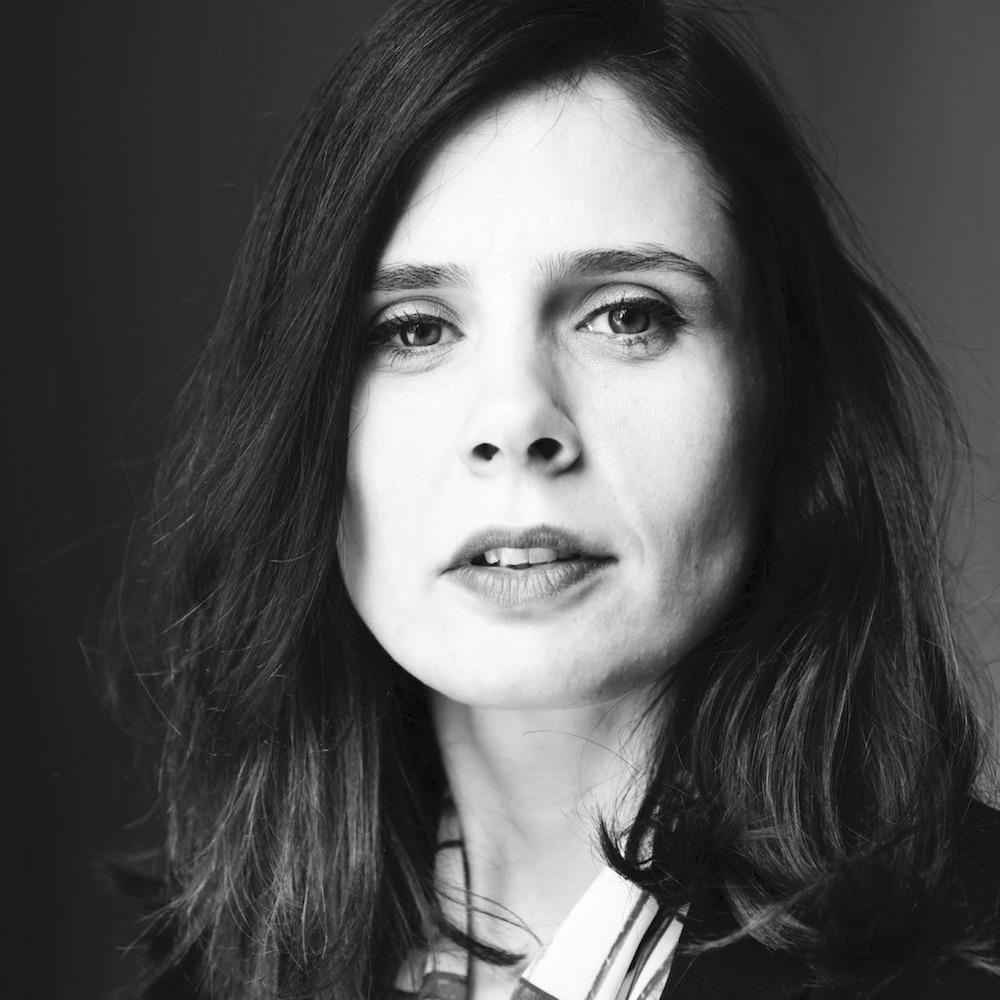
Dafina Halili is a journalist and editor at Kosovo 2.0. For more than a decade, her work has focused on human rights and social justice, with particular attention to women’s rights, minority rights, and LGBTQ+ rights—and how these issues intersect with education, employment, and broader social and economic conditions. She specializes in in-depth and narrative reporting that brings forward perspectives often overlooked in mainstream media. Dafina holds a Master’s degree in Diversity and the Media from the University of Westminster in London, U.K., and a BA and MA in Dramatic Arts from the University of Prishtina.
Media Partners:








"A desk is a dangerous place from which to watch the world" (John Le Carré)