Search
To search for an exact match, type the word or phrase you want in quotation marks.
A*DESK has been offering since 2002 contents about criticism and contemporary art. A*DESK has become consolidated thanks to all those who have believed in the project, all those who have followed us, debating, participating and collaborating. Many people have collaborated with A*DESK, and continue to do so. Their efforts, knowledge and belief in the project are what make it grow internationally. At A*DESK we have also generated work for over one hundred professionals in culture, from small collaborations with reviews and classes, to more prolonged and intense collaborations.
At A*DESK we believe in the need for free and universal access to culture and knowledge. We want to carry on being independent, remaining open to more ideas and opinions. If you believe in A*DESK, we need your backing to be able to continue. You can now participate in the project by supporting it. You can choose how much you want to contribute to the project.
You can decide how much you want to bring to the project.

Across the Balkans, a visible shift in cinema is unfolding through the work of women filmmakers who are redefining language, archives, memory and authorship. In Kosovo, this is often described as a “wave” of women filmmakers. This movement isn’t just about representation; it questions the inherited structures of filmmaking itself—how stories are built, whose bodies carry meaning, how memory is stored, and what kind of knowledge cinema produces.
In this conversation, Yugoslav-born filmmaker and curator Kumjana Novakova, living between Skopje and Sarajevo, in whose documentary film Silence of Reason, absence is confronted through fragmented archival testimonies, voices of women subjected to wartime sexual violence, and Kosovar director Norika Sefa, based in Prague, whose films such as Looking for Venera and Like a Sick Yellow explore uncertainty, memory and bodies as unstable archives, speak about absence not as emptiness but as potential; about doubt as a creative position; and about memory, fear and experimentation as political practices.
Norika Sefa: What I feel is that this new wave of women directors partly comes from the fact that men were very comfortable with the existing, preset way of making films. They were focused on mastering that system. We, on the other hand, were left in a kind of quiet “elsewhere,” trying to figure out how to do it differently.
I remember when we talked about locations, casting, crew everything was already prescribed: “this is how it’s done.” But our script required something else, a different approach. That was both a problem and an opportunity. It forced us to find a new way into filmmaking.
And the more I worked, the more this question stayed in the air: Is this really the only way filmmaking should be done? Of course, there is no single answer. That’s the beauty of cinema: you never truly know how a film will turn out until the film finds its own form. Yet today’s funding systems expect us to know everything in advance just to apply—what the film will look like, how it will be structured, even which audiences will respond, like tags—so we can get the money.
In Kosovo, I think this constant “trying to find ways” became a method in itself and allowed our films to have their own distinct languages. We each had something deeply personal that demanded its own form.
Kumjana Novakova: For me, what you’re saying about preconceived ways of making cinema is crucial. After the 1990s and early 2000s—after all the violent parts of recent history began to “settle”—a lot of inherited ways of doing things were questioned in society, not just in the arts.
In cinema, the first thing you question are the pillars of power: the male auteur figure, the director as unquestioned center, the established production models.; Some of the few women who were part of the mainstream film scene until the 90s mostly operated within a system that reproduced certain narratives.
So these opening cracks in the system didn’t benefit those already secure in it; they benefited those who had nothing to lose—women and non-binary artists. For me, it’s about being able to create under conditions that you define yourself. To do that, you need skills that come from constantly being questioned. You learn to invent your own rules from those questions. That’s where art is born—not from inherited conventions, but from the ideas that emerge within constraints.
We also have to zoom out globally. The world is changing—for better and for worse. Hierarchies are getting stronger, but resistance is also becoming more inventive, more equipped with new tools. Feminist movement in the region is a part of that. I don’t think anyone is genuinely satisfied with the current state of the art field. And I think women and non-binary filmmakers are often the ones with the strength to really question what is happening.
Norika: I really like what you said about this being a moment when everything is questionable. That’s the best possible condition for creating—to stay alert, to doubt what we take for granted.
What I love most about cinema is precisely that it can cast doubt on what is presented as obvious. Even narrative itself can be questioned: what we narrate, how we narrate, which structures we repeat. Right now everything feels like it’s boiling; nothing is really concluded. We don’t have neat endings.
I find it very interesting to work at such a time. It’s closer to what I believe cinema should be. Institutions want to show you “what is,” to give you “facts.” But today, none of those facts feels stable. What is “real” today might be questioned tomorrow. That instability is frightening, but in cinema it can be productive. It keeps us thinking, rather than simply consuming.
Kumjana: Exactly. You can’t find genuine possibilities inside rigid, categorical filmmaking. It just doesn’t respond to the time we live in.
What worries me more is the structural support we receive—or don’t receive—from the spaces we still depend on: funding schemes and festivals. Enthusiasm, solidarity and informal support can carry you through a first film or a first few projects, but not forever. At some point, something has to shift so our work can develop further.
And here I don’t see a serious change, not only in our region but globally. Cinema funding, selection committees, exhibition opportunities—they’re still very much governed by the “boys’ rules.” When I say “boys,” I mean it in a political sense, not strictly gendered: a system designed around certain power structures.
I’d love to see us change not only how we play, but also the rules of the game. That’s the bigger political task.
And I think this is similar in other places too—South American cinema, Arab cinema, many “minor” film cultures. Not “minor” in ethnic terms, but in the sense of what Black feminist thinkers call minor acts: small, erased spaces and narratives that carry different knowledge.
In that sense, we have more to offer to systemic change than established white commercial cinema does. This model comes with a fixed idea of what cinema is. It’s very hard to change from that position. Can you imagine a truly radical, fully experimental edition of a major festival like Cannes? I can’t. But we could imagine a first edition of some new festival in our context that is wildly experimental, because we have nothing to lose.
We don’t have decades of institutional history telling us what a “proper” film is. Sometimes that’s painful, but it’s also an opening.
Norika: When I read the framing about “absence,” I also felt how tricky the word is. It can sound like something is simply missing. But for me, absence is not about knowing exactly what’s missing; it’s about allowing that gap to exist.
When I start a film, I don’t want to know everything. That’s very present in both my feature film Looking for Venera and documentary Like a Sick Yellow—they’re very different films, but they share this approach. I like to disturb what feels expected, to interrupt a line that everyone assumes will continue in a certain way.
With Looking for Venera, some people said, “You can’t decode this society. You don’t fully understand who’s afraid of what, or why the dynamics are the way they are.” But I think that’s important. In today’s storytelling, it’s valuable to stay in a position of not-knowing, to be open to being surprised even by what’s right in front of you. That position is political. It allows fear, doubt, questions, expectations—all of which are more honest than pretending to offer a neat answer.
The same goes for Like a Sick Yellow, which deals with traumatic events. Trauma doesn’t resolve neatly; it doesn’t need “evidence” for us to believe it. That’s why so many voices keep telling the same story from different angles. Language can change a lot; sometimes the way something is told matters more than the facts themselves.
When I moved from a feature film to a short, I questioned my relation to “reality.” For me, cinema is an artifice—we construct it. But I started asking: how artificial have we made the connections we show on screen? How artificial is the way we link events and cause and effect?
In the short film, I worked with home-video footage my family recorded. My father filmed us obsessively because he believed someone might one day enter our home and kill us all during the war. He was recording who was alive. The camera became a tool for survival.
When I looked at the footage, I realized how unstable the “reality” I grew up with actually was. There’s a character who, in public discussions, people might describe as “losing her mind,” but I don’t want that label. What interests me is how our identities are shaped by institutional norms—laws, gender expectations—and how frightening it is when a person doesn’t fit neatly into those categories.
Working with this material raised questions: Can the camera capture what’s really happening? Or is it always just someone’s point of view? Can found footage ever tell a truth close to the person’s lived experience?
So for me, absence is also about refusing to wrap things up. I don’t want to be the end point of a story. I want to be part of a chain of questions that someone else will continue.
Kumjana: For me, absence is less about being an opponent to something and more about starting from a place where there is no predefined space. That’s where I feel most aligned with certain feminist and especially Black feminist thinkers: absence as a kind of potential, an opening.
If we think of absence as a void, it’s not an empty void—it’s an open one. It can be frightening, but it’s also where you can imagine new possibilities and create narratives that didn’t seem possible before.
In terms of filmmaking, that’s the language of cinema itself. I don’t start a project with a clear concept. It usually begins with an attraction to something that feels like a void, a question — unclear, ambiguous, neither clearly a dream nor a nightmare, but hovering in between. That uncertainty tells me there might be a film there.
Take Silence of Reason. I was a teenager in the 1990s, and the dissolution of Yugoslavia, the wars, the genocides—they marked me deeply. But my first attempts to understand the world happened after the war, in the post-war period. And that period offered a very rigid narrative: heroes versus victims.
From a gender perspective, the pattern was obvious: men were heroes, no matter what they had gone through; women were victims, and the more they had endured, the bigger victims they became. I wanted to provoke that narrative in a deeper, almost epistemological way, not just with one small story.
When I started researching, I realized that most public discourse—and even many academic studies—rely on fragments, testimonies, analyses, but there was very little direct, sustained engagement with the legal and archival material that actually constructs these narratives in courts. So I decided to go as precisely as possible into one concrete archive: the documentation from a single trial at the ICTY (International Criminal Tribunal for the former Yugoslavia).
Working only with that material, I wanted to open a different reading: to show not “heroes and victims,” but a field of different players and experiences that the dominant discourse had flattened. Again, it was about entering from a space of absence—of a discourse that was missing—and seeing what could be opened.
Norika: For me, that’s also why I like cinema to be a little scary—not horror for its own sake, but unsettling enough to mobilize you. If a film opens a void for the viewer and refuses to wrap everything up, you can’t stay a passive spectator anymore; you have to decide what you do with what you’ve seen, what you carry forward.
Kumjana: For me, all my work—whether filmmaking or research—is, in some way, memory work. Not in a nostalgic sense, but as a way to ground ourselves in the present.
I think it’s a misconception that memory ties us to the past. That idea serves a certain capitalist logic that wants us to forget structural patterns and focus only on the “new.” In reality, what we remember—and how we remember—grounds us here and now. Past experience is knowledge.
Cinema is a space where memories become knowledge in the present. It allows us to see how certain past experiences are central to what is happening now, and to recognize patterns we’ve already lived through. Film can propose a new non-linear paradigm of time.
(Featured image: Filmstill from Silence of Reason (2023) by Kumjana Novakova)

Kumjana Novakova is a moving image artist, working also as a film curator and lecturer. Originally born in Yugoslavia, Kumjana works at the intersection of moving image arts, research and theory. Her formal education combines social sciences and research methodologies in Sofia, Sarajevo, Bologna and Amsterdam. Her art practice is research-based and explores relationships related to power and violence, war, memories and resistance. Her film Disturbed Earth (co-directed with G.C. Candi) has been shortlisted for the Academy Awards. Her last film Silence of Reason won over twentyfive international awards, among which Best Directing Award at the 2023 IDFA, Best mid-length film at HotDocs, Best International Film at Cinema du Réel.
Portrait © Agnese Zeltiņa
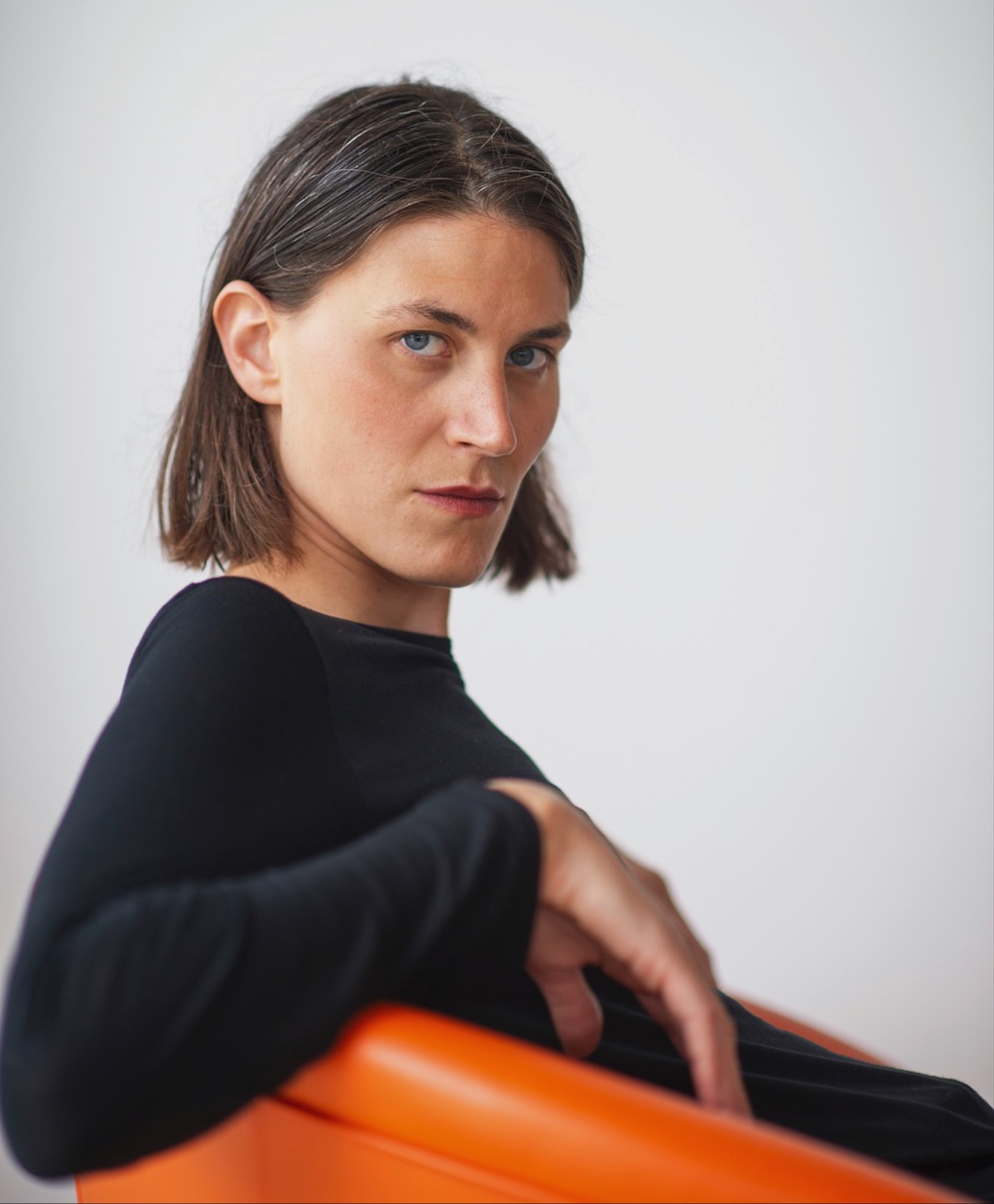
Norika Sefa is a Kosovo-born filmmaker whose work moves between fiction and documentary. Her debut feature Looking for Venera (2021) announced her as a singular new voice, winning multiple prestigious awards. Her latest film, Like a Sick Yellow (2024), is an avant-garde documentary that expands her bold, visually driven approach. A writer-director who also produces and edits her work, Norika is a member of the European Film Academy (EFA).
Portrait © John Pavlish
Media Partners:






"A desk is a dangerous place from which to watch the world" (John Le Carré)