Search
To search for an exact match, type the word or phrase you want in quotation marks.
A*DESK has been offering since 2002 contents about criticism and contemporary art. A*DESK has become consolidated thanks to all those who have believed in the project, all those who have followed us, debating, participating and collaborating. Many people have collaborated with A*DESK, and continue to do so. Their efforts, knowledge and belief in the project are what make it grow internationally. At A*DESK we have also generated work for over one hundred professionals in culture, from small collaborations with reviews and classes, to more prolonged and intense collaborations.
At A*DESK we believe in the need for free and universal access to culture and knowledge. We want to carry on being independent, remaining open to more ideas and opinions. If you believe in A*DESK, we need your backing to be able to continue. You can now participate in the project by supporting it. You can choose how much you want to contribute to the project.
You can decide how much you want to bring to the project.
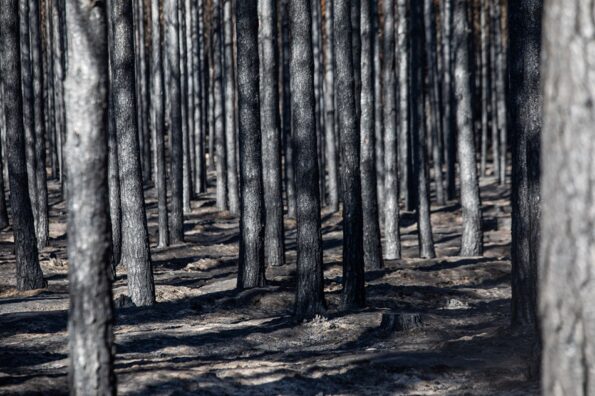
Living a contemporary life demands developing a paradoxical tolerance for collapse. We face a daily, anesthetizing normalization of crises. For instance, forest fires that devour entire landscapes are no longer perceived as isolated climate anomalies but rather as the physical and literal manifestation of a structural problem. As someone from Castile and León, as a body that inhabits and moves through this wounded landscape, this reality is not a theoretical abstraction but rather a shared scar.
In a world in which official discourse has deliberately been rendered unthinkable (saturating us with catastrophic data to block our political imagination), art cannot limit itself to documenting the ruins and ashes. Aesthetic practice must be the vector that joins rage and radical tenderness, the biological decomposition of ecosystems and the emergence of new forms of cooperative life and community health. In his book Incendios[1]Pedregal, A. (2025). Incendios. Una crítica ecosocial del capitalismo inflamable. Madrid: Verso Libros (Fires), Alejandro Pedregal argues that we are witnessing the material realization of inflamatory capitalism. He argues that the logic of capital operates analogously to that of uncontrolled fire, that is, as an implacable voracity that spreads at a molecular level, consuming ecosystems, subjectivities, and social fabric, leaving in its wake a homogeneous trail where ashes, ruin, and total dispossession triumph.
Faced with this panorama of a scorched planet, the question of the scope of action for political and artistic expression becomes urgent. How can we respond to the systemic framework that transforms everything into pyro-pornography? The institutional response seems exhausted, trapped in the very logic it seeks to combat.
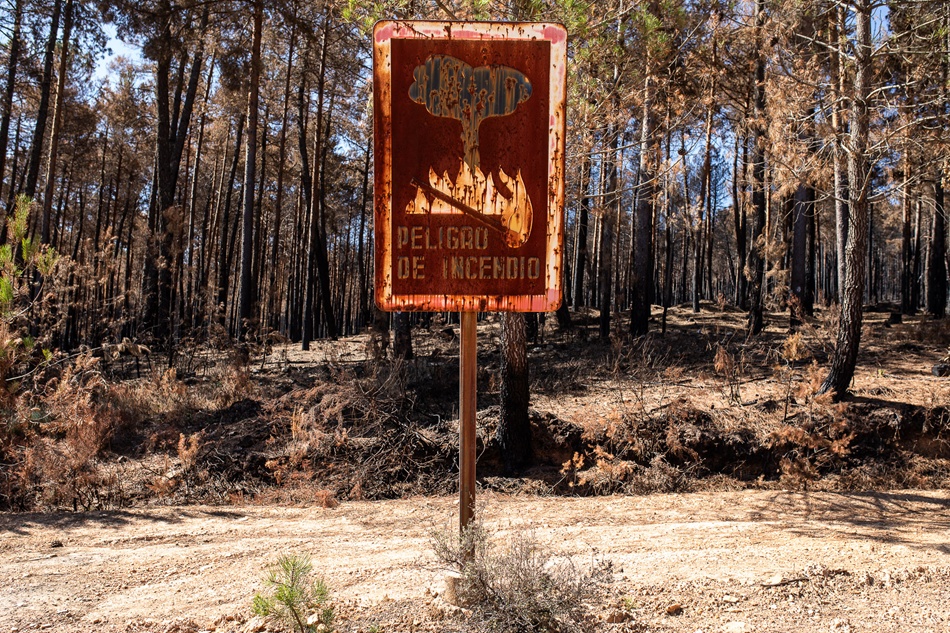
Paisaje tras el incendio de la Sierra de la Culebra, 2022. Fotografía de Nico Rodríguez
It is at this point that we need to reclaim Amanda Piña’s proposal of “soft resistances” (receptive, open, and radically generative of alternative realities), or Hellen Torres’s idea in Especies del chtuluceno[2]Torres, H. (2019). “Especies del Chthuluceno”. En M. Ptqk (Ed.), Especies del Chthuluceno. Panorama de prácticas para un planeta herido (pp. 15-32). Bilbao: Gabinete Sycorax / Belleza … Continue reading (Chthulucene Species) that we need “attentive listening, acceptance, keen eyes and open pores, the desire for something to happen that we don’t quite know what it will be but that must be balanced, generative, and kind. Reason and self-centered subjects are of no worth here, instead what is needed is responsible articulations, affected bodies that affect, space for movement, trust, care, and harmony.” What is needed is other ways of acting and relating that go beyond the limits of the human and embrace the other-human, an aesthetic and existential praxis firmly anchored in somatic experience, capable of breaking the paralysis that shock imposes on us.
It is in the scorched earth that the urgency of redefining desire emerges in order to strip it of its neoliberal capture as a mere engine of individualistic consumption. Desire is understood through its concomitances (those affective, biological, and political phenomena that coexist, accompany, and modify each other). This desire does not arise solely from deprivation nor is it an isolated impulse, instead it is a relational field of forces, a mutual correspondence that occurs simultaneously with the crisis. To desire today is to activate the friction of collective bodies that refuse social atomization.
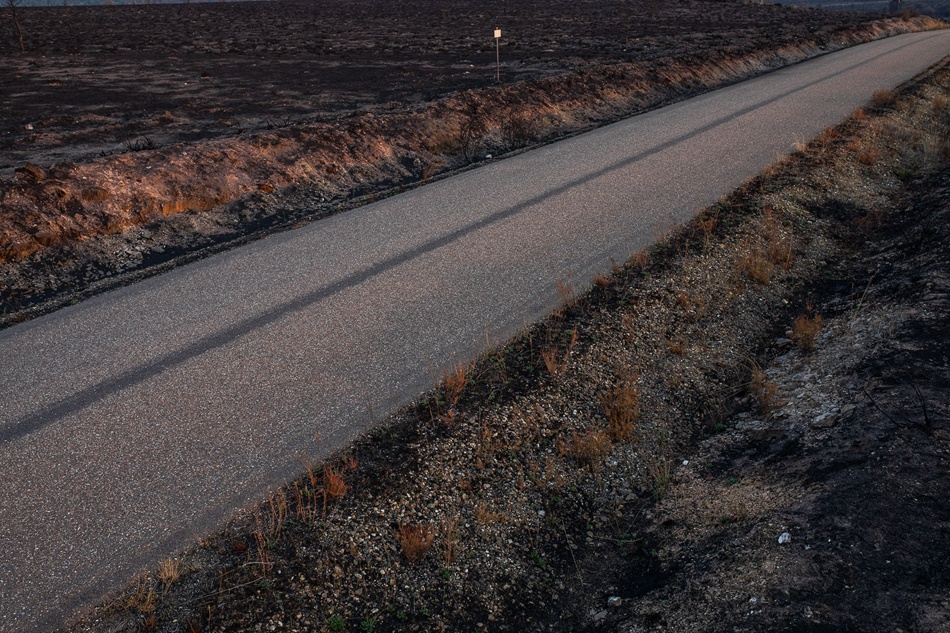
Forest fire in the Sierra de la Culebra, 2022. Photograph by Nico Rodríguez
For this desire to be truly operational, it must be articulated through situated devices. This is where artistic and aesthetic practice assumes its true political power, serving as a bridge that sutures the tension between the dispositional (the way of being and organizing reality that focuses on possibility, tendency, deployment and openness to change) and the repertorial (the living archive of competencies, sedimented knowledge, common memories and ordering technologies that provide internal coherence and persistence to a community). Projects such as Endangered Human Movements by Amanda Piña, in which movements in danger of extinction are recovered, and The Market for Useful Knowledge and Non-Knowledge by Mobile Akademie, where a device for the transmission of useful and useless knowledge is created, are examples that the art that interests us is not that which illustrates the catastrophe nor that which retreats into commercial self-referentiality, but rather that which functions as a laboratory of the dispositional with a sensitive, corporeal and vulnerable opening towards the unthinkable
Our desires must be capable of establishing new repertoires. This implies that the aesthetic experience must invent new relationship techniques, choreographies of care, architectures of the encounter and affective technologies. This is an attempt to make the aesthetic process function as a tool of collective repair in territories that have an invisible and devastating enemy, namely, the impact on the mental health of neighbors. Sustaining the vibration of communities necessarily requires taking care of their mental health and providing it with a living archive of sensitive skills so that the pain does not evaporate into shock or paralysis.
Burning is the only way to destabilize the static landscape of the programmed disaster to which everyday life leads us. Proposing that we are the ones who cause these fires implies consciously introducing that vibration into the machinery of the abnormal lives that we inhabit, forming an active part of the biochemical and affective reaction to the fires. Desire finds its political power in the balance between the dispositional and the repertorial and it requires maintaining ourselves in a state of absolute disposition (open to overflow, affective drift, and vulnerability), but also taking care to translate that vibration into stable repertoires. The outbreak of fire is not enough, we need to transform the ashes into techniques of mutual support, affective architectures and common memories capable of giving material persistence to the alternative worlds that emerge. We must stop documenting the landscape after the fire and instead facilitate possible, sensible worlds.
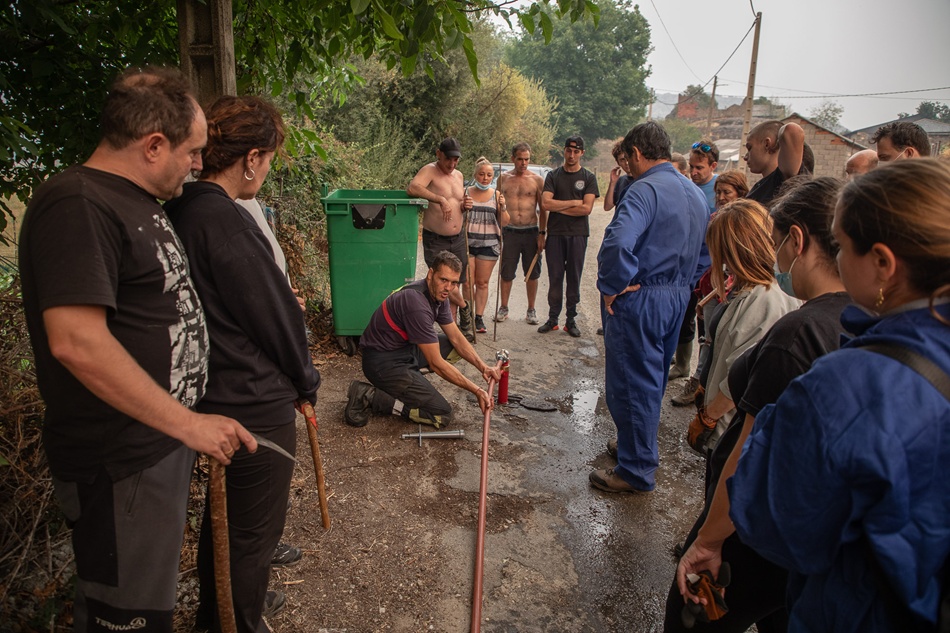
The community gathered during the fire at Lake Sanabria, 2025. Photograph by Nico Rodríguez
To understand the scope of this aesthetic and political combustion, it is essential to take note of the triad of paradigms that Stephen Pyne deploys in his book Fuego, salvajismos y domesticaciones[3]Pyne, S. (2017). Fuego. Salvajismos y domesticaciones. Santiago de Chile / Cantabria: Hifas Editoriales / Humus Ediciones (Fire, Savagery and Domestication). Pyne offers us a methodological map in which the physical, the biological and the cultural intersect, providing an ideal structure to analyze how artistic creation can operate as an ecosystem catalyst.
First off, this physical paradigm reminds us that fire is a chemical reaction strictly shaped by the material characteristics of its environment. Transferred to the field of desire in Concomitentes, this makes us aware that no artistic practice arises in a vacuum, that all action is conditioned by the infrastructure, tensions and precariousness of the territory. Secondly, the biological paradigm introduces a crucial ontological inversion, namely, that life is the reason fire exists. Fire requires biomass, accumulated organic matter, in order to exist. Likewise, cultural resistance and transformative desire are only possible because there is a prior communal vitality, an accumulation of shared experiences and subterranean affect waiting for the right spark to ignite.
Finally, the cultural paradigm points directly to the responsibility of human agency, that is, what communities do or fail to do, directly or indirectly, with respect to fire and its compositional regimes. It is here that the governance of the fire is defined, the collective decision of what should be preserved and what defunct structures should be handed over to the purifying flames of transformation.
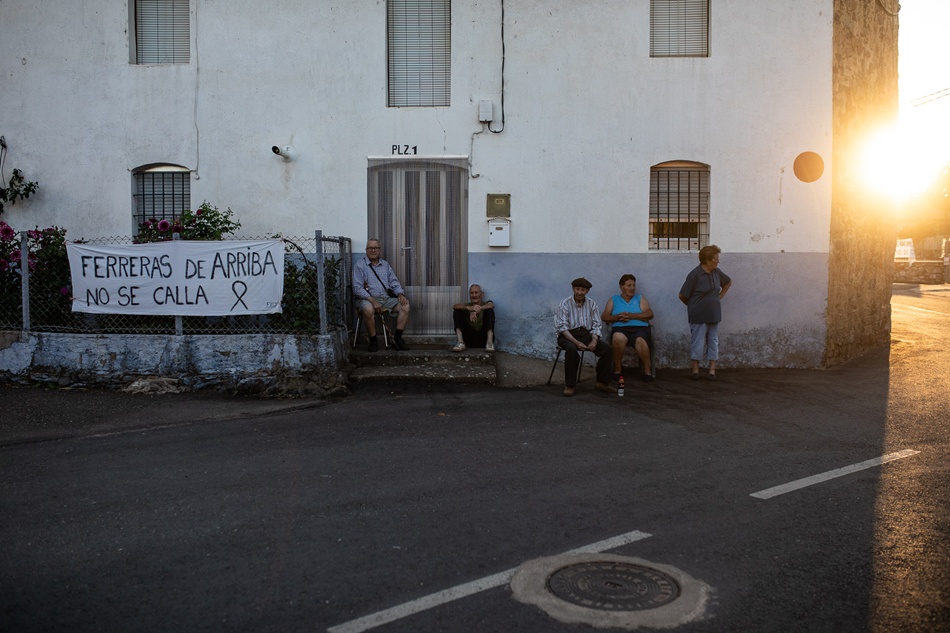
The village of Ferreras de Arriba following the forest fires in the Sierra de la Culebra, 2022. Photograph by Nico Rodríguez
The intertwining of the biochemical paradigm and the cultural paradigm allows us to think about community processes of artistic creation in their eco-political dimension. As in a fire, communities are the biomass that allows the desire/flame to arise and they are the ones who decide what to do with it.
The figure of the anyone[4]Moreno-Caballud, L. (2017). Culturas de cualquiera: Estudios sobre democratización cultural en la crisis del neoliberalismo español. Madrid: Acuarela Libros / Antonio Machado Libros. acquires a central relevance in these places. The anyone does not represent an anonymous mass but rather the singularities dispossessed of corporate privileges that, nonetheless, acquire the tools of creation. These communities, by assuming fire as an element of metabolic transformation, not only describe or transform their territory but also initiate horizontal processes aimed at subverting, regenerating and radically transforming their own vital ecosystem.
In the face of a world that has become unthinkable, burning is an act of vital affirmation and a reconfiguration of desire. The only valid response to the implacable pyre of capitalism is the generation of sovereign and community fires. Artistic and affective fires that destroy the normality of shock and which open, through soft resistance, breathable spaces where the human and the other-human can cohabit again. The desire to burn in a collective combustion stops people from being passive spectators of the end of the world and helps them to become the biochemical alchemists of its reconstruction.
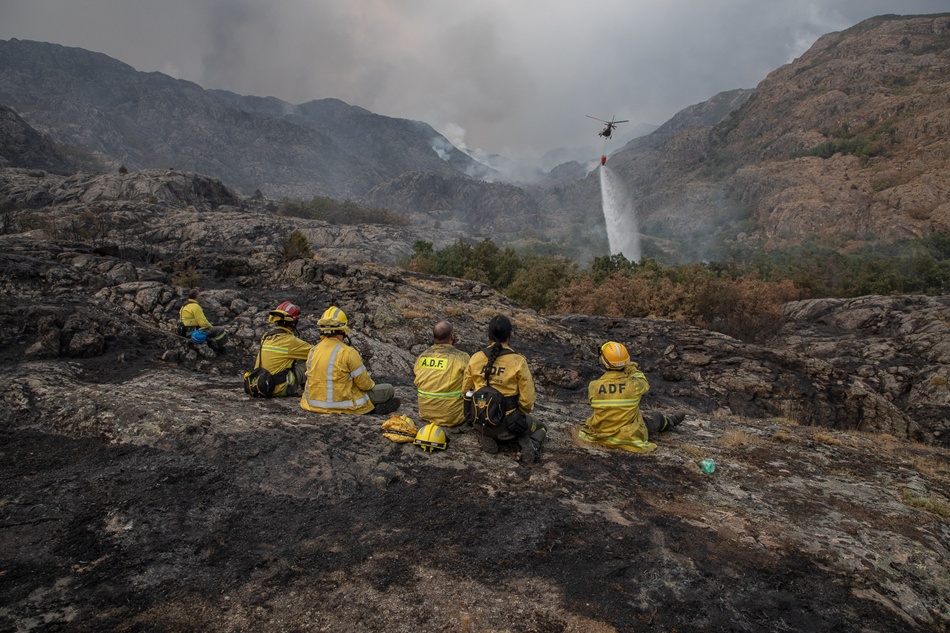
Fire-fighting operations at Lake Sanabria, 2025. Photograph by Nico Rodríguez
[Featured image: Landscape after the wildfire of Sierra de la Culebra, 2022. Photograph by Nico Rodríguez.]
| ↑1 | Pedregal, A. (2025). Incendios. Una crítica ecosocial del capitalismo inflamable. Madrid: Verso Libros |
|---|---|
| ↑2 | Torres, H. (2019). “Especies del Chthuluceno”. En M. Ptqk (Ed.), Especies del Chthuluceno. Panorama de prácticas para un planeta herido (pp. 15-32). Bilbao: Gabinete Sycorax / Belleza Infinita. |
| ↑3 | Pyne, S. (2017). Fuego. Salvajismos y domesticaciones. Santiago de Chile / Cantabria: Hifas Editoriales / Humus Ediciones |
| ↑4 | Moreno-Caballud, L. (2017). Culturas de cualquiera: Estudios sobre democratización cultural en la crisis del neoliberalismo español. Madrid: Acuarela Libros / Antonio Machado Libros. |
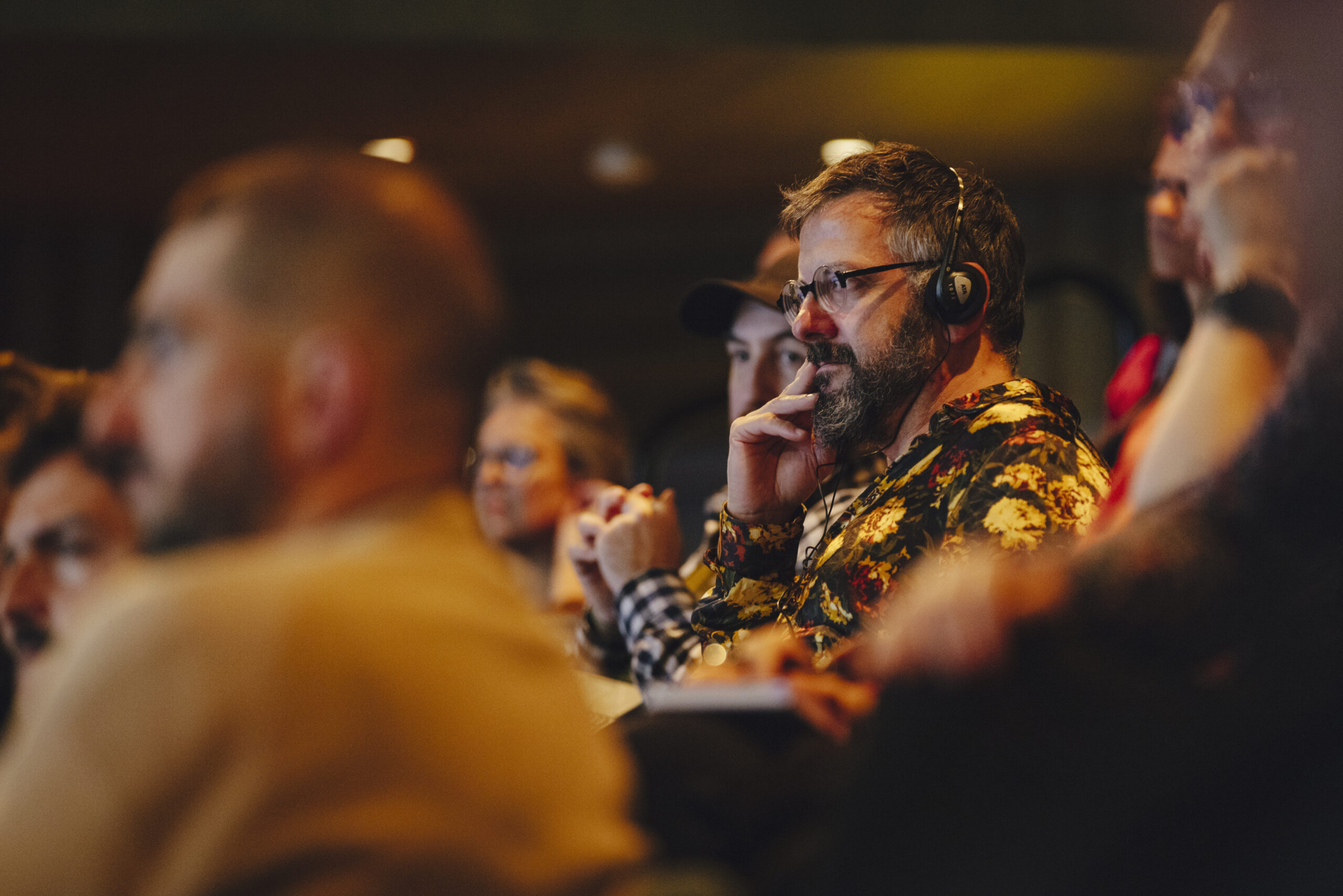
Alfredo Escapa Presa is an artistic mediator, creator and researcher specialising in the performing arts and collaborative creation. He organises social gatherings that bring together art, education and research to foster systems of critical exchange with diverse communities. His works are conceived as site-specific processes in which the outcome is inseparable from the collective that creates it.
He is a member of La rara troupe (a collective focusing on audiovisual creation and mental health, which has exhibited at the Berlin Biennale and the MNCARS) and collaborates with artists such as Nilo Gallego and Oscar Gómez Mata. He has facilitated eco-social mediations at Concomitentes (Narrativas solares and Secuelas energéticas) and in projects such as Arròs and Tierras pobladas. He is also co-author of books on critical education in museums, ecological assemblages and artistic mediation.
Media Partners:



"A desk is a dangerous place from which to watch the world" (John Le Carré)