Search
To search for an exact match, type the word or phrase you want in quotation marks.
A*DESK has been offering since 2002 contents about criticism and contemporary art. A*DESK has become consolidated thanks to all those who have believed in the project, all those who have followed us, debating, participating and collaborating. Many people have collaborated with A*DESK, and continue to do so. Their efforts, knowledge and belief in the project are what make it grow internationally. At A*DESK we have also generated work for over one hundred professionals in culture, from small collaborations with reviews and classes, to more prolonged and intense collaborations.
At A*DESK we believe in the need for free and universal access to culture and knowledge. We want to carry on being independent, remaining open to more ideas and opinions. If you believe in A*DESK, we need your backing to be able to continue. You can now participate in the project by supporting it. You can choose how much you want to contribute to the project.
You can decide how much you want to bring to the project.
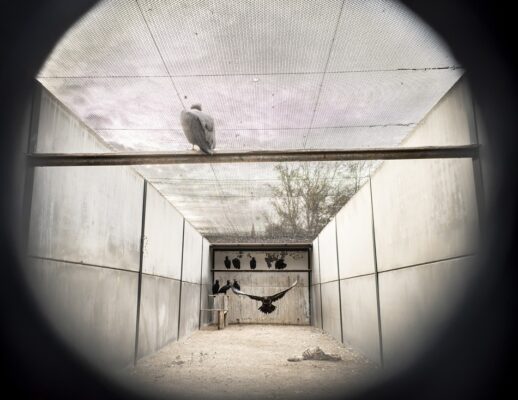
“The hardest part is the frustration. When you’ve been running around all day, nonstop, and in the end you see that it hasn’t done anything, that it’s not enough, that they die before reaching the hospital or that they’ll never recover.” The staff at AMUS, a wildlife hospital in Villafranca de los Barros (Badajoz) experience many difficult moments. They work with all kinds of animals that arrive injured at the hospital, emergency calls that often have a difficult recovery. Electrocuted birds or chicks that have fallen after suffering heatstroke, poisoned animals, animals injured by plastic waste, run over, or attacked by poachers. Most cases tell us how the bond between humans and the land is riddled with normalized violent practices. Many animals must be euthanized after suffering irreparable damage, when a return to the wild is impossible. I see the injuries they suffer, the cruelty they reflect, and I wonder how the hospital staff manages to keep going with such energy, how they process the anger and frustration. “I focus on those who pull through. And then keep going.”
There is a yearning for a better world. An immense yearning, capable of overcoming the cruelty and harassment suffered by wild animals in an increasingly industrialized rural area. Many of the patients who arrive at the hospital come after accidents with power lines, their burned bodies the mark of the electrification of the countryside. Many are victims of road accidents, and many don’t even arrive, crushed by the mechanization of agriculture. But the AMUS staff keeps going, along with the large group of volunteers they rely on, and the patients themselves, all the animals that recover and return to the wild. I am overwhelmed by the strength with which small animals recover from malnutrition or injured animals overcome fractures and grow strong enough to run or fly again. An immense desire to live and overcome a fragmented world, full of harsh environments, designed for agricultural and energy production, for the movement of cars and trucks, not for wildlife.
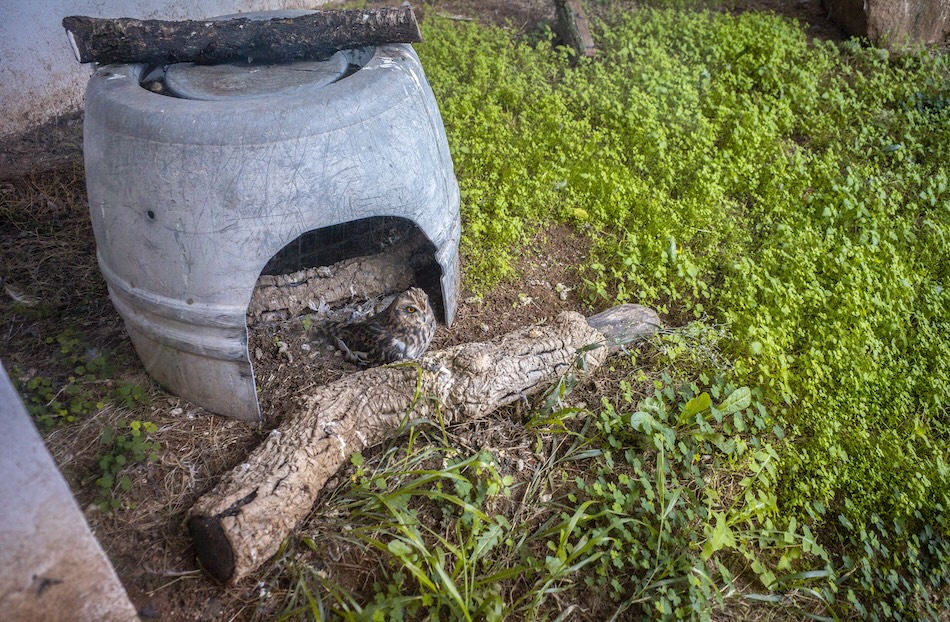
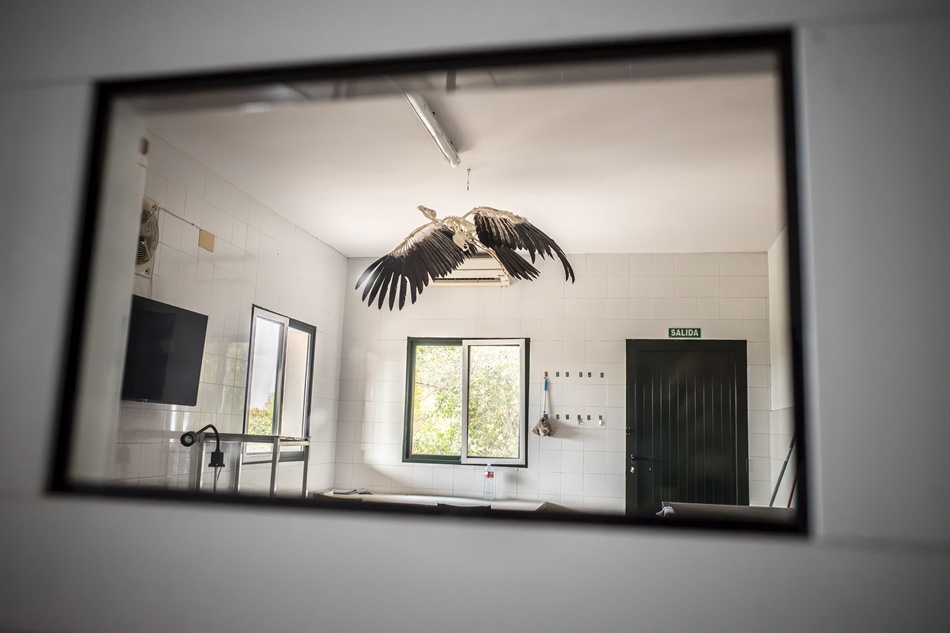
AMUS began more than 30 years ago, and over the years it has grown into a leading institution in wildlife rehabilitation fighting for the integrity of habitats in which different species need to live. With a brilliant team of professionals and a broad network of volunteers, their work ranges from rescuing injured animals and performing emergency surgeries to caring for hundreds of young animals during the summer months, collaborating with international networks to recover endangered species, and supporting research projects. It’s a vast array of tasks on many levels.
“We’re saving the world!” exclaims one of the AMUS workers as we head to clean the enclosure where some owls are kept. “Think about it. We clean this and it reduces bacteria and prevents them from getting infected. If they don’t get sick, they can recover and go back out and that makes the world a slightly better place. Every little bit helps!” She beams with joy as we scrub the walls and prepare food for the birds of prey.
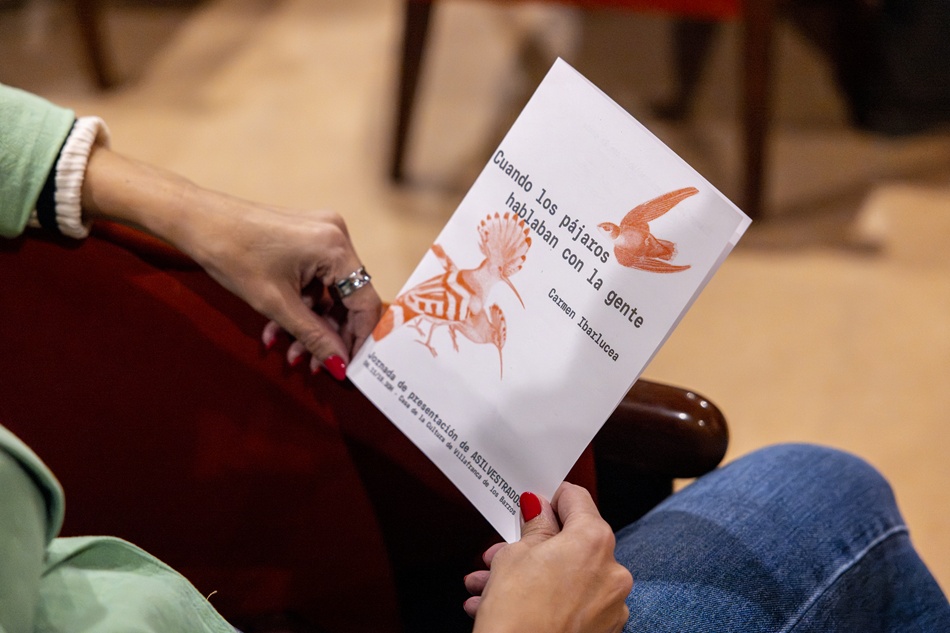
I have come to AMUS to carry out a mediation process with Concomitentes that we collectively call Asilvestrados (Wilding). We ask ourselves how an artistic project can help the recovery of wildlife. We are still in the first phase of the project, identifying and specifying the problems we can deal with, defining the limits and possibilities of this artistic commission. The challenge arises of finding ways to relate to a natural environment that we have forgotten or that is disappearing, of valuing and strengthening the volunteer networks that support AMUS, making visible the daily challenges that its workers have and, above all, the conditions that endanger the wild species of Extremadura. The vast majority of animals that arrive at the hospital are there due to human causes that could have been avoided. In this first phase of the project it has been essential to join a few volunteer work sessions at AMUS to learn first-hand about the challenges and difficulties that exist every day. Learning occurs through experience, putting the body to work, using our hands.
After the first volunteer sessions, a person from the center asks me how I feel. “How are you doing? Do you like it?” I know you expect an affirmative and enthusiastic response. Almost everyone who works or volunteers at AMUS feels enormously passionate about their work and, even more than their work, about animal life. There is enormous satisfaction in spending hard, repetitive, tiring, hot or cold hours of work putting energy into saving animal lives. I understand the warmth and energy that comes from spending time with wild animals, it fill the world with meaning. I understand that, but, for whatever reason, I don’t fully agree with it. I leave work the first mornings, after feeding baby swifts, putting crickets and tenebrios in their crops, and I think no, I don’t like the experience, I don’t find pleasure or enjoyment in the work that is done daily at AMUS. Many tasks seem hard to me and many others cause rejection (although everything is easy to get used to), but I have found another satisfaction. A sense of world that does not intersect through individual pleasure but rather with collective action, from respecting the world. Another form of desire emerges, a shift from individual desire, from hedonistic enjoyment, towards a collective desire to give meaning to the world through presence.
The AMUS hospital is full of stories of resilience in radically adverse conditions that show us an overwhelming desire for life. This makes the classification system of existence under a capitalist system unintelligible. The words of Jack Halberstam in his book “Wild Creatures. The Disorder of Desire” help me understand it: “…the wild is an affective space where temporality is uncertain, the relationship is improvised and the future is suspended. […] If nature has anything to tell us, it is this: dismantle the world in which you live, get rid of its incessant commitment to the same, ignore the demands for more, and accept being with the wild, accept the wild, surrender to the wild, and float or drown in its embrace.” Aware of the risk of romanticizing it, the experiences of the “bugs” who pass through AMUS should be a source to learn that no condition marks destiny. Animals do not want to be locked up in the hospital and recovery processes always seek to end with the patient’s escape, flight in liberation or running to a place where they can no longer be seen. These experiences reflect a desire for wild life that does not fall within the parameters of capitalist human desire. The patients who go through AMUS are not going to turn around before leaving to say thank you, nor are they going to give a gift to the caretakers who have made an effort in their recovery. This care work is driven by a sense of a common world and sacrifice. Placing artistic practice in this context confronts the neoliberal individual desire that marks much of the circuits of artistic creation with a communal desire that dilutes the individual subject.
“Everyone wants to help animals until they have to sacrifice something of their life.” It is another of the phrases that I have noted in the first conversations with the AMUS team. Supporting the desire for wildlife entails the sacrifice of an anthropocentric way of life, displacing the human subject through concrete acts, not as metaphor. Small acts that accumulate, giving shape to an anthropological transformation.
“The worst thing is the frustration when you aren’t able to save an animal. So, what you have to do is focus on what you are achieving. And keep doing it.” The challenge is so great that trying to think about it as a whole can be an impediment. We must respond to it with action, with concrete, daily and collective tasks. Creating a world from specific acts that save a life, heal a wound, helping an animal fly again. Small tasks that give a new meaning to the world intervene in the symbolic sphere by doing things. The artistic work with which Asilvestrados will culminate must add to and enhance a process that is already happening. This will take time, but whatever it is it will not try to invent or create something new but rather recognize the processes and gestures that are already underway as legitimate ways of making the world. Beyond the concrete experience of Asilvestrados, one of the challenges of contemporary creation should be abandoning the centralism of individual desire in order to merge into collective work.
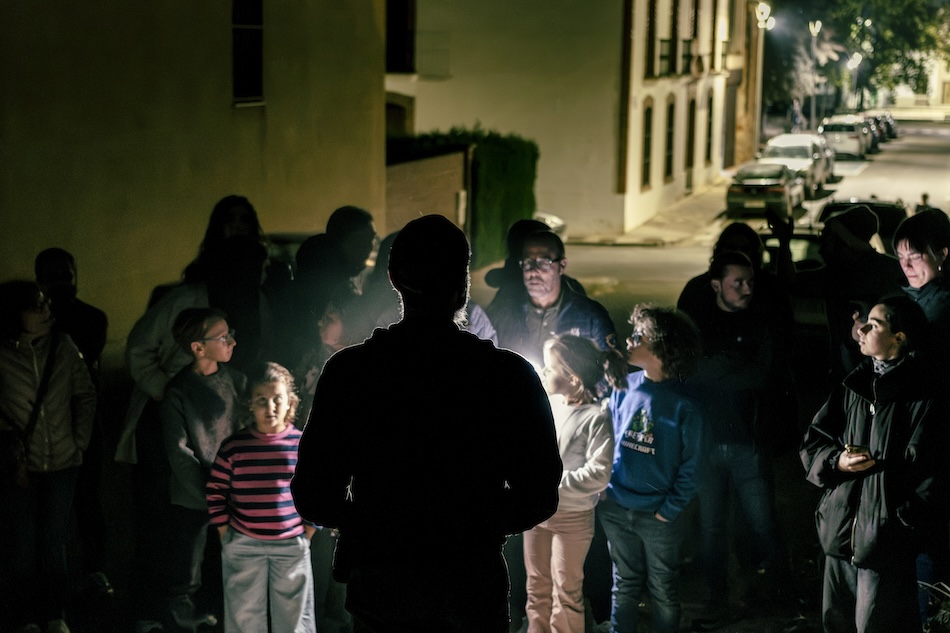
[Featured image: Animal patients in one of the facilities provided for their recovery. All images: © Félix Méndez and Verónica Rodríguez]
Jose Iglesias García-Arenal pursues an artistic and curatorial practice centred on long-term processes relating to the politics of memory and the symbolic construction of territory. He works with writing, audiovisual pieces, and community-based research and creation, particularly in non-urban contexts and within the framework of the climate and energy crisis. He is a curatorial mediator at Concomitentes, where he runs the Asilvestrados project, and since 2019 has directed Plataforma MAL, an association dedicated to artistic research and creation based on the ‘diffuse urbanities’ of the south-west of the Iberian Peninsula, through residencies, workshops and mediation processes that combat ‘cultural desertification’.
Portrait: Bernalina Producciones
Media Partners:





"A desk is a dangerous place from which to watch the world" (John Le Carré)