Search
To search for an exact match, type the word or phrase you want in quotation marks.
A*DESK has been offering since 2002 contents about criticism and contemporary art. A*DESK has become consolidated thanks to all those who have believed in the project, all those who have followed us, debating, participating and collaborating. Many people have collaborated with A*DESK, and continue to do so. Their efforts, knowledge and belief in the project are what make it grow internationally. At A*DESK we have also generated work for over one hundred professionals in culture, from small collaborations with reviews and classes, to more prolonged and intense collaborations.
At A*DESK we believe in the need for free and universal access to culture and knowledge. We want to carry on being independent, remaining open to more ideas and opinions. If you believe in A*DESK, we need your backing to be able to continue. You can now participate in the project by supporting it. You can choose how much you want to contribute to the project.
You can decide how much you want to bring to the project.
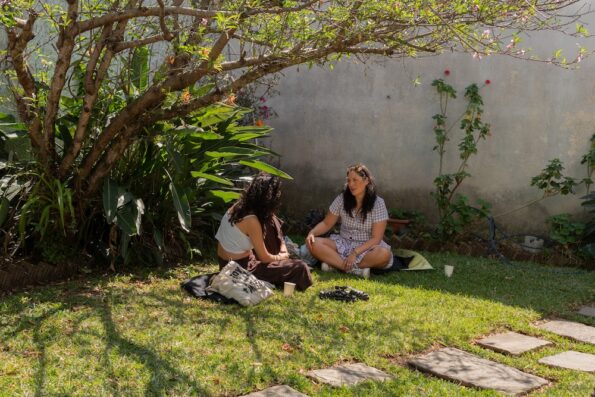
La Revuelta (The Revolt) is an independent space located in Guatemala City, a place to collectively create, meet, and build. It has an art production workshop, a feminist library, and spaces for exhibitions, training, and workshops. Beyond its infrastructure, it functions as a support network for young and feminist artists in Guatemala. Through the School of Feminist Artivism, we have supported the training of more than 60 artists. We also offer a Diploma in Guatemalan Feminist Graphic Arts Archives and a residency program. Although we have built international dialogues, La Revuelta sees itself as a deeply local organization.
After five years, we can say that we have built our own model of an art space, an independent infrastructure driven by the political question of what would have to change in the art world for women to exist within it with dignity? Our work centers on women’s sexual and reproductive rights and the transformation of the conditions under which they produce and are recognized within the art world. We don’t see feminism as a category but rather as a struggle that begins with the bodies we inhabit.
How did we get here?
In 2020, the pandemic closed spaces for gathering and deepened inequalities. Guatemala was experiencing a political and health crisis while museums, galleries, and educational spaces tried to figure out what to do. Amid this uncertainty, we asked ourselves the question: If everything closes, what do we lose?
The answer was simple: almost nothing.
None of those institutions truly supported our lives or our practices. We didn’t have high-ranking positions to lose, collections to manage, budgets to defend, or spaces we could call our own.
And precisely because of that, everything became possible.
What we did have was the shared conviction that things had to change. Our circle was full of artists, friends, and acquaintances who had been harmed by the art system. Stories of violence circulated in biennials, galleries, universities, and museums. We first shared them in confidence, but then we recognized patterns, and, finally, we learned to name them. We also began to examine normalized inequalities. Why could a man improvise in a discussion and be celebrated while a woman could spend years researching and still be questioned? Why had we normalized sharing spaces with our abuser? We didn’t just want to denounce these contradictions, we wanted to imagine what could exist instead. This began an exercise in political imagination in order to envision a world built by us and for us.
We started from a simple premise, namely, if we have nothing, we can invent everything.
We discovered that there were many more women who felt the same as us. We were angry. A flower rarely blooms in a hostile environment, but we weren’t flowers, we were enraged cacti beginning to take over the landscape.
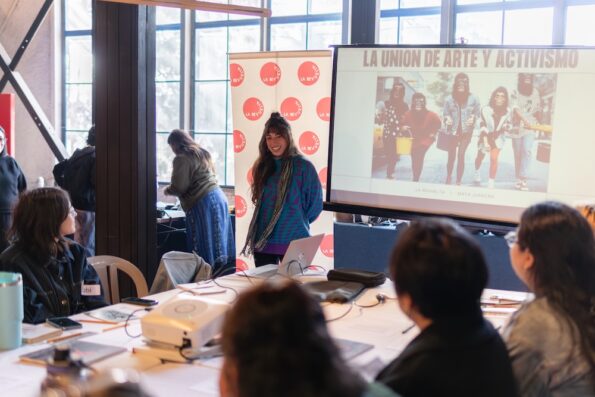
Our first art residency was called Las calles son nuestras (The Streets Are Ours). The proposal was to offer production funding and support for public space projects aimed at women and feminized bodies. We didn’t have a physical space, but if our territory was the street the city would become our first space. What we did need were resources. We became aware of something we had ignored, that is, that we had cultural capital, knowledge, experiences, relationships, and people willing to share what they knew. We decided to put it into action. We organized a portfolio workshop and, with an affordable fee, raised our first funds. Then came parties and raffles in which we sold beer and artwork. It was fundamental to discover that resources could be produced collectively and, above all, that they had to circulate.
We weren’t precarious, as the system had led us to believe, we just needed methodologies that matched our needs. We stopped waiting for legitimacy and began to seek alliances. Our greatest aspiration was our own existence. We also had to learn something more difficult, namely, to stand together in dissent.
Autonomy doesn’t mean the absence of structure. If we wanted to endure, we needed an organizational model that lived up to our ideals. The collective embraced us, but the communal explained us better. We began to talk about co-responsibility, reciprocity, and generosity. Building collectively doesn’t mean becoming the same.
Our struggle could not be limited to achieving greater representation of women within art. Just as important as disputing who enters a museum was defending the sexual and reproductive rights of women and their right to live and work with dignity. We didn’t want more women to enter the system but rather to ask ourselves what system we needed to build.
In that process, a fundamental distinction emerged, the difference between wealth and abundance. We learned to think of abundance as a peach tree. A tree bears fruit and those fruits feed birds, insects, humans and the earth. No one needs to own all the peaches for the tree to be abundant. Abundance exists precisely because it circulates.
At first we took this idea to the extreme. All funds went into projects, artists and activities. We were left out of the equation and ignored all the work that made it possible for La Revuelta to exist, until we understood that this also reproduced a well-known form of violence, that is, expecting women to support projects, communities and institutions for free.
We had to be part of the circulation. Recognizing our work, paying ourselves fees and building decent conditions was not abandoning our principles. If the resources are enough for the artists but not for the workers who make the space possible, that is still not abundance. If there is care for some and exhaustion for others, that is still not community. If dignity is not enough for everyone, then it is not dignity, it’s privilege.
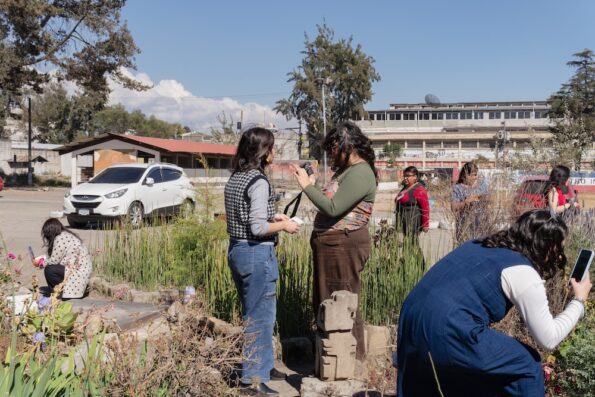
At first we paid ourselves just a fraction of the money we received, establishing that only 1% of the funds could be allocated to salaries. We all had other jobs and sometimes we contributed part of that income to support the collective. But then we got tired, and with it came complaints about the time, responsibilities and value of our work. So we began to ask ourselves, how can we talk about labor rights within a self-managed and self-sustaining collective in which resources were always limited?
We looked around us. Who in Guatemala received a fair salary? Who had social security, vacations and the possibility of thinking about retirement? A definition appeared that transformed our way of understanding ourselves, namely, that we were cultural workers.
We were not women who loved art so much that they were willing to work for free. With our time, knowledge, bodies and work we supported a part of the culture. If we were workers, then we had rights. That meant reducing projects when there were no resources, monetizing time worked and including fees in budgets. We learned that saying “It’s not enough” could also be a political decision.
For too long the cultural sector has survived thanks to people who work for less, work for free or turn their precariousness into a demonstration of commitment. We no longer wanted to romanticize that.
Paying ourselves a better wage wasn’t enough, though. If we achieved decent wages only within La Revuelta we would only have been a small exception within a deeply precarious system. The question had to grow to address how we could make our experience produce changes for other cultural workers?
Salary ceased being an internal discussion and became a structural struggle. We approached organizations in the cultural sector and formed an ad hoc committee to promote access to social security for cultural workers in Guatemala. Dignity cannot depend on just obtaining funds. It cannot last just as long as a subsidy. It can’t end when a project ends. Labor dignity needs structures capable of lasting.
After five years, we have learned that we do not want to resemble that which we question. La Revuelta exists in a specific territory and builds its methodologies from the women who inhabit it. Although today we have structure, programs, residencies, exhibitions and archives, we continue to resist thinking of ourselves solely as an institution.
We think of ourselves as a movement. A movement supported by an idea that in our context is still radical, namely, that women deserve decent conditions to create art.
We wanted decent wages. We wanted time. We wanted care. We wanted to be able to get sick without everything collapsing. We wanted to create, do research, accompany other artists and build knowledge. We also wanted something that rarely appears in the strategic plans of cultural institutions, that is, we wanted to be happy.
We don’t believe burnout is proof of commitment. We don’t believe that precariousness produces better art. We don’t believe that suffering from working in culture is inevitable. After five years, we understand that building another cultural institution was not enough. We had to imagine another way of relating, of working, of distributing resources, of exercising power and of accompanying each other.
A feminist infrastructure cannot be measured only by how many exhibitions it produces, how many artists it brings together, or how much funding it obtains. It is also important how the people who support it live. Therefore, among our measurements, there is one that remains fundamental, namely,
The right to enjoy what we build. To work without destroying ourselves. To create without asking permission. To be together without having to be equal. To imagine futures that do not reproduce the violence of the structures that we question.
Maybe that has been our true revuelta. Not just finding a space for women within the art world, but daring to imagine a world of art in which it is worth living.
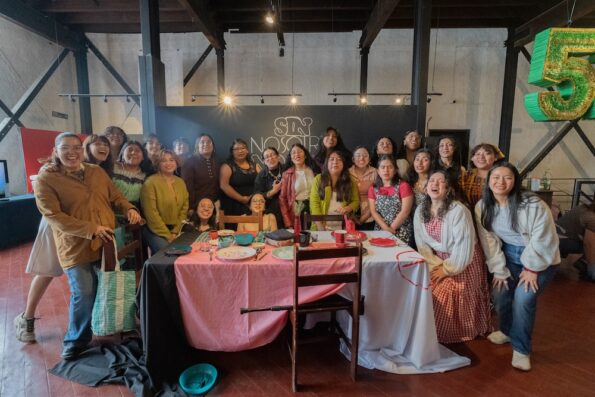
[Photos courtesy of La Revuelta]
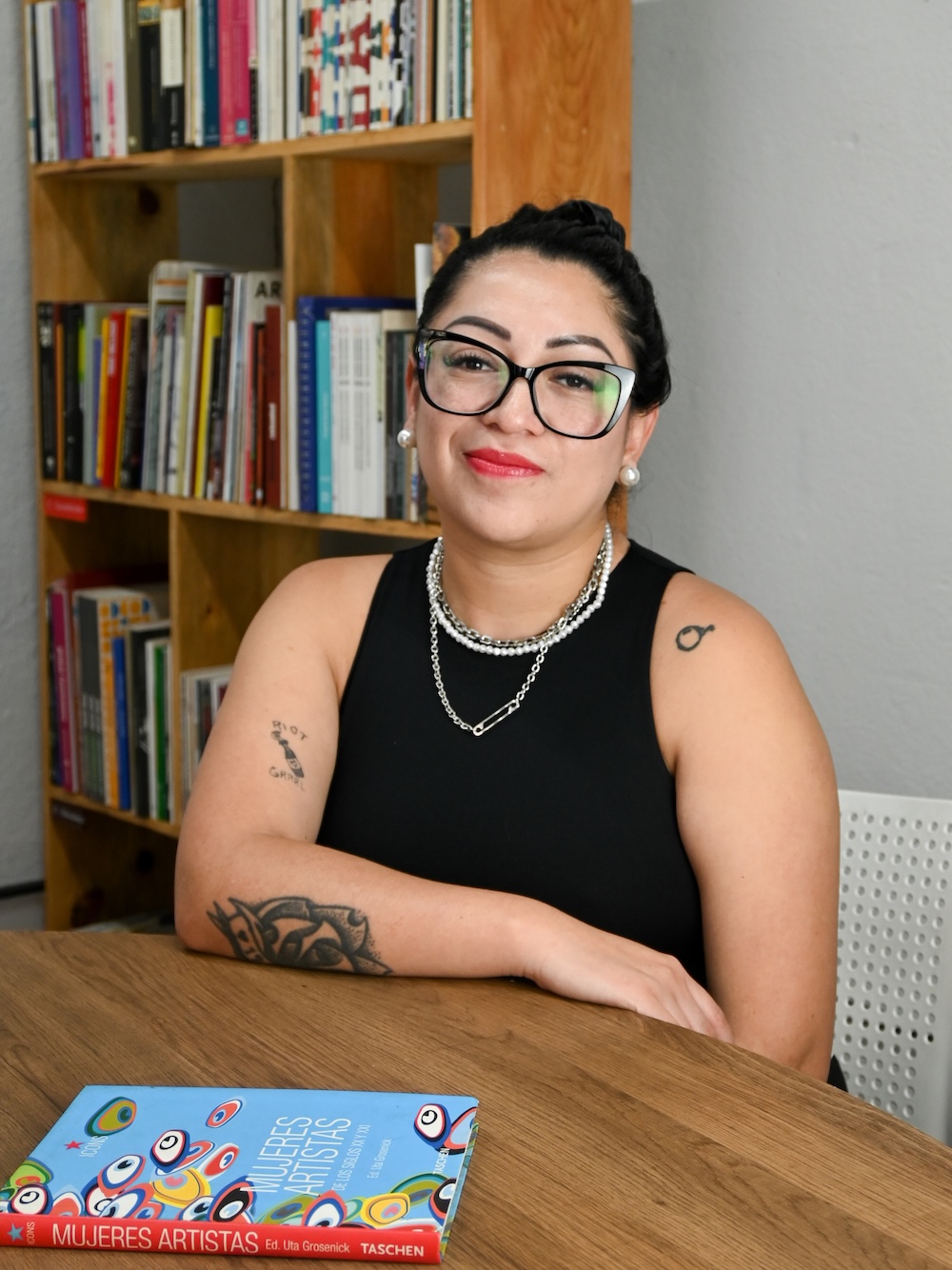
Maya Juracán (Guatemala City, 1987) is a curator, writer, and researcher. Her practice focuses on curating as a critical and community-oriented tool for considering art in dialogue with history, territories, and social dynamics, positioning art as a catalyst in the pursuit of human dignity. She has founded dissident initiatives such as Proyecto 44 and the Bienal En Resistencia—a self-organized biennial that occupies public space in Guatemala to support social resistance movements—and is a co-creator of La Revuelta, a feminist curatorial collective in Central America committed to memory, advocacy, and community building.
She has curated exhibitions at the MAC in Panama and the MADC in Costa Rica, and has been a speaker at MoMA PS1, the University of Michigan, OCA Norway and Bergen Assembly, amongst others. In 2024, he acted as an adviser to the Creative Time Summit. His writings have been published by Museo del Chopo, Buchaca, Brill’s and PHAIDON.
Media Partners:






"A desk is a dangerous place from which to watch the world" (John Le Carré)