Search
To search for an exact match, type the word or phrase you want in quotation marks.
A*DESK has been offering since 2002 contents about criticism and contemporary art. A*DESK has become consolidated thanks to all those who have believed in the project, all those who have followed us, debating, participating and collaborating. Many people have collaborated with A*DESK, and continue to do so. Their efforts, knowledge and belief in the project are what make it grow internationally. At A*DESK we have also generated work for over one hundred professionals in culture, from small collaborations with reviews and classes, to more prolonged and intense collaborations.
At A*DESK we believe in the need for free and universal access to culture and knowledge. We want to carry on being independent, remaining open to more ideas and opinions. If you believe in A*DESK, we need your backing to be able to continue. You can now participate in the project by supporting it. You can choose how much you want to contribute to the project.
You can decide how much you want to bring to the project.
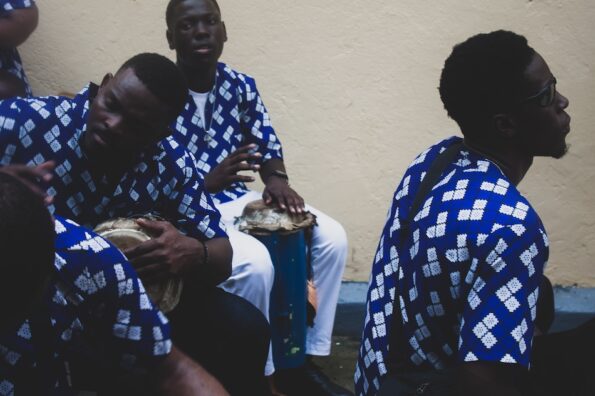
Bonkó ñánkue is a Creole ritual that combines dance, performance, song, and percussion. This tradition originated in Fernando Poo (Bioko) from the encounter between slaves brought to the island by British colonists between 1827 and 1843 who formed an “emancipated” society known as the Fernandinos, and the Abakuá Ñáñigos who were deported from Cuba by the Spanish Crown from 1862 until the end of the same century. From this encounter was born the syncretic fusion called Ñiñingo Ñánkue, and this fusion raises the question that runs throughout this article, namely: How do Afro-descendant traditions create their own survival strategies?
The direct origin of this phenomenon lies in the Abakuá Brotherhood founded around 1836 in Cuba by people of the Efik nation deported from Calabar who transformed their rituals, traditions, dances and songs into a new cultural expression based on body and performative actions. They concealed their myths within Roman Catholic dogma, embroideried their secrets in vibrant patterns, and hid their messages within the movements of their dances. This technology, inherited from the Ekpe society (a hermetic cultural tradition brought by the Efik from their homeland) not only allowed for cultural preservation, unlike other enslaved communities whose identities and cults disappeared into oblivion, but also made them the most representative Afro-descendant religion of the time. After gaining power, they began to intimidate institutions and governing bodies by transforming their community’s ritual society into a guarantee of employment and protection.
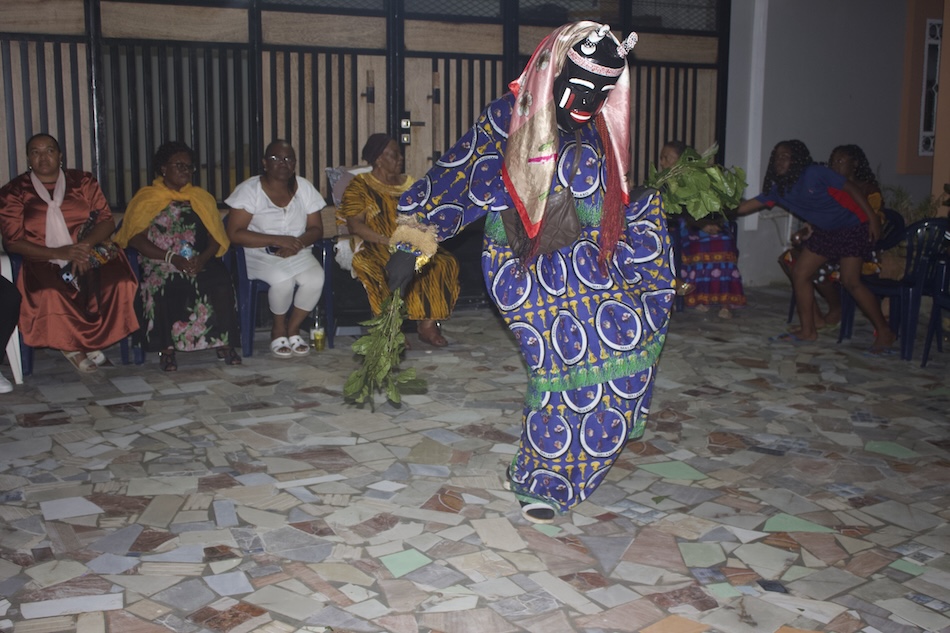
In response, the colonial repression unleashed by the Spanish Crown and the Cuban Creole elites was relentless, associating Ñañiguismo with violent crime, witchcraft, and an “evil lifestyle.” However, neither arrests, murders, nor exile to prison islands in Africa managed to extinguish Abakuá as a religious and cultural identity.
The Bonkó Ñánkue was born precisely from this punitive deportation, as the very bodies expelled from Cuba reconstructed, on the island of exile and within the Fernandina community, social and ritual continuity. Exile did not destroy their cultural technology, instead it transplanted it, and with this forced dispacement something new was born.
Within this context, this article traces a genealogy of bodies that crossed the Black Atlantic, a term coined by Paul Gilroy who proposed thinking of Black diasporic identity not as a fixed root (a pure origin to which to return) but as a route of transatlantic circulation. Thus, we can connect these African ritual practices with traditional Black and queer resistance that emerged in the 20th-century American urban context within two urban cultures, namely, Detroit techno and Harlem ballroom-voguing, both of which were subjected to similar hostile ecosystems. In this text, we attempt to understand how these cultures have managed to survive and preserve their practices through transformation and innovation.

Techno Was Not Born in Berlin
Techno was born in the early 1980s in Detroit, in the suburbs of Belleville, and more specifically, at the hands of Juan Atkins, Derrick May, and Kevin Saunderson, collectively known as the Belleville Three. At that time, Detroit was a city devastated by deindustrialization, racial segregation, and institutional neglect, so much so that the automotive industry, which had defined the city’s Black working-class identity, was on the verge of collapse. Violence, economic collapse, and the community’s despair became the thematic raw material of Detroit’s sound, and this landscape of ruin directly shaped the industrial and desolate character that defined the city’s imagery.
Within this landscape of ruins, these three Black teenagers synthesized the possibilities of Black electronic technology and Afrofuturist, speculative, and Afrodiasporic practices to imagine a sonic fiction for world-building, sound as a way of imagining possible futures with bodies invalidated by a social circumstances[1]Dan Sicko, Techno Rebels: The Renegades of Electronic Funk, 1999..
When Atkins played his first single on the radio, the audience had no idea that he was a black kid from Detroit. Instead, people thought the music came from Europe, thus revealing how the dominant ideology could not conceive of technological and musical innovation coming from black bodies. What the official story also often omits is that this sound grew up in deeply queer context. DJs like Ken Collier and Stacey “Hotwaxx” Hale were part of a techno club culture that brought together a city divided by race, class, sexuality and gender identity to create a common space of belonging. Hale explained in an essay for Nylon magazine (2018) that the scene was a sexual refuge since almost all the leading DJs were queer. This queer genealogy was filtered out in its voyage to Europe.
The extraction was consummated with the fall of the Berlin Wall in 1989, when Dimitri Hegemann brought Detroit techno to a bank bunker reconverted into the Tresor club. A music born of ruin and racial marginalization was redefined as the soundtrack of German reconciliation. The anthropologist Frédéric Trottier-Pistien pointed out in The Worlds of Techno in Detroit (2018) how, as it became popular in Europe, this genre began to lose its roots and the narrative of its struggles. The support communities for minorities that the dancing and the music characterized became invisible as the artistic environment became racially homogenized.
Extraction was not the only way techno reached Europe. Another network, one that was much more precarious and persecuted, supported it out of ideological affinity rather than commercial interest. The manifesto recorded in 1992 on the first maxi-album of the Underground Resistance collective was a call for a global alliance to use the music as a battering ram to bring down the wall between races. It reached the ears of Spiral Tribe, London’s traveling sound system, and “Mad Mike” Banks, a founding member of the collective, recognized the same almost mystical conception of music that they held[2]DJ Mag, «The history of Spiral Tribe, the UK’s most notorious travelling sound system», 2022..
When the United Kingdom criminalized free parties under the Criminal Justice and Public Order Act of 1994, a law expressly designed to prohibit “repetitive beats” on public land, and after the mass arrests at the Castlemorton festival, Spiral Tribe did not disappear but instead went into exile in Rotterdam, Paris and Berlin, where they founded, in July 1993, anticipating the repression, the first free teknival[3]A self-organised, free, multi-day electronic music festival that embraces the culture of free parties festival in Europe. This exile gave birth to a network of illegal parties that spread from France to the Czech Republic, supported by artist-run labels such as Network 23, which kept hard techno with Detroit roots circulating without the need of a record label or cultural institution to endorse it. While the European market and museification chose which part of Detroit deserved to survive, the underground free party limited itself to repeating, with an almost religious devotion, the original message. This reached its peak in 2024, when Berlin’s club culture was declared Intangible Cultural Heritage by UNESCO without any explicit mention of Detroit, generating a wave of indignation at such a diffuse and depoliticized genealogy.
We can see this same colonial gesture, that is, keeping the rhythm and the look but discarding the context and the bodies that gave them meaning, with voguing and ballroom.
Harlem Ballroom and Voguing/The Body as a Living Archive
If techno is the technology of black and queer sound, ballroom is its bodily technology in constant flight. Born in Harlem in the 1970s as a response to black and Latino gay, trans and queer people expelled from charitable and religious institutions, ballroom culture organized its survival and dignified existence in houses. These care infrastructures functioned like adopted families, offering housing, mentoring and protection to those who had been rejected elsewhere, within the context of what would become a devastating humanitarian crisis in broad daylight.
The commemoration of fleeting corporeality became a practice of creating spaces where the celebration of the body and one’s own existence was a technology of survival. The houses became spaces where dance, singing and interpretation were tools for the ongoing transformation of diverse, beautiful, unique identities. Voguing, a cultural scene from the 80s, turned the body into the living archive of a representation that was structurally denied by an audience completely alien to this culture, and which was designed to sustain itself in its precariousness.
The extractivism of this practice was rapid, multiple and overwhelming. In 1989, Malcolm McLaren took this culture to number 1 on the charts with the song Deep in Vogue, whose video clip showed the dance talent of Willi Ninja, founding figure of the House of Ninja. This hit would help consolidate the idea that vogue could be extracted from the ballroom.
Simultaneously, in that same year, designers such as Thierry Mugler and Jean Paul Gaultier incorporated voguers into their shows, including other categories or modalities practiced in the ballroom. These artistic performers continue to be used today to “exoticize” or “enrich” the spectacle of big-brand fashion shows, including those mentioned above. However, even after decades of appropriation, they have not paid tribute to a community that continues to exist in practically the same conditions of abandonment.
Madonna consummated the extraction on a massive scale with the hit Vogue, from the album Breathless, choreographed by Jose Xtravaganza and Luis Camacho, both from the House of Xtravaganza. The documentary Paris Is Burning established within the film world, and for a white audience, an image whose authorship and narrative control remained beyond the hands of those who actually created it.
This pattern of visibility without redistribution continues today. While voguing has become a global consumer product, present on catwalks and series like Legendary, historic houses such as LaBeija or Xtravaganza rarely benefit from commercial agreements that exploit their aesthetic. However, ballroom continues to offer protected spaces and empowerment for people who decide to create, in their imagination and in their corporeality, forms of subsistence and mutual support. This is an ancestral tradition that exists, mutates and moves just like the bodies that inhabit it. Projects such as Posá Suto and Espacio 301 in Cali, Colombia or Don’t Hit a la Negra in Barcelona and Madrid are current examples.
To this day, projects inspired by the concept of inclusion and the safe havens of the original ballrooms are dedicated to promoting, through the same mechanisms of attention, care and mentoring, spaces of growth for queer people in precarious situations. Ballroom is also the legacy of a time when AIDS irrevocably damaged the scene just as this community was reaching its full potential, a context that makes later cultural extractivism especially violent, as it stole from a community that was, literally, burying its dead.
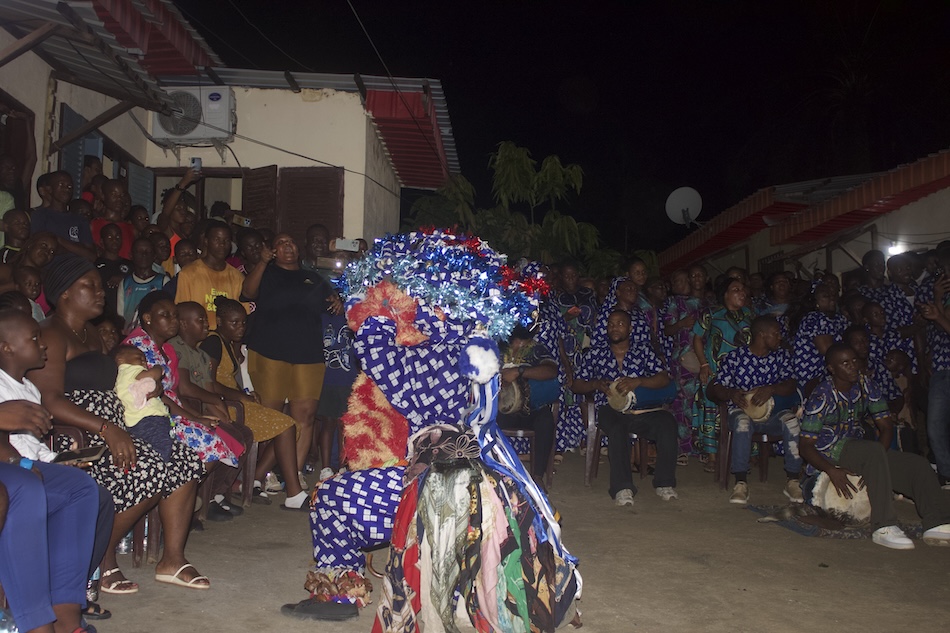
What Bonkó ñánkue and Abakuá share with Detroit techno and Harlem ballroom is not a thematic similarity, but rather a similar mechanism, that is, a body that not only preserves a memory but updates it every time it repeats it, dances to it, transforms it and puts it back into circulation. Memory is not simply stored in the body but exists in practice and by relation. In this case, historical precedents visiblize the stories of these bodies that have healed and survived through dance, music and their cultural scenes.
Whenever a system excludes a body from its protection, bodies must build their own parallel economy of care. When the colonial State declared them outlaws, the Abakuá Ecobios turned ritual belonging into a guarantee of work. When biological families expelled them, the Harlem houses turned adopted kinship into a refuge. When its scene was institutionalized and moderated, the Detroit sound expanded its dance floors underground and in free parties.
In all three cases, being clandestine is not a defect or a simple refuge, it is infrastructure. The very same technology, that of mutual care organized from dissidence, crosses the ritual Black Atlantic of Fernando Poo and Cuba and ends up, a century later, in the Black Atlantic urban sounds of Detroit and Harlem, and from there to the countless coasts of Europe, in a constant back-and-forth flow.
(Photographs of the Bonkó ñankue, taken by Jordi Mani Huesca in December 2025 in Malabo, Equatorial Guinea © Jordi Mani Huesca)
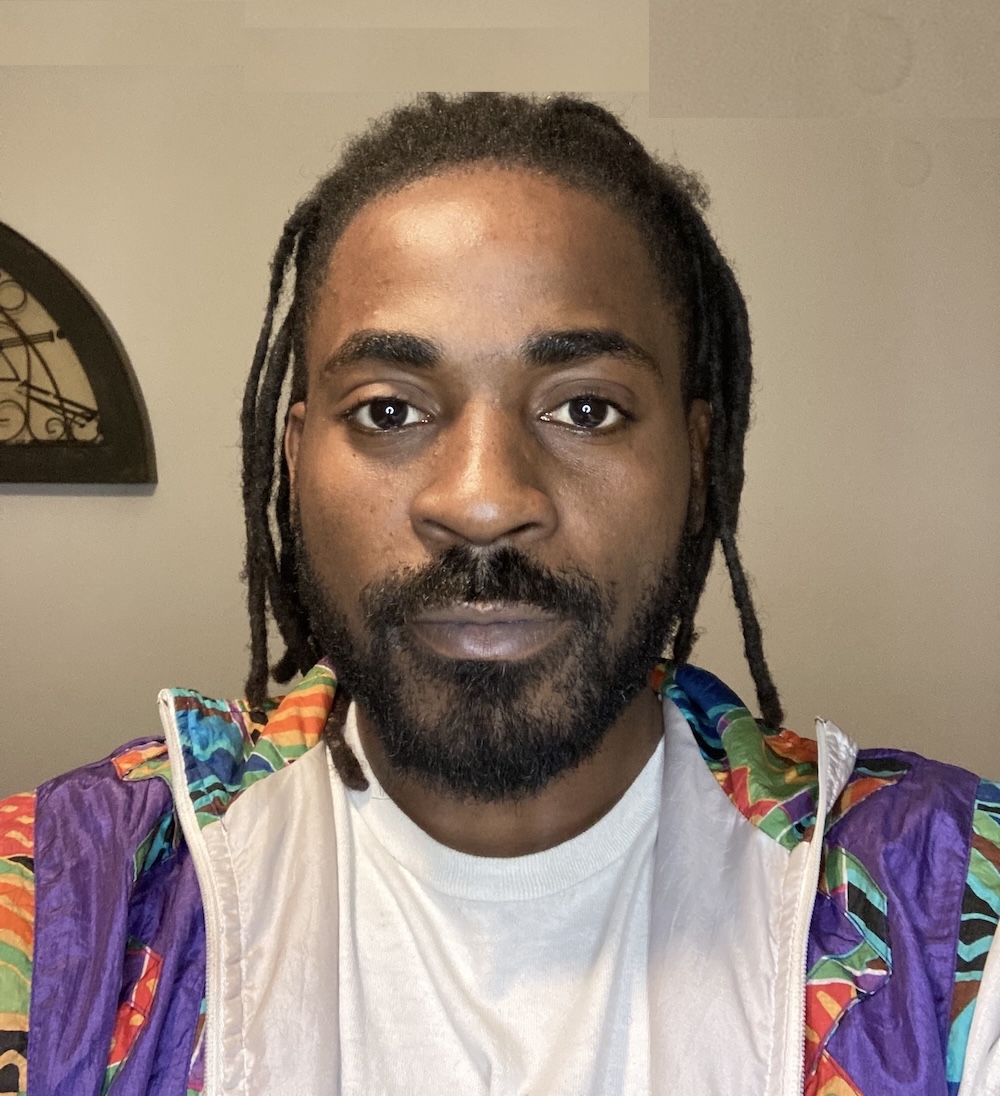
Jordi Mani Huesca is a DJ, producer and researcher born in Equatorial Guinea and based in Barcelona. He combines electronic music and ancestral African rhythms with an eco-futurist perspective, creating spaces for celebration and resistance through dissidence. His practice integrates community, sound archives and performance to interweave memories of migration and contemporary rituals. As a member of the dissident collective Don’t Hit a la Negra, he drives projects that bring together the body, party culture and critical research, situating his work at the intersection of club culture and decolonial thought.
Media Partners:









"A desk is a dangerous place from which to watch the world" (John Le Carré)