Search
To search for an exact match, type the word or phrase you want in quotation marks.
A*DESK has been offering since 2002 contents about criticism and contemporary art. A*DESK has become consolidated thanks to all those who have believed in the project, all those who have followed us, debating, participating and collaborating. Many people have collaborated with A*DESK, and continue to do so. Their efforts, knowledge and belief in the project are what make it grow internationally. At A*DESK we have also generated work for over one hundred professionals in culture, from small collaborations with reviews and classes, to more prolonged and intense collaborations.
At A*DESK we believe in the need for free and universal access to culture and knowledge. We want to carry on being independent, remaining open to more ideas and opinions. If you believe in A*DESK, we need your backing to be able to continue. You can now participate in the project by supporting it. You can choose how much you want to contribute to the project.
You can decide how much you want to bring to the project.
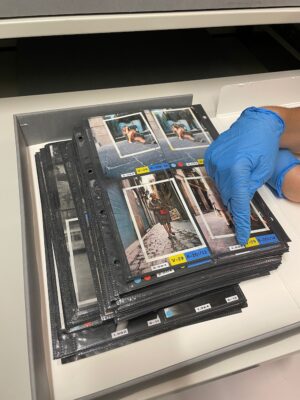
Museum objects are not frozen in time or fixed in meaning; rather, they long to remain alive. Their permanence depends on the gaze of those who encounter them. In this case, that gaze belongs to Violet Ferrer—a trans woman, activist, artist and sex worker who has spent years preserving the memories of Barcelona’s queer communities and sex workers.
I do the museum is a project developed within Comunitat 360º, a MNAC programme that seeks to strengthen the museum’s social and community role within its surrounding neighbourhoods while amplifying voices that have historically been underrepresented in cultural institutions. It also forms part of the museum’s programme on sexual and gender diversity, initiated in 2017, which has sought to recover forgotten and silenced histories through performances, guided tours and other performative formats.
The project began with a series of questions: What traces of sex work and gender dissidence exist within the collection? Who has been allowed to produce knowledge in the museum, and whose voices have been excluded? Together with Violet Ferrer, we set out to explore these questions.
Our aim is not simply to make diversity more visible or to add marginalised perspectives to the existing narrative. Rather, it is to question the patriarchal, colonial and heteronormative epistemologies through which the institution has historically interpreted these subjectivities.
The project’s title deliberately echoes the exhibition I work the street (MNAC, 2013), dedicated to photographer Joan Colom, best known for documenting Barcelona’s Chinatown—today’s El Raval. Colom photographed discreetly, holding his camera below his waist without looking through the viewfinder, capturing everyday street scenes and, increasingly, the world of sex work. His work remains inseparable from the controversy surrounding Eloísa Sánchez Gadeo, who denounced the unauthorised use of her image in Camilo José Cela’s Izas, rabizas y colipoterras (1964). Eloísa rejected being represented as a prostitute and challenged the publication of her photograph without her consent.
In the exhibition catalogue, the curators acknowledged the need for a feminist reading of Colom’s work and recognised that they had failed to consider the perspectives of the women portrayed—many of whom could no longer be located or had already passed away. I do the museum, developed thirteen years later, constitutes a first attempt to address this unresolved question. Importantly, it does so through Ferrer’s own lived experience, without relying on an external theorist to validate or conceptualise her story. Here, feminist theory and feminist practice are inseparable. Rather than being produced from outside the museum’s subjects—as has often happened within institutional frameworks—they emerge directly from lived experience and political activism.
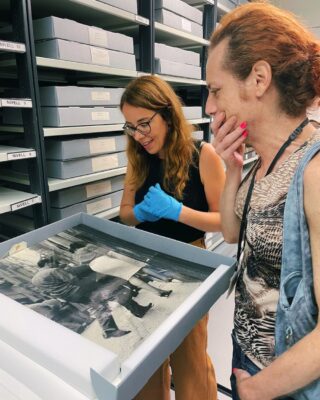
If mediation is to become transformative, it cannot remain confined to educational programmes. It must permeate the institution as a whole, fostering horizontal forms of dialogue and collaboration with communities and social actors who have historically remained at the margins of official narratives. One of the project’s key moments was Ferrer’s visit to the museum’s photographic archives, where she explored representations of sex work and other forms of social otherness in works by Joan Colom, Colita, Català-Roca and others. Through photography, these artists documented realities that largely remained outside official cultural narratives. Access to the museum’s library and documentary collections also proved fundamental to the research.
The project developed through ongoing conversations between Ferrer and the programme’s coordination team, many of them exchanged as WhatsApp voice messages alongside carefully planned meetings at the museum. Gradually, this process generated a small network of trust, care and mutual support. In a cultural sector often driven by overproduction and by the constant generation of symbolic value through critical discourse, the project deliberately moved in the opposite direction. It prioritised spending time rather than producing outputs; reducing production rather than multiplying content; resisting the reproduction of curatorial rhetoric and institutional critique as ends in themselves; and instead focusing on accompanying, facilitating and caring for everyone involved throughout the research process.
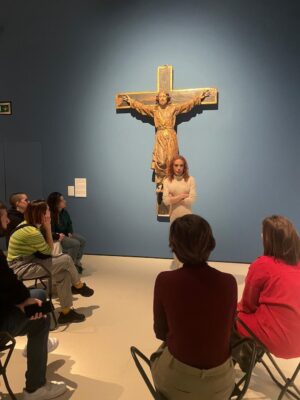
The research was shared publicly through two initiatives designed to connect with the cultural ecosystem surrounding the MNAC. The first was a workshop on dissident portraiture with young people from Barcelona’s La Marina neighbourhood, led by illustrator Aitana Giráldez at Espai Jove La Bàscula. It began with a guided visit led by Violet Ferrer herself, exploring works such as Saint Liberata by Andreu Sala—a Baroque sculpture that shifted from being identified as Christ in Majesty to a female saint who prayed for a beard to escape an arranged marriage—A la Llotja by Joan Brull, which reveals bourgeois desire and double standards, and In the Bar by Ricard Canals, connected to the social history of Barcelona’s port. The second initiative was a public conversation presenting both the research process and its outcomes.
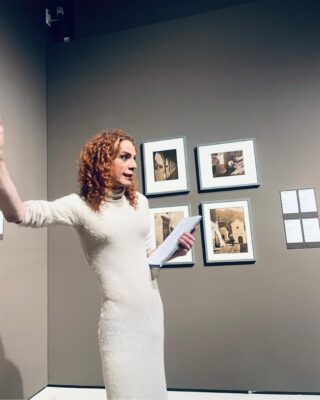
I do the museum does not seek to resolve these debates but to open new ones. Should Colom’s photographs continue to be displayed when some of those portrayed, such as Eloísa, explicitly opposed their circulation? Who should be responsible for protecting the representation of sex workers and gender-dissident communities? How should these archives be preserved, interpreted and cared for? What is the legacy of queer activism in Catalonia, and how might museums support the work of artists, thinkers and activists such as Violet Ferrer—as well as queer and dissident collectives—in sustaining political memory and resistance?
The cisnormative system has produced systematic forms of erasure. I do the museum is a modest intervention—fully aware of its own limitations—but also a necessary attempt to begin repairing some of those absences.
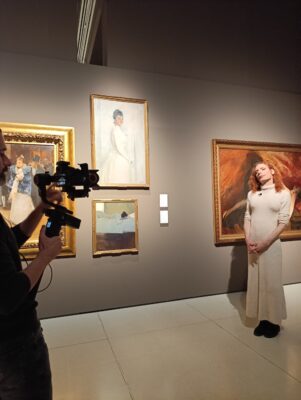
[All the images belong to the project I do the museum, at MNAC]
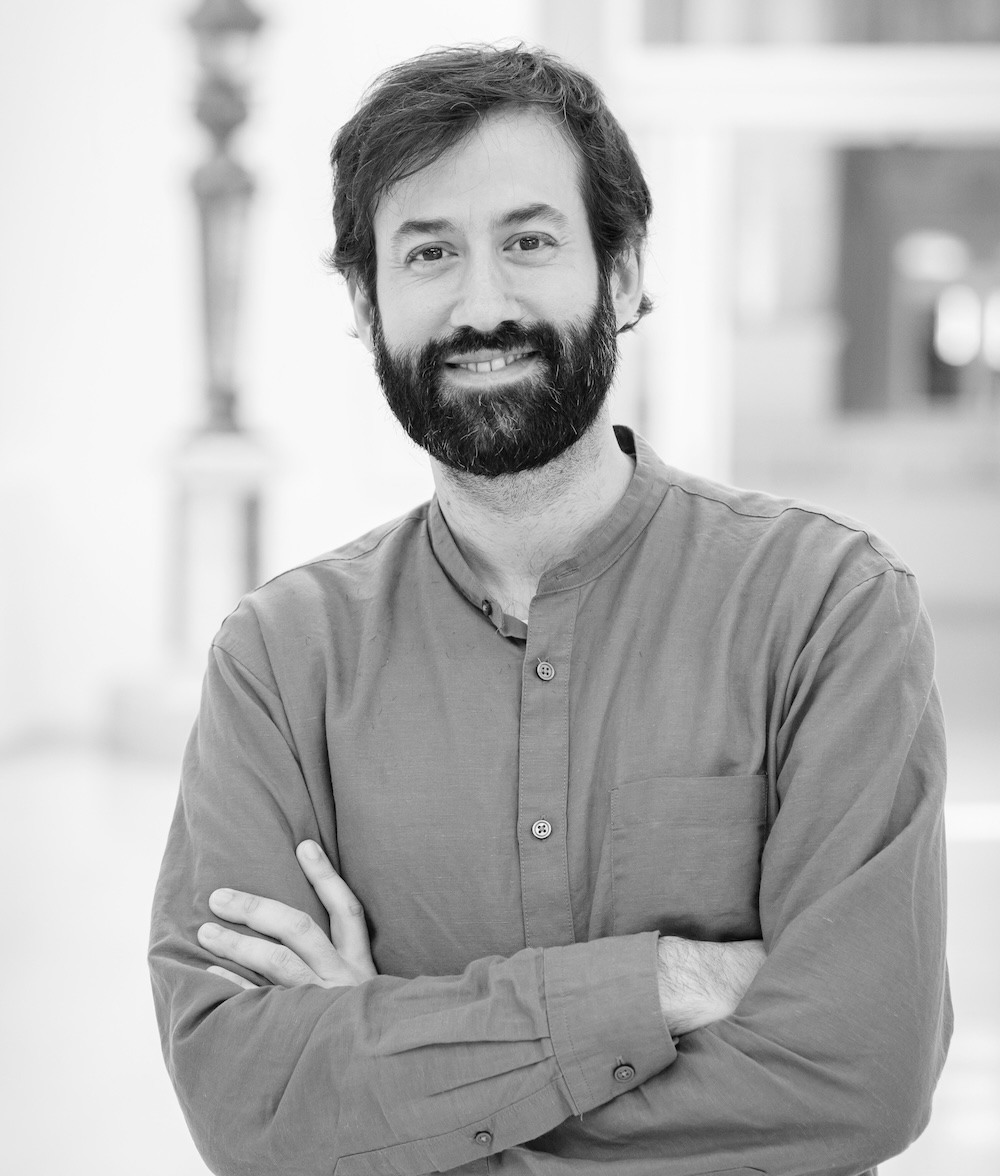
David Pablo Nicolás is a Senior Activities and Education Technician at the National Art Museum of Catalonia, where he coordinates different mediation programs, community initiatives and alliances with the territory and artistic projects with schools. Specializing in art and education, community cultural action, institutional relations and production of activities, he has also promoted heritage interpretation initiatives around sexual and gender diversity. With a degree in Art History and a master’s degree in Analysis and Management of Artistic Heritage from the Autonomous University of Barcelona, his previous career combines work as a mediator and trainer in the educational services of facilities such as the MACBA, the CCCB or the Miró Foundation as well as experience in the field of external relations in culture.
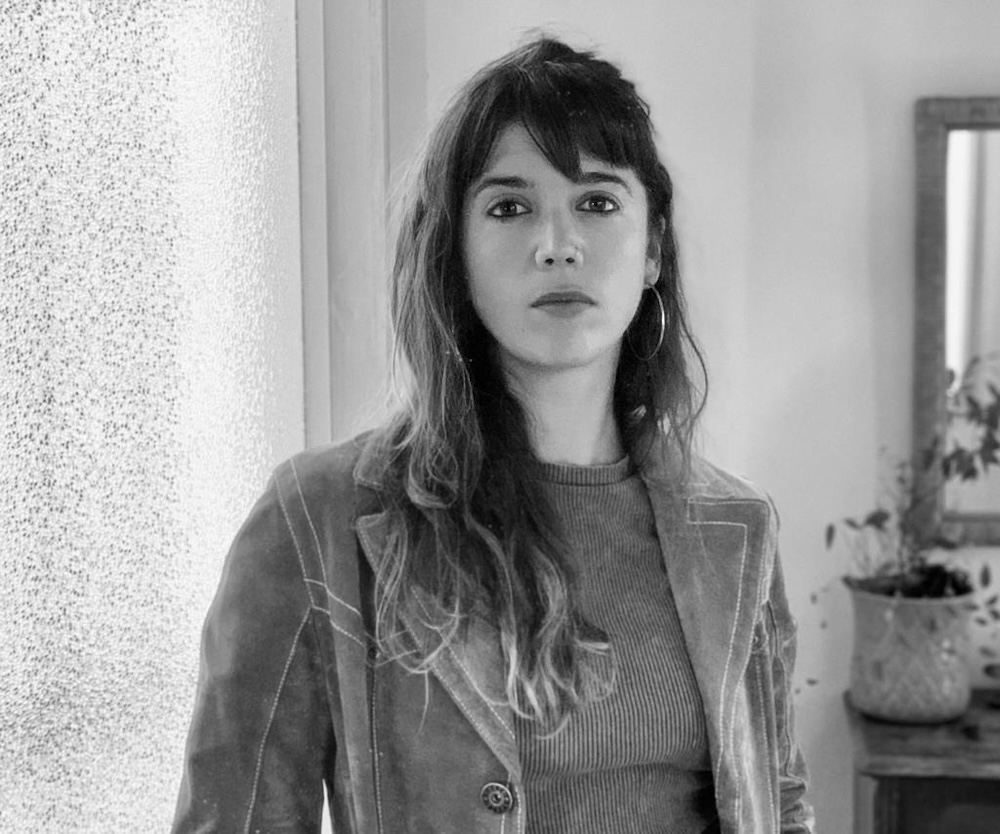
Helena Muñoz, artist, manager and cultural mediator graduated in Humanities and specialized in art and education and community cultural policies. She has developed projects that intersect art, education and research with the support of institutions such as ACVIC – Center for Contemporary Arts, Sant Andreu Contemporani, Sala d’Art Jove, Casa Tres Patios de Medellín, La Bonne and the CCCB – Center for Contemporary Culture of Barcelona. Her work addresses, in particular, popular memories and the right to the city. She currently collaborates with the MNAC – Museu Nacional d’Art de Catalunya, where she is curator of the Comunitat 360º program. At the same time, she continues to develop her artistic and mediation projects.
Media Partners:






"A desk is a dangerous place from which to watch the world" (John Le Carré)