
Search
To search for an exact match, type the word or phrase you want in quotation marks.
A*DESK has been offering since 2002 contents about criticism and contemporary art. A*DESK has become consolidated thanks to all those who have believed in the project, all those who have followed us, debating, participating and collaborating. Many people have collaborated with A*DESK, and continue to do so. Their efforts, knowledge and belief in the project are what make it grow internationally. At A*DESK we have also generated work for over one hundred professionals in culture, from small collaborations with reviews and classes, to more prolonged and intense collaborations.
At A*DESK we believe in the need for free and universal access to culture and knowledge. We want to carry on being independent, remaining open to more ideas and opinions. If you believe in A*DESK, we need your backing to be able to continue. You can now participate in the project by supporting it. You can choose how much you want to contribute to the project.
You can decide how much you want to bring to the project.
To close this series of texts about backrooms, I invited my friend Eloy Fernández Porta to talk about the topic. I knew immediately he was the right person for this conversation as I’ve always admired his ability to make a wide array of references and draw unexpected connections between them. Furthermore, many of the questions that run through these texts, such as structural anxiety, which he addresses in his essay Los brotes negros (The Black Sprouts), or the way in which capitalism shapes our collective psyche, which he explored in his curatorial work on Narcohumanismo, have been part of his research for years.
Rosa: In my text, I tried to conceive of backrooms (repetitive and depersonalized spaces where the threat isn’t embodied but instead experienced as a permanent disorientation) not only as a genre of viral horror but also as a metaphor for contemporary malaise. The pandemic crystallized this feeling in a brutal way. Suddenly, we began to inhabit suspended spaces and the world became a real-life version of backrooms, and this left a deep generational mark. It wasn’t just isolation, it was an ontological suspension.
I think that’s part of what has made it so viral. Many young people immediately recognized that feeling, the suspicion of being trapped in a reality that seems functional but has lost its meaning. This is why I’d like to start off right away with a question: What does it say about our society that an entire generation has converted an empty office hallway into an image of terror?
Eloy: What you’re suggesting is an invitation to think about the contemporary aesthetic condition as an immense backroom that extends through our physical, digital, and, of course, psychic realm. Backrooms are inscribed within what we could call aesthetics of absence. This objectless fear is related to the fact that we have been educated to think in terms of presence. Western metaphysics is, to a large extent, a metaphysics of presence, hence the fascination and the difficulty that Eastern traditions based on emptiness provoke in us. Absence emerges as a core element that destabilizes our ways of seeing and thinking. One of the most profound transformations of the digital world has been, I believe, the reformulation of the relationship between absence and presence, making absence visible as a source of unease.
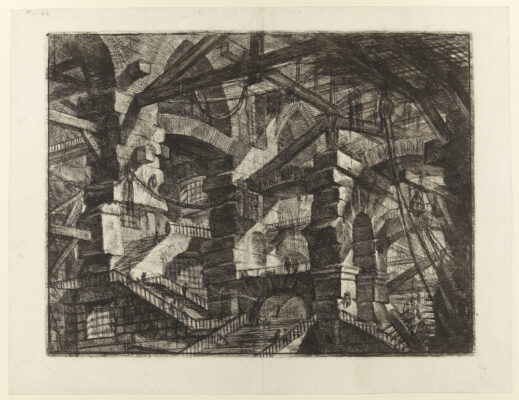
In this sense, a key work is Piranesi’s Le Carceri d’Invenzione, with its gigantic and chaotic prisons without directions and without a center or periphery. I remember the impact this book had on me when I studied it with Rafael Argullol, who interpreted the prisons as the first crisis of the visual order inherited from the Renaissance. I would add that these spaces, infernal scenarios in which human figures never appear, also function as places of psychic punishment. We have no idea who is imprisoned there, perhaps it is ourselves as modern subjects. This cognitive crisis begins with Piranesi and backrooms could be one of its contemporary manifestations.
Rosa: Yes, both imaginary prisons and backrooms share a dislocation and excess of architectural space, as well as an absence of people. I think these characteristics resonate so well today because they connect with the spectral process of our time. It’s no longer just about the financial abstraction of capitalism, since diffuse threats, such as climate collapse, job insecurity, or depersonalized relationships, are constant.
It’s also impossible not to think of Freud and the uncanny as that which is both familiar and strange, and therein lies the key. We are not afraid so much of the external Other but of that Other that dwells within ourselves, repressed and unrecognizable.
Eloy: Absolutely. The dynamic between what is familiar and what is strange appears in many areas, and very clearly in romantic relationships. While reading your work, I thought of Nathaniel Hawthorne’s Wakefield, a short story in which a man, after pretending to go on a trip, settles near his house to secretly observe his wife’s life without him. It’s as if he was experiencing an excess of intimacy and needed to withdraw in order to observe from an objective distance.
This parable can be reread in light of what you’re suggesting, that in the digital age the individual seems to prefer observation rather than participation, distance rather than direct contact, technical mediation rather than face-to-face interaction. This has often been interpreted as a personal failing but is now found in so many people that we must ask ourselves if there’s a cultural origin.
Another variation on Wakefield is David Lynch’s Lost Highway, in which the protagonists receive recordings of their own house from an external, anonymous perspective. There is that famous scene in which a mysterious man approaches Bill Pullman’s character at a party and tells him to call his own home, and when he does the mysterious man answers. The terror is triggered in the involuntary exposure of intimate space.
Rosa: I’d like to know what you think about the relationship between backrooms and late capitalism. I believe the connection, beyond the obvious empty offices and hallways, lies in the psychological realm, in repetition, disorientation, and loops, all of which allude to anxiety, hyper-availability, or permanent suspension. This connects with the idea of liminal space as a threshold between states. Today we live in a chronic liminality in which we’re no longer going through a transition but are already entrenched in it.
Drawing on the work of Fisher or ‘Bifo’ Berardi, who identified depression as a structural symptom of capitalism, we could say that anxiety is a symptom of post-pandemic, platform-based, and artificial intelligence-driven capitalism. Does this system also produce a specific aesthetic of unease?
Eloy: It should be noted that depression has existed in different political systems. Fisher’s interpretation is insightful but also very present-day. He is correct, however, in linking it to work rhythms. This leads us to discuss forms of oppression that are not exclusively capitalist. In any case, I think a key point is that of expectation. In platform capitalism, hyperactivity, overproduction, and stress have become so normalized that they inevitably lead to collapse.
Rosa: An important aspect of my writing was to dismantle the idea that backrooms are just an internet phenomenon, for which I proposed a visual genealogy that connects the work of Kane Parsons with artists like Serafín Álvarez, Gregor Schneider, and Kay Sage. Backrooms engage with psychoanalysis, surrealism, critical architecture, and contemporary installation art. Do you know of other examples where architecture is approached from its emotional dimension?
Eloy: Reading your text, I thought of Larry Sultan’s The Valley, a photographic series about houses in a Californian suburb used for pornographic film shoots in the 1990s. In this study of the meaning of home and family, Sultan examines why the middle-class ideal of domesticity lends itself to this type of staging. For him, it’s a deeply melancholic series because it revisits places from his childhood and youth, but at the same time it’s a re-examination of the performativity of adult films in which the actors appear in moments after the action with an existential air, almost like Hopper’s characters.
Rosa: Of course, more than just a scenario for horror architecture, they speak to our anxieties and concerns in much more subtle, yet equally accurate, ways. Staged domesticity or the latent melancholy in a seemingly familiar space, like the one you mentioned, can trigger the same sense of strangeness and disorientation as a backroom. In both cases, identity seems to slowly disintegrate, as the familiar ceases to offer refuge, the coordinates that organized our experience become unstable, and everyday reality acquires a disquieting quality that’s difficult to name.
With that being said, I think we can wrap up this conversation. Thank you very much, Eloy.
[Featured Image: Giovanni Battista Piranesi, Le Carceri d’Invenzione. Second edition, 1761, Princeton Univeristy Art Museum]
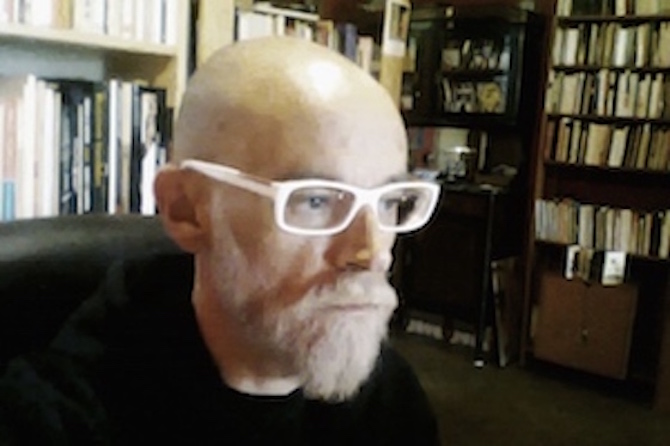
Eloy Fernández Porta holds a PhD in Humanities from Pompeu Fabra University (UPF), where he received the Extraordinary Doctoral Prize. He has published the essays Afterpop, Homo Sampler, €RO$ (Anagrama Prize), Emociónese así (Ciutat de Barcelona Prize), En la confidencia, L’art de fer-ne un gra massa, Las aventuras de Genitalia y Normativa, Los brotes negros y Medianenas & Milhombres. He has curated exhibitions such as Narcohumanisme (Bòlit, with Núria Gómez Gabriel), Bad Painting (Fundació Vila Casas, with Carlos Pazos), Infinita/Unfinished (La Capella, with Beatriz Escudero) and three editions of BCN Producció (La Capella). His work has been translated by Polity Press.
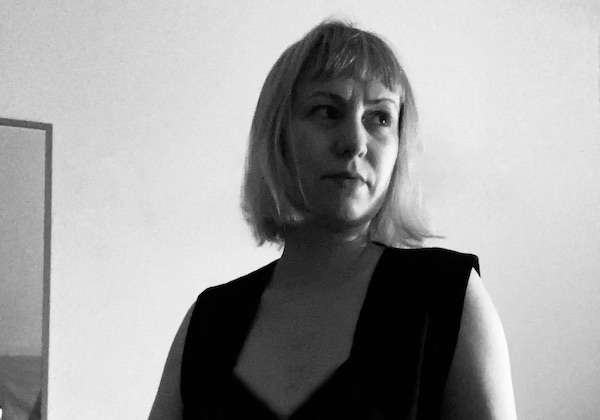
Rosa A. Cruz is a Catalan-Andalusian art historian and cultural communicator. She has worked at the Museu d’Art Contemporani de Barcelona, at ADN Galeria and at the University of Barcelona, where she was part of the AGI Art, Globalization, Interculturality Research Group. She is particularly interested in questions about the double, psychology and biographical discourse. She is currently conducting research on the intersection between contemporary sexual and artistic practices.
Media Partners:






"A desk is a dangerous place from which to watch the world" (John Le Carré)