Search
To search for an exact match, type the word or phrase you want in quotation marks.
A*DESK has been offering since 2002 contents about criticism and contemporary art. A*DESK has become consolidated thanks to all those who have believed in the project, all those who have followed us, debating, participating and collaborating. Many people have collaborated with A*DESK, and continue to do so. Their efforts, knowledge and belief in the project are what make it grow internationally. At A*DESK we have also generated work for over one hundred professionals in culture, from small collaborations with reviews and classes, to more prolonged and intense collaborations.
At A*DESK we believe in the need for free and universal access to culture and knowledge. We want to carry on being independent, remaining open to more ideas and opinions. If you believe in A*DESK, we need your backing to be able to continue. You can now participate in the project by supporting it. You can choose how much you want to contribute to the project.
You can decide how much you want to bring to the project.
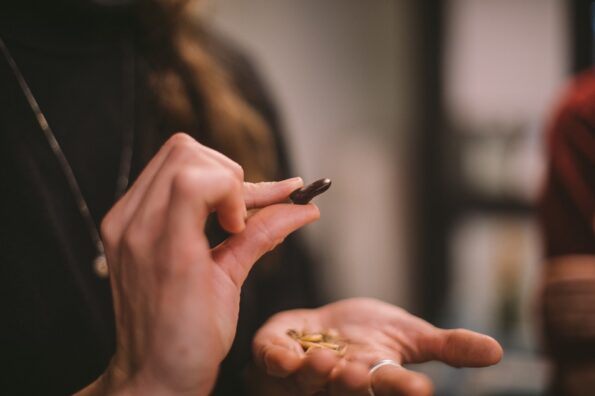
What place do artistic production and mediation occupy in the turbulent times in which we live? How can mediation contribute to building cultural expressions that are more attentive to the forms of interdependence and vulnerability that inhabit the world?
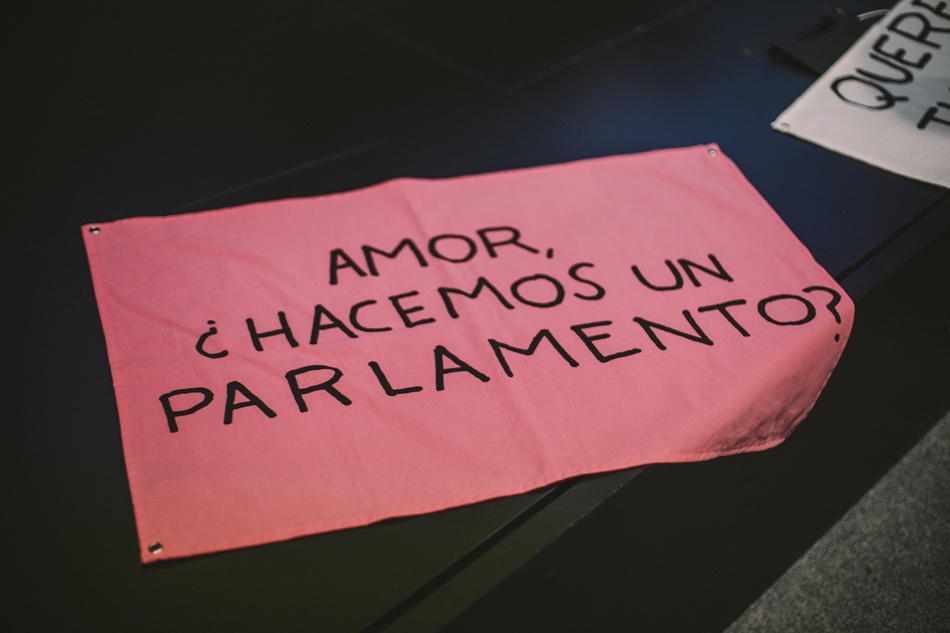
Jornadas Enredadas: Comunidades deseantes, IVAM (4th of June 2026). Photo: Julia Reoyo-Caixa Fosca
In recent years, artistic mediation has undergone a significant conceptual shift. In contrast to a didactic conception of mediation as a mechanism for translating and simplifying content previously legitimized by cultural institutions, a vision of this practice emerges as a space for the co-production of affects, knowledge, and alternative ways of relating to the world. From this perspective, mediation ceases to operate as an instrumental device or transmitter of knowledge and instead becomes a space for encounter, participation, and the collective construction of meaning, a place of “active involvement” to use the words of María Lind (2013). This reorientation is especially relevant in the face of contemporary problems such as the ecosocial crisis, migration, the precariousness of life, and the various forms of violence perpetrated against people and territories. These are complex phenomena that go beyond conventional frameworks of understanding and require situated, open, and committed approaches. These issues also demand a broader conception of democracy, understood not only as a system of representation and decision-making but also as the capacity of a society to pay attention to what exists on its margins, to listen to diverse voices, and to build collective responses to crisis situations. In this text we share ideas arising from our experience as mediators for Concomitentes in the projects Connexions Metabòliques and [Re]conocer el monte (Getting to Known the Mountain Once Again), and from which we reformulate the role of civic art as a practice of expanded democracy.
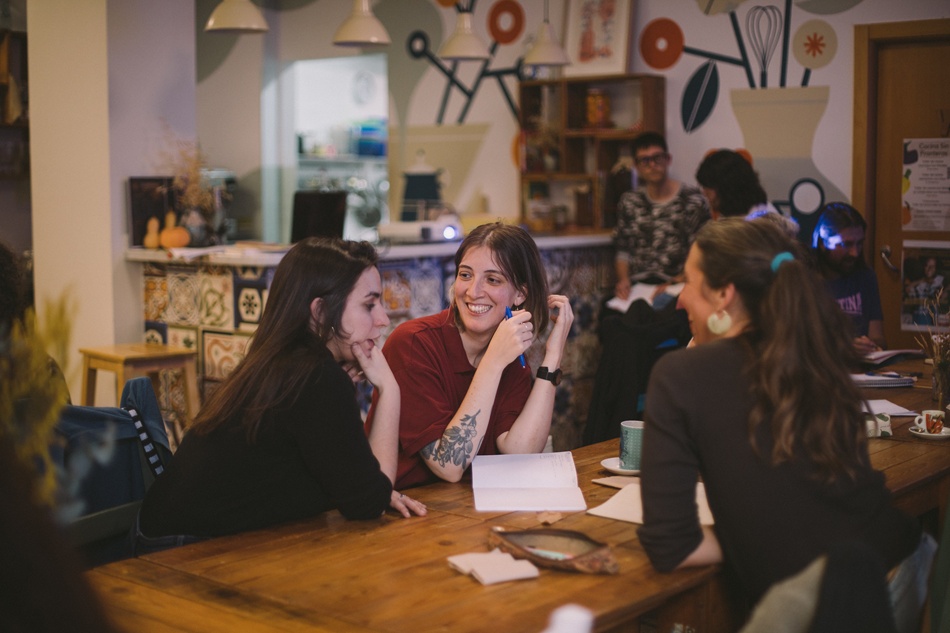
Poéticas del banquete, workshop with María Sánchez, project Connexions Metabòliques (5th of February 2026). Photo: Julia Reoyo-Caixa Fosca
As mediators and cultural producers, we propose a mediation based on the practice of allowing ourselves to be affected (Lafuente, 2024), a practice of listening that connects with a specific context, attends to singularities, and weaves networks of complicity among those who resonate with what is happening around them. This affective research is configured as a way of working that recognizes the sensory and cognitive potential of care (of bodies, territories, emotions, and relationships) in the construction of the common good. At the same time, it strengthens dynamics of self-organization and fosters the emergence of communities articulated around collective thought and action. This approach also implies that social demands are not always explicitly formulated and that they often manifest as diffuse unease, latent needs, intuitions, and as yet unstated concerns. Mediation consists precisely of approaching these areas of indeterminacy and facilitating the conditions for them to be expressed, debated, and acquire collective consistency.
One of the fields of exploration that is created by this perspective is a novel alliance of the issues of art with those of the struggles and resistance of social movements. As art is a practice that does not operate solely by the criticism of existing paradigms but also from the prefiguration of what does not yet exist, it allows us to recognize in everyday life and in the immediate future sometimes barely perceptible affects, atmospheres and sensibilities that nonetheless point to the emergence of new worlds (Rogoff 2021). Thanks to the capacity of artistic languages to promote sensitive and situated interaction, this type of mediation can also contribute to intervening in sensorial politics and contribute to counteracting the feelings of helplessness and uncertainty that accompany many of the current crises. Thus, this way of approaching art can be understood as a technology of collective attention capable of dealing with open questions and activating processes of democratic imagination linked to the desiring force of bodies and territories.
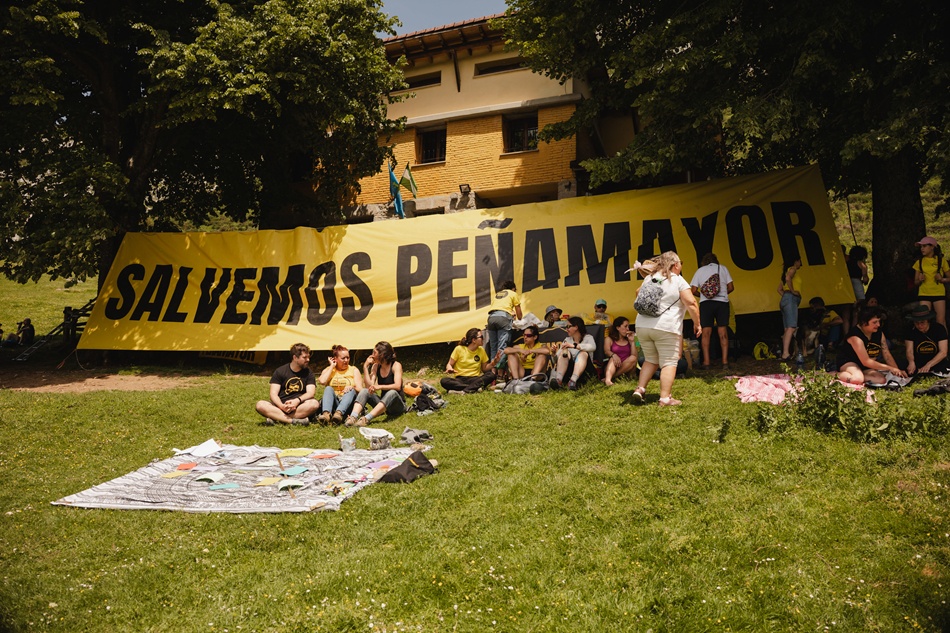
Simultaneous protest in Peñamayor (May 2026). Photo: Nay Semeya
What kind of desire are we referring to when we talk about this? Here another line of reflection opens up a key point. Faced with perspectives that define desire as an expression of an individual lack that seeks satisfaction in accumulation and consumption, the contributions of Deleuze and Guattari (1972) invite us to think about desire in another way, namely, as a relational, productive force always linked to the composition of the collective. In fact, it is not the insatiable and destructive desire for a capitalist matrix that harms (us) so much (Herrero, 2025), but rather a longing for the power of the common, for a speculative place with which to assemble differences, experiment with encounters and open up unexpected possibilities of shared existence. Artistic mediation is thus one possible tool, among others, with which to question and go beyond a privatized conception of desire and an atomized vision of the community as a mere sum of individualities. Starting from our experience in Concomitentes projects, and in dialogue with Bruno Latour’s “parliament of things” (1993), we have begun to link the practice of mediation with the heuristic figure of a possible parliament of desire. If Latour’s proposal revolutionized the social studies of science by including non-human agents in the political sphere, the parliament of desire can accommodate a multiplicity of insufficiently recognized voices and expand the limits of what can be represented, heard and exist on the horizon of possibilities. Furthermore, going beyond the traditional logic of the assembly, which tends to focus on decisions, it brings us into an unprecedented alliance based on the opportunity to strengthen our capacity to take charge and respond to challenges. In the end, artistic mediation appears as a particularly favorable place to experiment with the challenges of the present and to materialize processes of collective creation that find in art a sensitive form of expression and civic action.
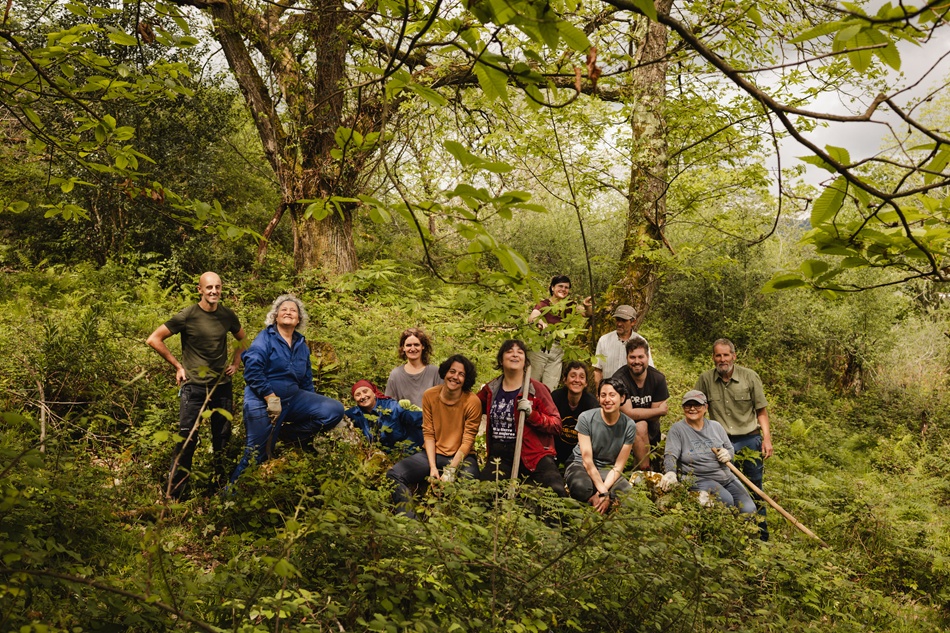
Andecha, work session of [Re]conocer el monte (Getting to Known the Mountain Once Again) (April 2026). Foto: Nay Semeya
Deleuze, G., & Guattari, F. (1972). Anti-Oedipus. Capitalism and Schizophrenia.
Herrero, Y. (2025). Metamorfosis: Una revolución antropológica (Metamorphosis: An Anthropological Revolution).
Lafuente, A. (2024). Apples and Pears: How to Prototype Without Having a Clue.
Latour, B. (1991). We Have Never Been Modern.
Lind, M. (2013). “Why Mediate Art?” In J. Hoffmann (Ed.), Ten Fundamental Questions of Curating.
Rogoff, I. (2021). “Not Yet.” In H. Slager (editor), The Postresearch Condition
[Featured image: Poéticas del banquete, workshop with María Sánchez, Connexions Metabòliques project (5th of February 2026). Photo: Julia Reoyo-Caixa Fosca.]
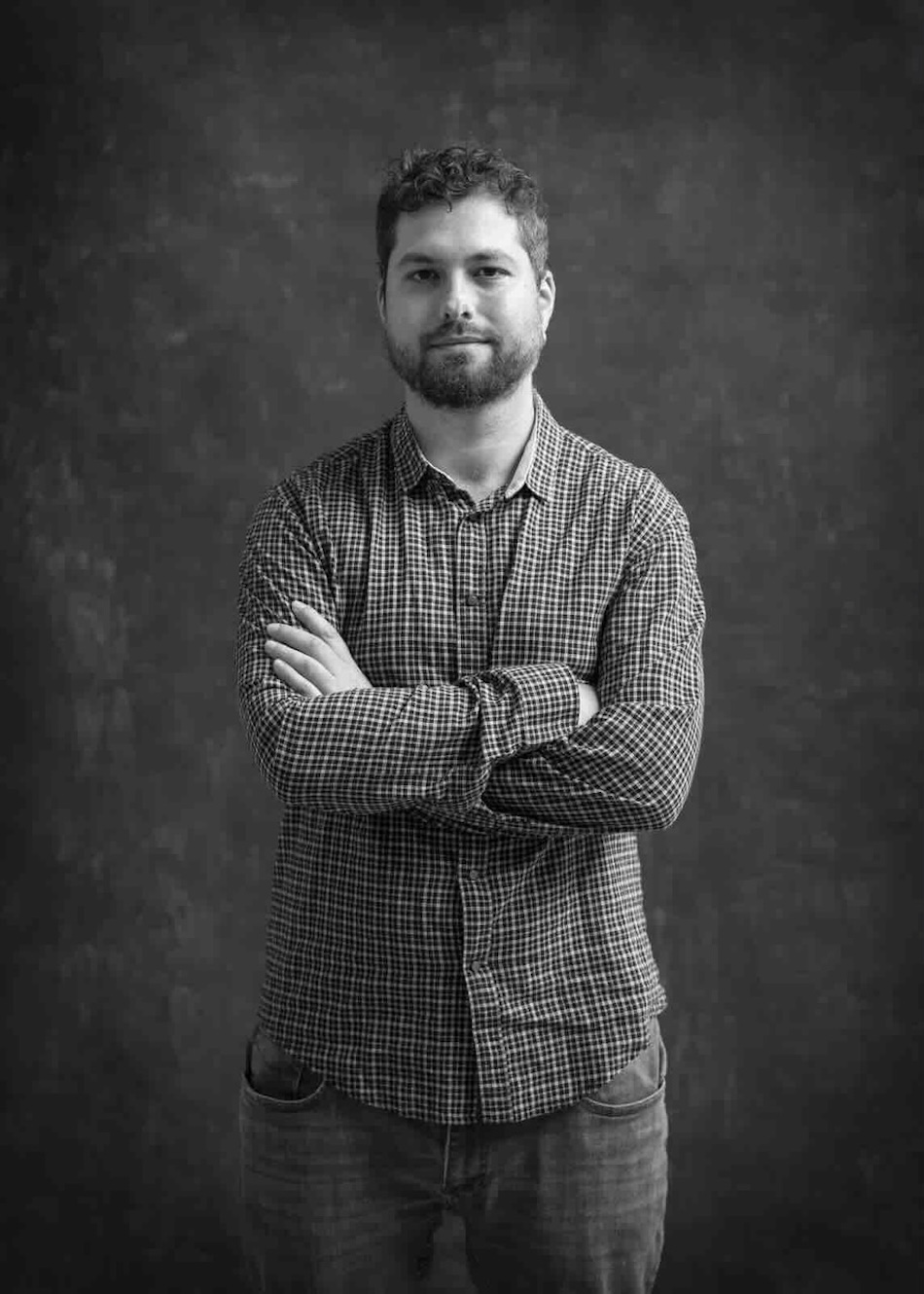
Llorián García Flórez is an anthropologist of listening, mediator-curator and piper. It combines conventional academic research with artistic research. His work addresses music and alternative ruralities, the reactivation of traditional participatory dance, the experimentality of piper accompaniment, the gaiapolitics of manure. In 2024, together with the Asturian artist Ricardo Villoria, he co-curated the exhibition Rodrigo Cuevas: the grace of folkloric agitation (LABoral: Center for Art and Industrial Creation); and, in 2025, he launched the Night in Dance Llaboratoriu (Climate Biennial). He is currently a mediator of [Re]conocer el monte, a participatory art project by Concomitentes in collaboration between the neighborhood platform Salvemos Peñamayor and the cultural center La Benéfica de Piloña.
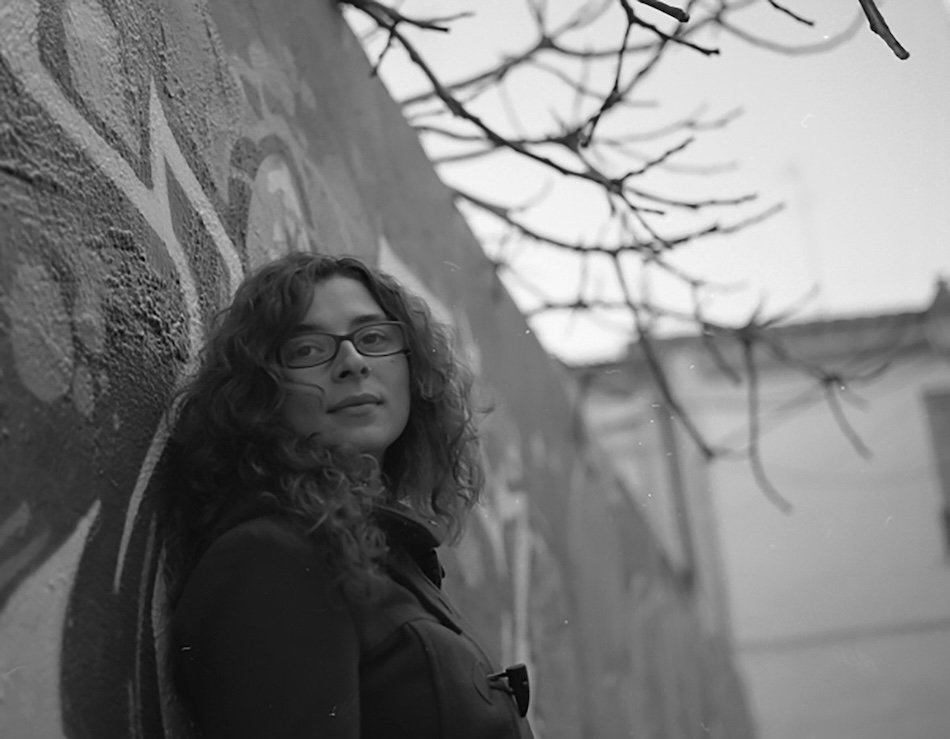
Chiara Sgaremella is an artist, activist, and lecturer at the University of Barcelona, where she researches the intersections between collaborative processes and art focused on eco-social issues within the contemporary landscape. She holds a PhD in Fine Arts and has served as a visiting scholar at the Center for Creative Ecologies at the University of California, Santa Cruz (USA). Alongside her academic work, she develops artistic, pedagogical, and mediation projects centered on socio-environmental themes. Her work has been exhibited internationally, and she has participated in residencies such as Sites of Practice (2024), Tierra Ciudadana (UPV, 2023), and Groundwork for Embedded Art Practices (UNIDEE-Fondazione Pistoletto, 2021), among others. She is a co-founder of the art collective Cuerpoterritorio, through which she acts as a mediator for the project (Metabolic Connections) within the Concomitentes initiative.
Media Partners:


"A desk is a dangerous place from which to watch the world" (John Le Carré)