Search
To search for an exact match, type the word or phrase you want in quotation marks.
A*DESK has been offering since 2002 contents about criticism and contemporary art. A*DESK has become consolidated thanks to all those who have believed in the project, all those who have followed us, debating, participating and collaborating. Many people have collaborated with A*DESK, and continue to do so. Their efforts, knowledge and belief in the project are what make it grow internationally. At A*DESK we have also generated work for over one hundred professionals in culture, from small collaborations with reviews and classes, to more prolonged and intense collaborations.
At A*DESK we believe in the need for free and universal access to culture and knowledge. We want to carry on being independent, remaining open to more ideas and opinions. If you believe in A*DESK, we need your backing to be able to continue. You can now participate in the project by supporting it. You can choose how much you want to contribute to the project.
You can decide how much you want to bring to the project.
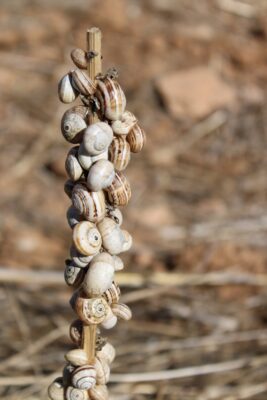
A Dry Branch Covered in Snails
This summer I discovered that the clusters of snails that gather on the branches of the Alt Camp region were in estivation, a form of summer dormancy that is, at the same time, a survival strategy in the face of adverse environmental conditions. This image led me to observe how a way of life organizes itself around a structure, in this case, an agglomeration of bodies, experiences, and time that come together on a branch which seems, at first glance, dry and lifeless.
The branch is not merely a support. It is that around which these bodies gather and find a way to survive. This image raises a question about what sustains our practices and relationships, and about what we mean when we talk about infrastructure.
Thinking about the infrastructures of relationships implies recognizing that, even where resources and institutional structures are precarious or nonexistent, there are ways of relating that sustain practices, transmit knowledge, organize work, and make shared ways of life possible. What would happen if, instead of adapting to existing institutions, we imagined other institutional forms based on the connections and needs that emerge from our practices?
Armando Perla uses the markets of Kuskatan and Guatemala as a starting point to explore a network of kinship, exchanges, and knowledge passed down through generations, in which these connections sustain forms of knowledge and practice that rarely find institutional recognition.
Maya Juracán shares the experience of La Revuelta and the search for collective ways to organize work, care, and resources to make artistic practice possible under dignified conditions.
Anna Santomauro, with Arts Catalyst, shifts the focus to territory and explores how the relationships woven with communities and organizations produce place, belonging, and shared spaces, opening up other ways of being together.
Finally, Antonia Alampi, through Spore Initiative in Berlin, addresses institutional design by thinking of institutions as structures that arise from the relationships they seek to cultivate, the communities they engage with, and the ways of life they aim to make possible.
These are institutions that do not precede relationships but instead are formed by them.
[Featured image taken by Xavi Reyes]
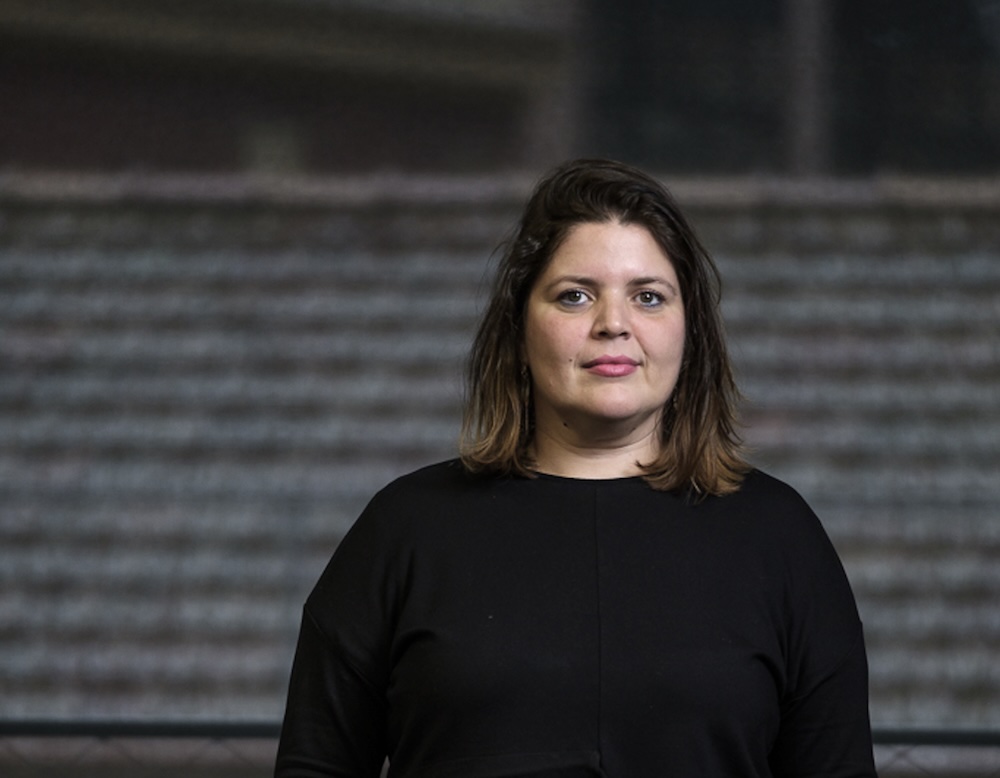
Veronica Valentini is a curator, educator and researcher. She views curatorial practice as a relational exercise that attunes to contexts and forges links between bodies, forms of knowledge and affect. She is the founder and director of EMMA, and co-founder and co-director of BAR Project, a platform that currently develops the exhibition, public and educational programmes at HAUS–Espai d’art i pràctiques contemporànies. Since 2022, she has been coordinating Hangar’s international residency programmes and research networks in Barcelona. A founding member of Concomitentes in Spain since 2018, she has spearheaded projects such as Diversorium. Artes vivas y espacio de convivencias y actualmente desarrolla Parlamento del Mar, and is currently developing Parlamento del Mar, which connects science and the public to explore new forms of ecological governance. Dancing Diversity: Gestures and Affects for Encounters Between Diverse Bodies, Bartlebooth, 2024) and Reciprocity: Institutional and Artistic Practices as Metaphors for Mycelium, Ajuntament de Terrassa, 2026).
Media Partners:




"A desk is a dangerous place from which to watch the world" (John Le Carré)