Search
To search for an exact match, type the word or phrase you want in quotation marks.
A*DESK has been offering since 2002 contents about criticism and contemporary art. A*DESK has become consolidated thanks to all those who have believed in the project, all those who have followed us, debating, participating and collaborating. Many people have collaborated with A*DESK, and continue to do so. Their efforts, knowledge and belief in the project are what make it grow internationally. At A*DESK we have also generated work for over one hundred professionals in culture, from small collaborations with reviews and classes, to more prolonged and intense collaborations.
At A*DESK we believe in the need for free and universal access to culture and knowledge. We want to carry on being independent, remaining open to more ideas and opinions. If you believe in A*DESK, we need your backing to be able to continue. You can now participate in the project by supporting it. You can choose how much you want to contribute to the project.
You can decide how much you want to bring to the project.
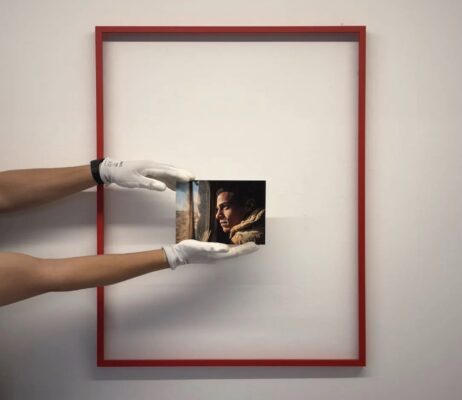
There is a particular exhaustion shared by many artists, filmmakers, musicians, programmers, and curators from the Middle East and North Africa. It is not simply the exhaustion of censorship, lack of funding, or institutional fragility. It is the fatigue of seeing one’s reality continuously interpreted, framed, translated, and legitimized by others. I have carried this feeling for years; first as an artist, then as a curator, programmer, founder of independent initiatives, and someone moving constantly between Morocco and Europe.
When I began curating projects and later developed Arab Media Lab in Marrakech, I was not simply organizing screenings or exhibitions. Curating meant constructing relationships between images, memory, poetry, spirituality, technology, and lived experience.
A curator creates a way of seeing.
I believed new media arts, digital experimentation, and alternative cinema could become tools of transformation within our own realities across the Middle East and North Africa. We did not want to import the avant-garde as decoration; we wanted to absorb it into our own rhythms, wounds, humor, dreams, and contradictions.
That vision became Arab Media Lab and later the Digital Marrakech Festival. Yet very early on I encountered an uncomfortable truth, as narratives about our region were often already being constructed elsewhere before we entered the room.
My discomfort with many Western curators working on the Middle East and North Africa never came from resentment. Many were intelligent, generous people who genuinely loved the region. The problem was deeper.
Even with good intentions, many arrived carrying inherited lenses, that is colonial memory, media imagery, anthropology, geopolitical narratives, and lingering fantasies about the Orient. Again and again, I felt our realities were being translated before being heard. In Europe, curators of Arab and Middle Eastern art often occupied enormous symbolic authority. They were not simply selecting works; they were shaping how entire societies became visible internationally. Certain patterns became impossible to ignore. Silence became radical. Poverty became aesthetic. Spiritual ambiguity became experimental. Ordinary realities became avant-garde once institutionally validated.
The issue was not appreciation. The issue was mediation.
Too often we did not arrive directly. We arrived through interpretation.
One of my most painful experiences happened while presenting my own video art internationally. At the time, I believed deeply in universality and resisted reducing my work to identity. Yet curators and even artist friends would sometimes tell me:
“That’s not you, Aziz.”
I never forgot that sentence because hidden inside it was another, “We already decided who you are supposed to be.”
This is one of the deepest contradictions facing many Arab and North African artists. The moment your work escapes expected themes, like conflict, migration, religion, folklore, trauma, exile, identity politics, its legitimacy becomes suspect.
Western artists are often granted the freedom to operate within the formal and conceptual traditions of modern and contemporary abstraction, as well as ambiguity, intimacy, metaphysics, and formal experimentation, without having to explain their origins, whereas Arab artists are are often pushed back toward representation.
The Western artist is granted universality. The Arab artist is repeatedly returned to origin.
In 2008, I was invited by the Berlin International Film Festival, Berlinale Talent Campus to give a lecture on digital and new media arts in the Arab world. During the discussions, a German producer told me that my films would probably not interest Western audiences because Morocco had “no conflict.”
I was shocked.
The statement unintentionally revealed an entire economy beneath cultural discourse where conflict had become cultural currency. War, occupation, migration, extremism, trauma, dictatorship, exile, these themes are immediately legible internationally. Works dealing with humor, spirituality, love, boredom, everyday life, or formal experimentation often receive far less urgency.
It is almost as if some audiences are not looking for art itself, but for geopolitical access through art.
Artists slowly begin feeling pressured to perform crisis in order to exist. Friendship, ambiguity, slowness, interiority, and ordinary existence disappear.
In other words: full humanity.
When we returned to Morocco, we hoped to create spaces where contemporary artistic language could emerge from local realities rather than imported intellectual models. Through Arab Media Lab, we attempted exactly that.
Yet we quickly discovered that what counted as sophisticated or avant-garde often remained tied to inherited francophone structures and forms of cultural authority. What disturbed certain circles was not only our work. It was that we were trying to reclaim our own image directly, without intermediaries.
North Africa occupies a strangely unstable position.
Too Arab for Europe.
Not Middle Eastern enough for dominant Arab narratives.
Too contemporary to be folkloric.
Too local for global branding.
Internationally, we are grouped under “Middle East and North Africa.” Yet avant-garde legitimacy often remains associated with Western institutions or historical Mashreq intellectual centers. As if experimentation naturally belongs elsewhere.
Even within Arab cultural spaces, North African artists sometimes feel the need to be validated externally before being recognized locally. One of colonialism’s deepest wounds is that it teaches societies to outsource cultural confidence.
As I became more involved in curating, another question emerged; Can an autonomous curatorial language survive institutional agendas?
In 2003, together with my late friend Abu Ali—Toni Serra, artist and director of OVNI in Barcelona, we had a direct discussion with an influential Western curator involved in framing contemporary Arab new media arts internationally. What concerned us was not individual selections but the broader mapping of an entire region through predetermined narratives. It often seemed as if contemporary Arab art only began once institutions named, archived, and validated it. Decades of underground experimentation, pirate media culture, informal networks, and artistic resistance risked disappearing because they had never been documented by power.
TRANSARAB emerged as a response to this condition, followed by VIDEOKARAVAAN and later ARAB MEDIA LAB. Not as gestures of resentment, but as defenses of plurality and the right of cultures to narrate themselves.
The question of representation cannot be separated from history.
Western museums remain filled with artifacts extracted during colonial expansion. But perhaps something else was also extracted, it is the authority to narrate.
Not only objects were displaced.
Interpretation was displaced.
Memory was displaced.
Historical legitimacy was displaced.
Decolonization cannot remain a fashionable slogan. It requires rebuilding autonomous archives, curatorial languages, criticism, artistic memory, and cultural confidence.
Projects such as Arab Media Lab sought, in their own modest way, to contribute to that effort. Not by rejecting dialogue with the world, but by insisting that artistic practices from the Middle East and North Africa can think, archive, theorize, and experiment for themselves.
The future of cultural production in North Africa and the Middle East cannot depend solely on external validation.
The goal is not isolation. The goal is dignity.
A healthy cultural relationship would allow artists, curators, and institutions to define themselves without first passing through external authorization. It would recognize that universality does not belong exclusively to the West.
The deepest struggle is not visibility.
It is authorship.
Who speaks?
Who frames?
Who validates?
Who explains?
Who defines sophistication?
Who constructs memory?
Who owns the image?
Until these questions are confronted honestly, many artists from the region will continue carrying the same quiet discomfort: the feeling of watching their realities become visible only after somebody else describes them first.
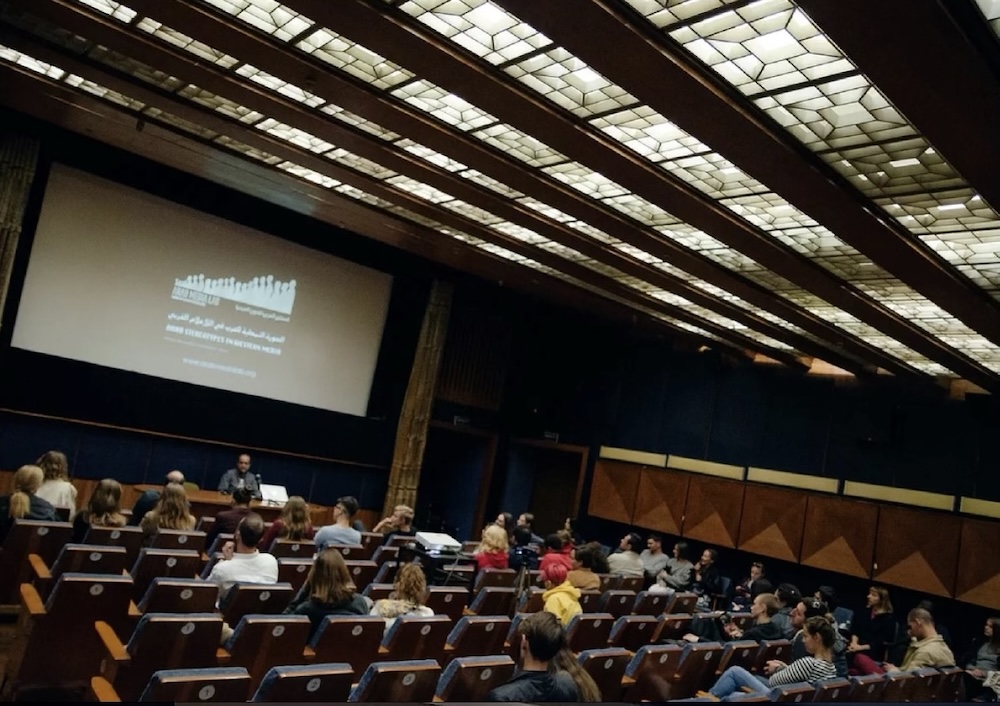
Abdelaziz Taleb lecture on Planet of the Arabs / Kiev Biennial, 2020
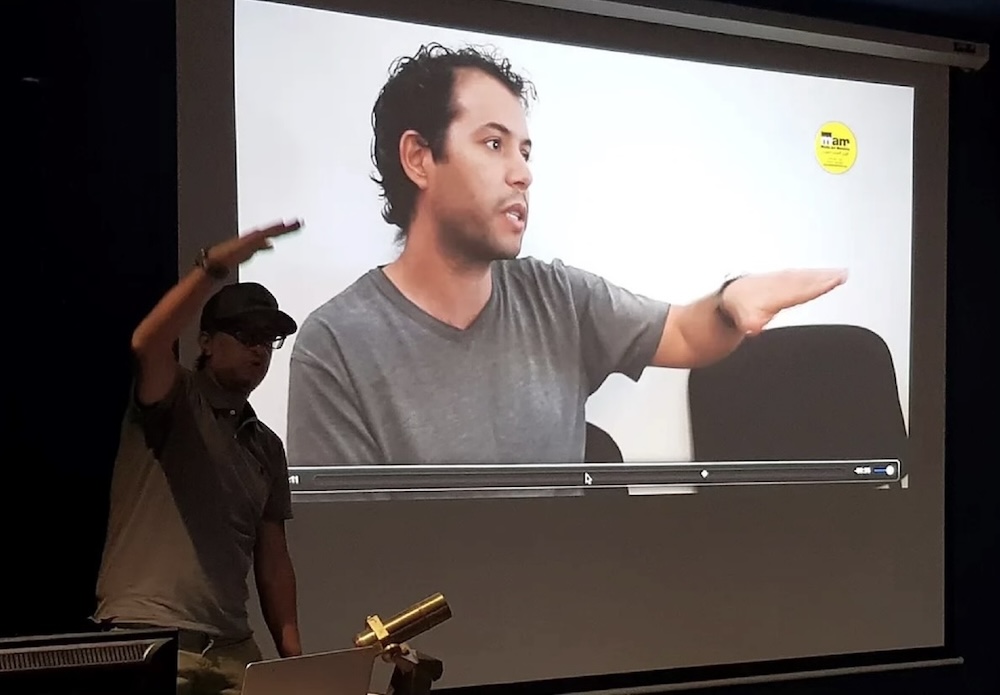
Arab Media Lab, Prince Claus Fundation, The Netherlands, 2023
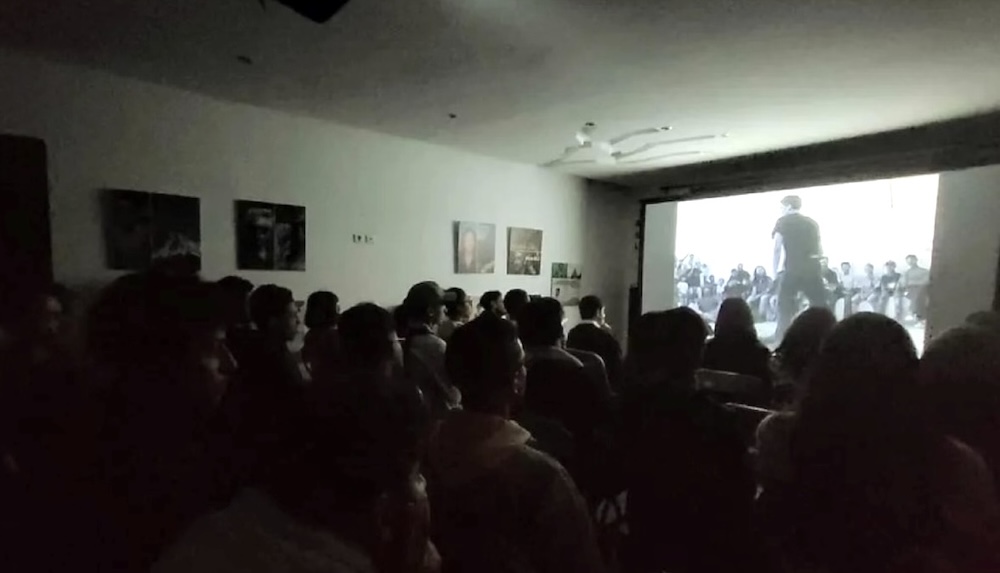
Arab Media Lab Center, Marrakech, 2026
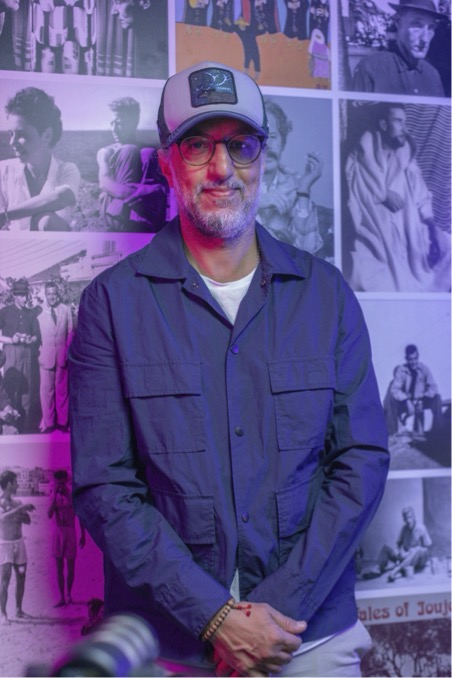
Abdelaziz Taleb is a Moroccan mixed media artist, filmmaker, curator, and founder of Arab Media Lab. His work explores experimental cinema, video art, archives, spirituality, memory, and contemporary visual culture. Since the early 2000s, his films, installations, and curatorial projects have been presented internationally at festivals, museums, and cultural institutions, including the Berlinale, International Film Festival Rotterdam, CCCB Barcelona, and the Venice International Film Festival. He is the artistic director of several initiatives, including the Digital Marrakech Festival and Tangier Interzone. Alongside his artistic practice, he works as a curator, mentor, and cultural researcher focused on media arts and independent artistic production across the Middle East and North Africa. He lives and works in Germany.
www.abdelaziztaleb.net
Media Partners:





"A desk is a dangerous place from which to watch the world" (John Le Carré)