Search
To search for an exact match, type the word or phrase you want in quotation marks.
A*DESK has been offering since 2002 contents about criticism and contemporary art. A*DESK has become consolidated thanks to all those who have believed in the project, all those who have followed us, debating, participating and collaborating. Many people have collaborated with A*DESK, and continue to do so. Their efforts, knowledge and belief in the project are what make it grow internationally. At A*DESK we have also generated work for over one hundred professionals in culture, from small collaborations with reviews and classes, to more prolonged and intense collaborations.
At A*DESK we believe in the need for free and universal access to culture and knowledge. We want to carry on being independent, remaining open to more ideas and opinions. If you believe in A*DESK, we need your backing to be able to continue. You can now participate in the project by supporting it. You can choose how much you want to contribute to the project.
You can decide how much you want to bring to the project.
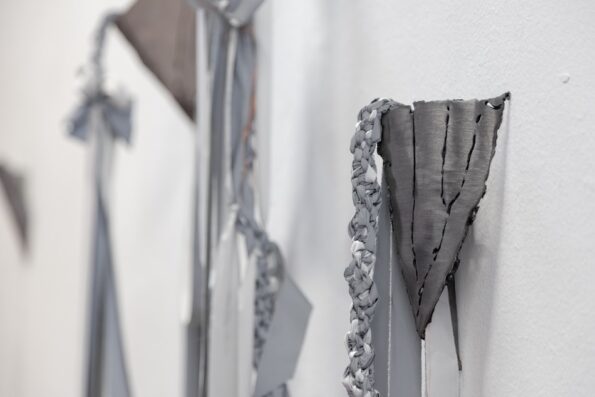
The Catalan art scene is often said to enjoy a curious kind of robust ill health: landmark spaces close, museums are caught up in internal disputes and questionable — at the very least— directorship appointments, while public initiatives face systematic precarity (one day, we will have to talk, at length, about the Sala d’Art Jove). Yet every now and then, projects emerge from this landscape that stand out for their strength, coherence and, in the case at hand, longevity. Homesession is one such example. Having survived in Barcelona’s art ecosystem for nineteen years, the organisation is taking the opening of its new space as an opportunity to look back and reflect on the path it has travelled so far.
És allà on vaig. Ecos d’allò que va ser i no va tornar offers an extensive survey of the project’s trajectory through a selection of artists and works connected to its various programmes. It is worth noting, however, that this is not simply a recap, tracing a chronological progression in the manner of a conventional retrospective, but an attempt to create a living archive rooted in the present. Most of the works on display emerged from residencies, trips or invitations, and remain shaped by those original circumstances. Revisiting them from a distance — both physical and temporal — while placing them alongside one another creates a new situation in which meaning can emerge.
The title, which draws on Clarice Lispector, evokes the ambiguity at the heart of the exhibition’s purpose: going, returning, or perhaps never having quite left. Memory is understood here not as a repository of past experiences, but as a material open to transformation. Revisiting does not mean recovering what once was intact, but discovering its reverberations, discontinuities and whatever still remains latent.
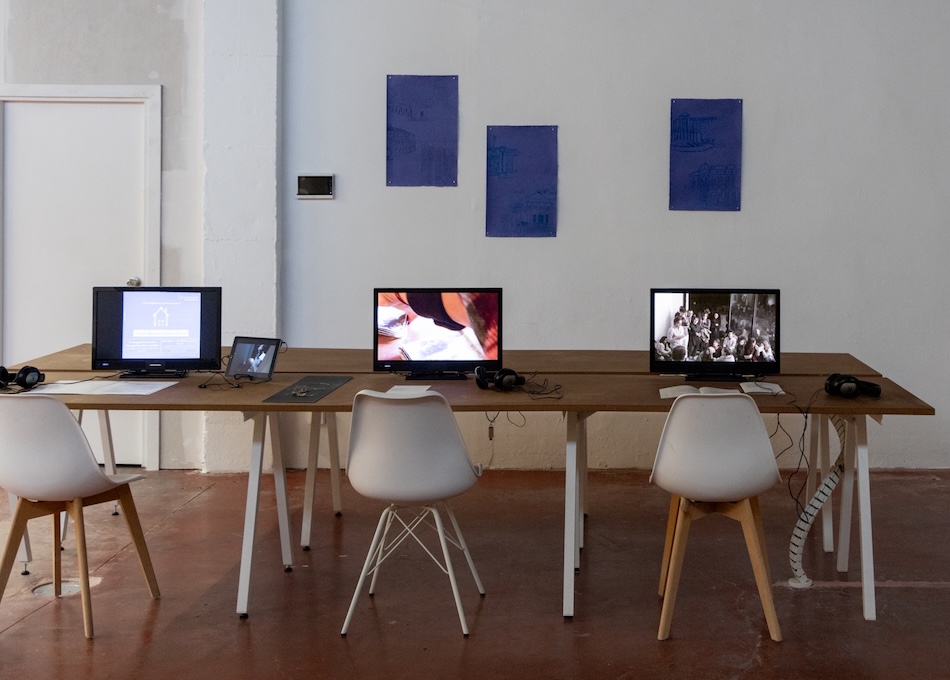
From left to right: Daniela Ortiz & Xose Quiroga, Lanzamiento, 2011; Rio Paraná, Que hacen con nuestros huesos, 2022; Veronica Valentini, The inhabitant of the floor above, 2011
The exhibition is structured around three areas — place, image and body — conceived as permeable, more like Venn diagrams, with constant intersections between thematic fields. Parallel site-specific activities and performances complement these areas and anchor them in the present. The first places territory at the centre of a political and affective dispute. Works by Daniel de la Barra, Rio Paraná, and Daniela Ortiz and Xosé Quiroga challenge the neutrality of landscape and domestic space, revealing how colonial, economic and institutional structures shape the ways we inhabit the world. In this regard, Qué hacen con nuestros huesos, by Rio Paraná, recovers the memory of the plundering of Mapuche bodies by European scientific institutions, while Lanzamiento, by Ortiz and Quiroga, brings the violence of evictions into the exhibition space itself.
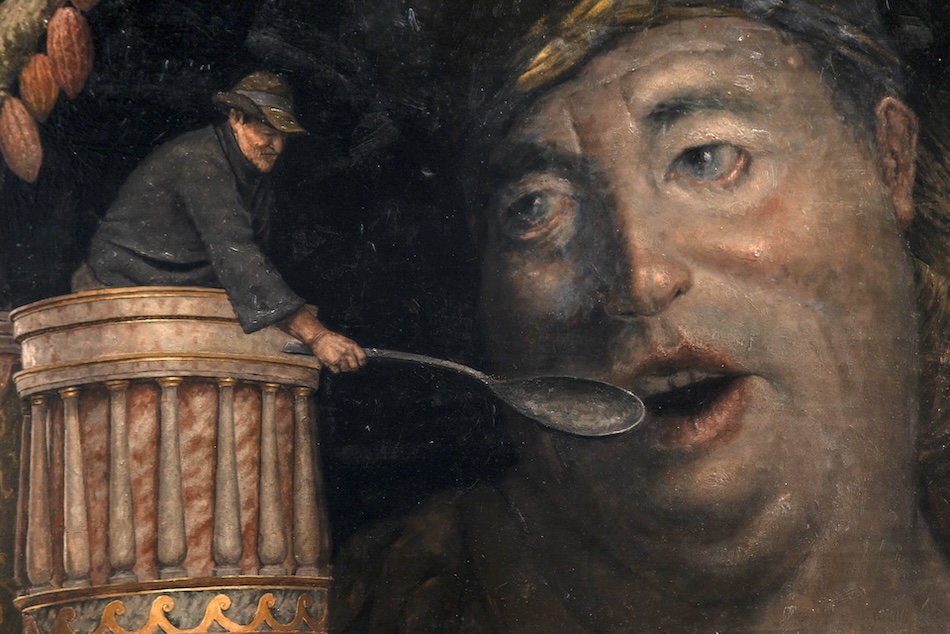
Daniel de la Barra, Esto no es un paisaje: Real Expedición Botánica, 2021
The second area approaches the image as a device that goes beyond representing reality and begins to contribute to the creation of a new one. Pablo del Pozo, Laura Llaneli, and the duo formed by Eulàlia Rovira and Adrián Schindlerexplore the intersections between languages, codes and systems of representation. Here, I find myself thinking of Sawako Nakayasu’s lines: “Let’s say it. Let’s not say it. Let’s say it again. Let’s say it. Like that.” Llaneli’s work, in particular, starts with the translation of one language into another and the losses or shifts that occur along the way. She takes a musical score and translates it into words, before transferring it back into a visual language, which she then interprets in a new visual work, different from the original.
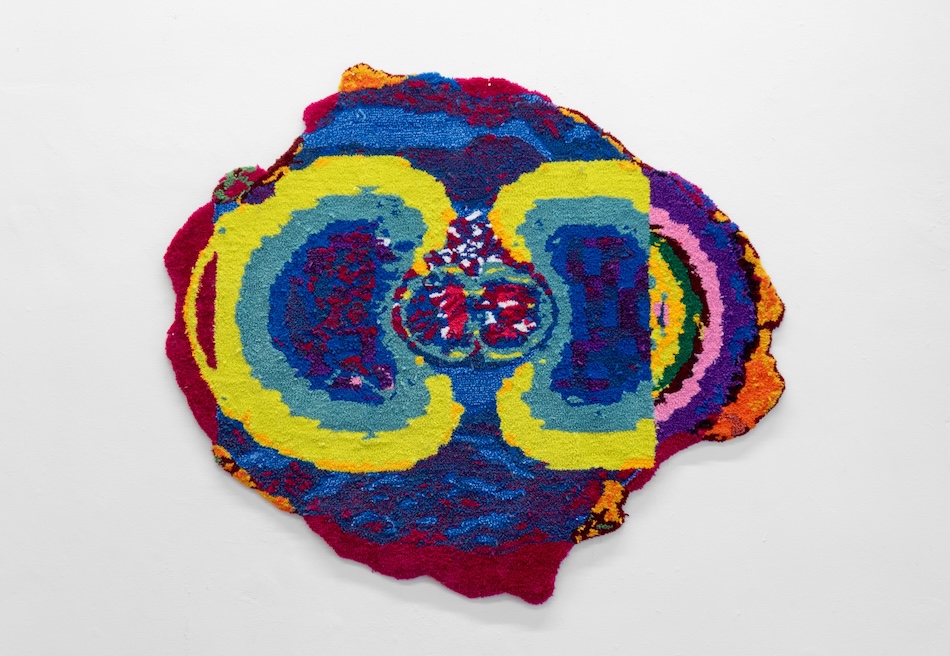
Pablo del Pozo, Hydrogen Flower, 2024
Finally, the body becomes the point at which all the tensions mentioned so far acquire a physical dimension. Voice, gesture and breath become ways of apprehending the environment from perspectives that elude hegemonic gazes because they stem from intimate experiences. In Paul Maheke’s works, for instance, minimal movement transforms the way space is experienced; in Delphine Pouillé’s, textile structures condition and restrict the possibilities of movement. For her part, Sangrar un árbol, by Natàlia Domínguez, traces a line connecting the bodies of workers on rubber plantations with the wounds inflicted on trees to extract the raw material.
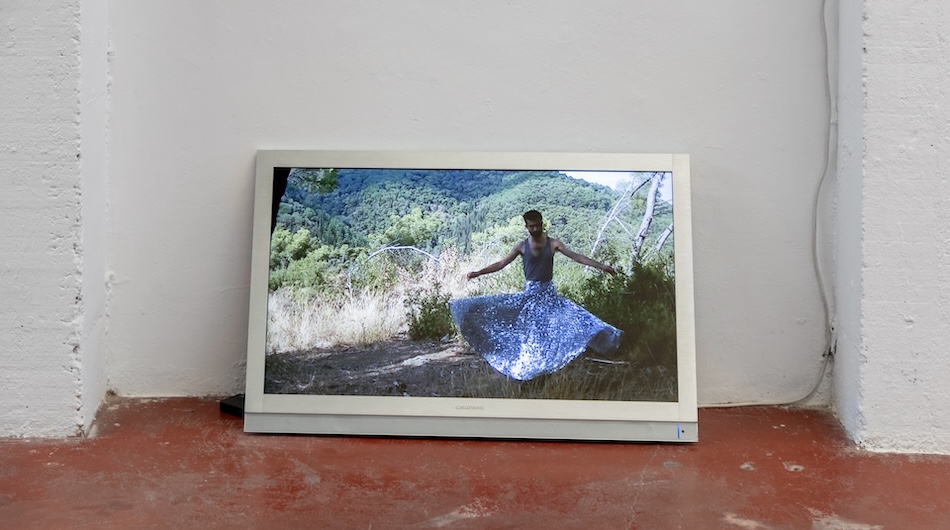
Paul Maheke, Tout en sollicitant le soleil (micro chorégraphie), 2012
Beyond the works on display, however, one underlying question runs through the entire exhibition: the artistic residency, understood not as a mere format but as a working methodology. The physical act of an artist travelling to an unfamiliar context is no incidental detail; encounters, exchanges and the friction of engaging with other forms of otherness directly shape the production process. In this sense, Homesession was ahead of the curve almost two decades ago, anticipating the hyperconnectivity and virtuality that now prevail. Against a landscape that drives individualism and alienation, the project has, from the outset, championed structures that make room for time, relationships and working conditions increasingly rare in a cultural ecosystem governed by precarity and immediacy.
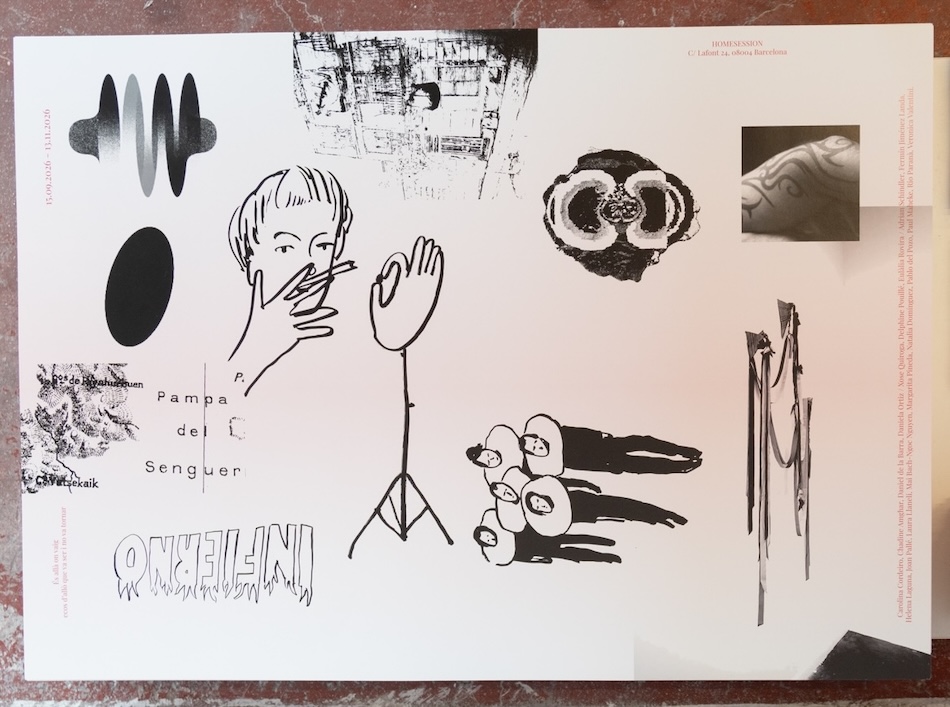
Andrea Gómez, exhibition poster
És allà on vaig… also offers a way of understanding the direction in which Homesession wants to take its project. The new venue is not presented as a break with the past — nor even as an aseptic white cube — but as a space of opportunity and possibility in which to reconsider what continuity might look like. To my mind, this is where the exhibition’s real interest lies: in its ability to make us understand that the trajectory of an independent space should not be measured according to the parameters of the creative and cultural industries™ (visitor numbers, years of activity, number of artists exhibited), but by its capacity to keep open the very questions that gave rise to it, the many answers that have emerged along the way, and the possibility of making room for responses from people who have not yet even been asked.
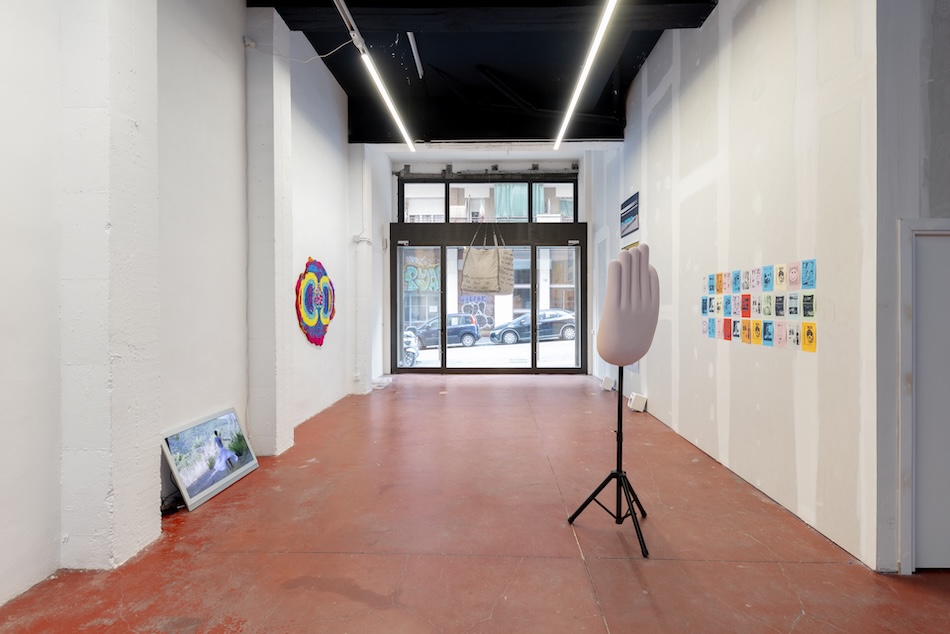
Homession, És allà on vaig. Ecos d’allò que va ser i no va tornar, installation view
[Featured image: Natalia Domínguez, Sangrar un árbol, 2025 (detail)]
All photos, courtesy of Homesession © Eva Carasol.
Jordi Garrido has been inhabiting the trenches of the art world for quite some time. A survivor, he has played every role in the game (except that of the artist), but his favourite is that of the “currator”(from curator and the Spanish currar, to work); the curator who does studio visits, writes, installs exhibitions, scrubs floors and, when necessary, coordinates insurance and transport. He regularly works with both living and dead artists.
Media Partners:






"A desk is a dangerous place from which to watch the world" (John Le Carré)