Search
To search for an exact match, type the word or phrase you want in quotation marks.
A*DESK has been offering since 2002 contents about criticism and contemporary art. A*DESK has become consolidated thanks to all those who have believed in the project, all those who have followed us, debating, participating and collaborating. Many people have collaborated with A*DESK, and continue to do so. Their efforts, knowledge and belief in the project are what make it grow internationally. At A*DESK we have also generated work for over one hundred professionals in culture, from small collaborations with reviews and classes, to more prolonged and intense collaborations.
At A*DESK we believe in the need for free and universal access to culture and knowledge. We want to carry on being independent, remaining open to more ideas and opinions. If you believe in A*DESK, we need your backing to be able to continue. You can now participate in the project by supporting it. You can choose how much you want to contribute to the project.
You can decide how much you want to bring to the project.
Passer d’un rêve à l’autre, the 18th Lyon Biennale, begins with an extraordinarily simple and dangerously expansive idea. What would happen if we stopped thinking of the economy solely in terms of money, production and the market, and understood it instead as everything we exchange, transform, inherit and need to sustain life? In Robert Filliou’s Principes d’économie poétique, Catherine Nichols finds a way to broaden the meaning of value through contemporary art. Labour, waste, care, memory, desire, transmission, energy and colonialism can all become part of the same economy.
Filliou offers something more unsettling. An artist and economist, he argued that profound social transformation required the prior transformation of economic structures. Nichols retrieves this thinking for a Biennale that seeks to position itself between critique and invention. But the shift affects not only what we understand by economy. It also bears on curatorial practice itself. To bring objects and images together under a concept is to establish relations that did not previously exist, to produce proximities, to write a possible reading. And the more elastic the concept, the greater the power of whoever establishes those connections.
Nichols seems fully aware of the problem. In the text accompanying the exhibition, she recalls her own formation within an Australian settler-colonial society and asks how the authority to name, interpret and represent can perpetuate habits of possession. Transposed to curating, the question acquires an uncomfortable precision. Arriving, selecting and connecting can all too easily become a form of mastery. The observation is particularly pertinent to a Biennale constructed precisely through connections between vastly distant practices, histories and geographies.
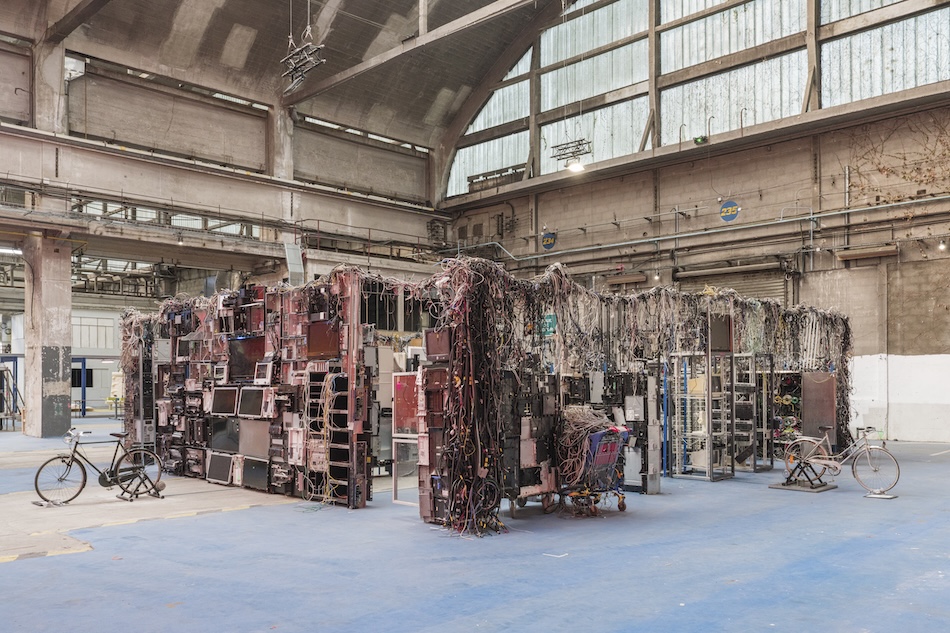
Akwasi Bediako Afrane, Cerberus T-26: Dance of Dialogue, 2026. Installation view at Les Grandes Locos. Courtesy of the artist. Photo: © Blandine Soulage
At Les Grandes Locos, the former railway workshops in La Mulatière, the material dimension is difficult to evade. Akwasi Bediako Afrane builds an architecture out of electronic waste that is activated by the physical effort of visitors. Screens, keyboards, circuits and cables restore materiality to the supposed immateriality we call digital. Serwah Attafuah, an Australian artist of Ghanaian descent, likewise takes technological waste as the starting point for an Afrofuturist digital universe in which extraction, consumption and obsolescence remain attached to images of the future. At the Musée des Tissus, Kokou Ferdinand Makouvia works with wood, rubber, paper and copper in a collective production process in which materials, gestures and memories circulate and transform.
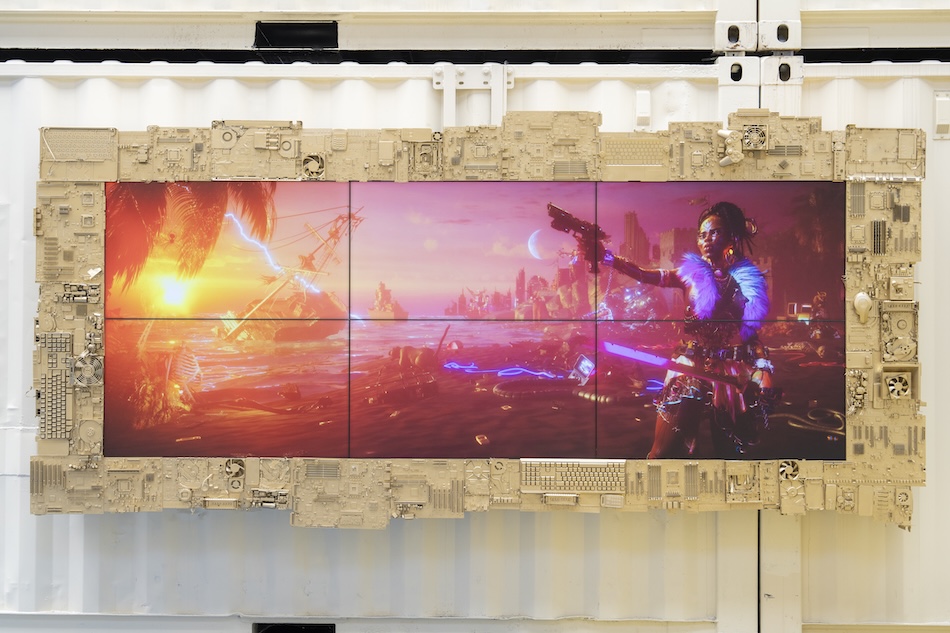
Serwah Attafuah, Between this World & the Next, 2024. Installation view at Les Grandes Locos. Courtesy of the artist. Photo: © Blandine Soulage
As the exhibition unfolds, however, the concept becomes increasingly porous. Production and labour give way to care, memory, transmission, belonging, territory, colonialism and interspecies relations. Here lies both the seduction and the problem of Nichols’s proposition. A notion capable of containing electronic waste, songs, a family relationships or an ancestral memories acquires an extraordinary associative power, but also risks losing its resistance. Poetic economy can become the perfect curatorial machine. Everything fits.
But the fact that everything can enter does not mean that everything enters in the same way. An exhibition does not merely decide what deserves to be seen. It also organises the conditions of that visibility. More than that, our way of looking is never neutral. Curating adds another layer, bringing works into proximity, establishing relations and producing a possible reading across different experiences, histories and geographies.
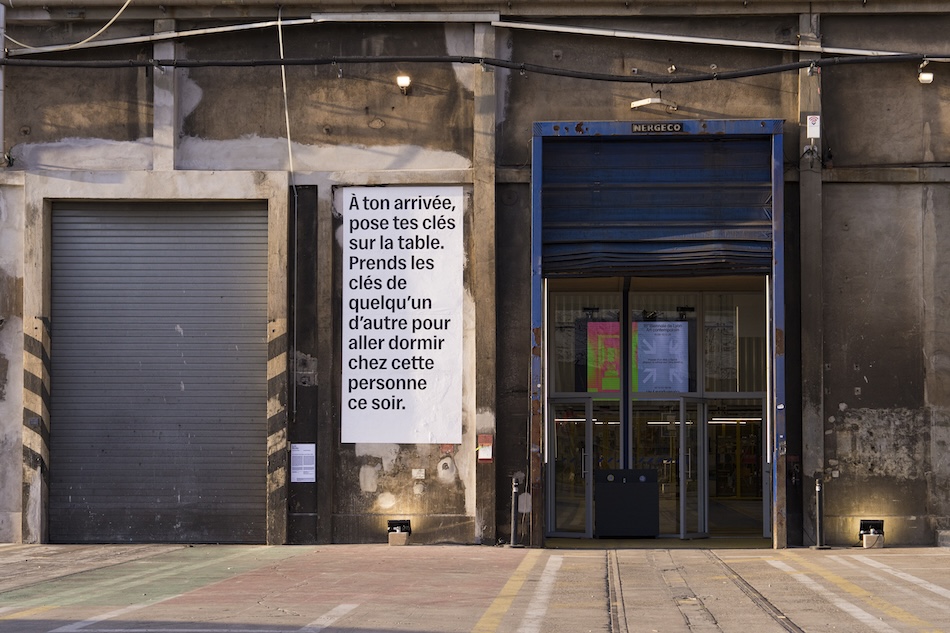
Luz Broto, Put Oneself in the Place of the Other, 2026. 8 protocols tailored to different venues at the Lyon Biennale and public spaces in Lyon. Installation view at Les Grandes Locos. Photo: © Blandine Soulage
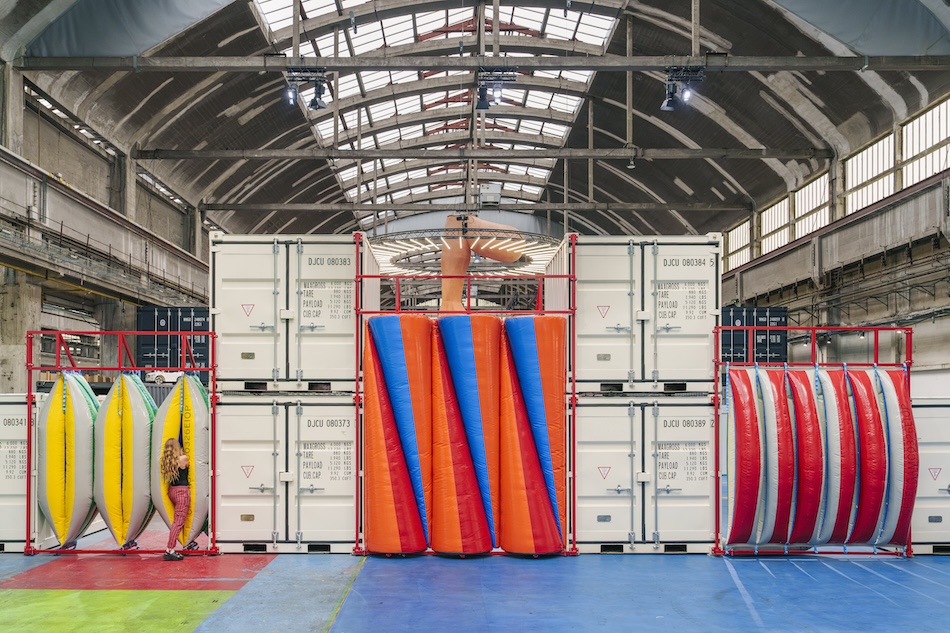
Laia Estruch, CARRAU P1, 2026. CARRAU P2, 2026. CARRAU P3, 2026. Installation view at Les Grandes Locos. Courtesy of the artist and Galería Ehrhardt Flórez. Foto: © Blandine Soulage
And the map that emerges in Lyon deserves attention. Among its 120 artists it includes creators from the Middle East —Lebanon, Gaza, Syria—, Armenia, India, Ghana, Australia and Aotearoa New Zealand, alongside voices from Eastern Europe —Kosovo, Bosnia— and others that make it difficult to maintain a comfortable division between centre and periphery, East and West, or North and South. To list them this way could easily turn a heterogeneous set of stories into a catalogue of peripheries viewed from Europe. That same tension runs through the Spanish strong presence at the Biennale, with nine artists —Lara Almarcegui, Luz Broto, Lúa Coderch, June Crespo, Laia Estruch, Karlos Gil, Núria Güell, Mónica Mays and Álvaro Urbano— whose practices range from Güell’s institutional critique and Broto’s spatial interventions to Coderch’s inflatable architectures and Estruch’s work with body, voice and space. Far from forming a homogeneous block, their presence underscores something that defines the entire Biennale, that proximities are not neutral and that every selection produces a possible reading across different geographies and histories.
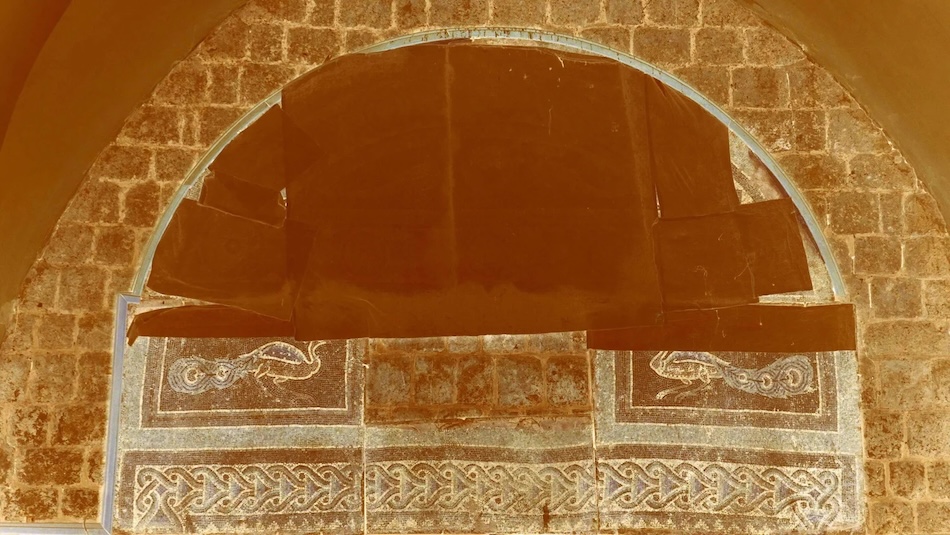
Huda Takriti, once upon a time they thought the end would come from above, 2026, film still. Courtesy of the artist and Han Nefkens Foundation
Huda Takriti introduces one of those histories through disappearance. Her work addresses clandestine excavations and the looting of archaeological sites in Syria, turning absence into a physical and historical presence. What disappears from the territory enters other chains of circulation, ownership and knowledge. Archana Hande follows another route through the punched cards of Jacquard looms, connecting Lyon and Bangalore, textile industry and computing, colonialism and labour. Here the economy reappears literally, as an infrastructure capable of linking distant places long before a biennial places them in the same room. Yana Nafysa Dombrowsky-M’Baye follows the route of gum arabic from Senegal to France and Lyon, turning the circulation of a raw material into a journey through colonial trade, diaspora and family memory.
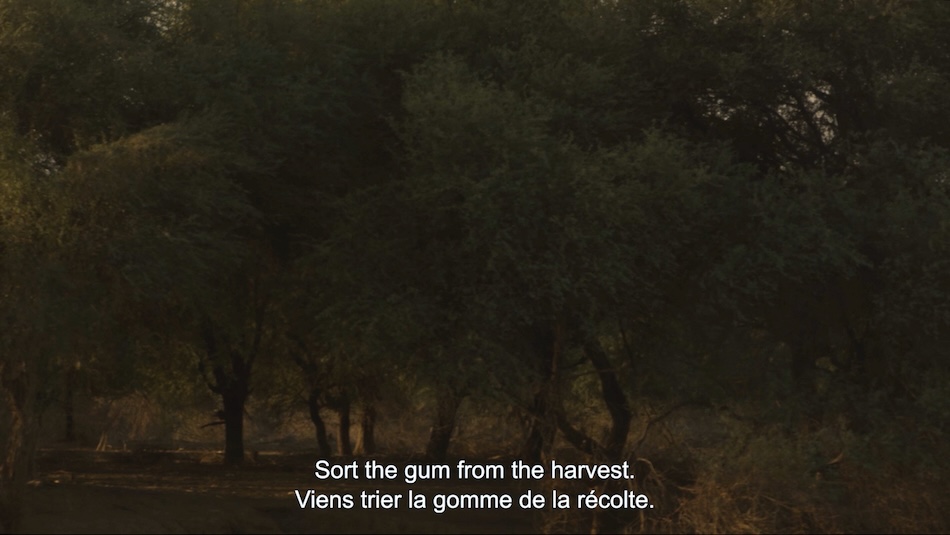
Yana Nafysa Dombrowsky-M’Baye, d’encens, de clou de girofle, de mouton, de thé brûlé, et de jasmin de nuit, 2026, film still. Courtesy of the artist
garrandarang, by Jazz Money, extends that movement. The poem follows rivers, trade routes, trees, paper and languages, drawing them into histories of extraction while refusing to make loss the final word. Against the extractive logic, territory, forests and surviving languages persist. The work also shifts the question from who owns the land to who can narrate it, archive it and produce knowledge about it.
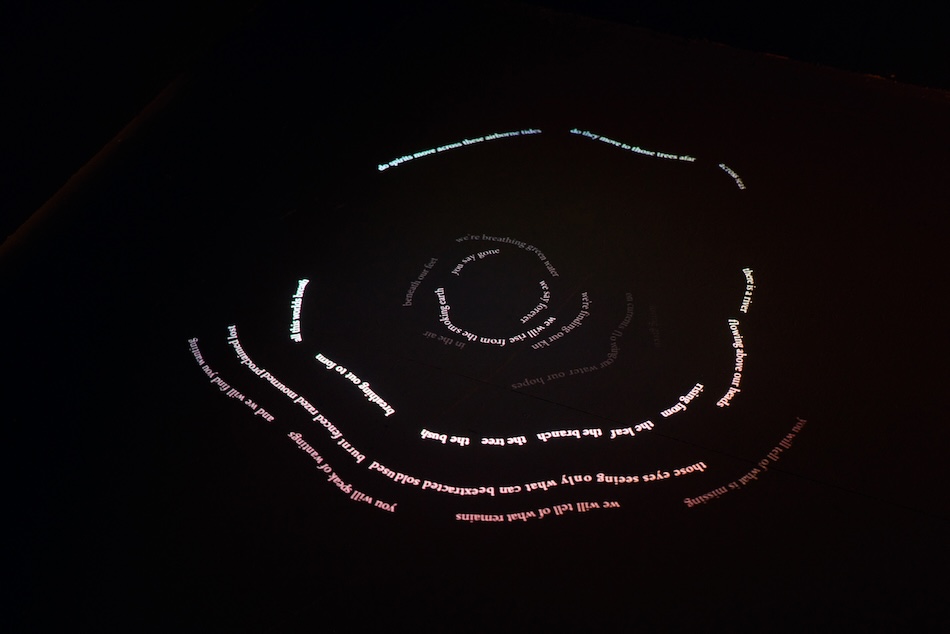
Jazz Money, garrandarang, 2021, text light projection on the floor. Installation view at Out of the Everywhen, Plimsoll Gallery, University of Tasmania, 2023. Courtesy of the artist. Photo: Rémi Chauvin.
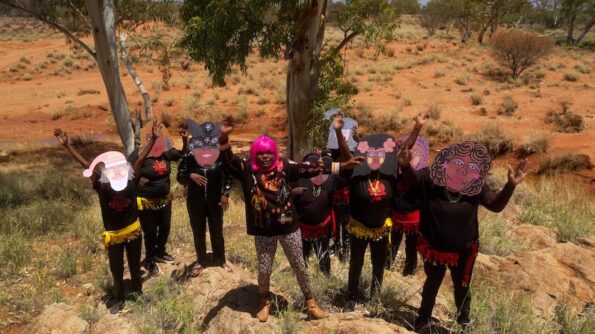
It is here that the strong presence of artists from Australia and Aotearoa New Zealand ceases to be merely a geographical feature of Nichols’s selection. Kaylene Whiskey brings ancestral narratives into contact with cars, superheroines and popular culture, unsettling any comfortable opposition between tradition and contemporaneity. Luke Willis Thompson turns the gaze back towards the colonial relations of the Pacific and conflicts over sovereignty that remain unresolved. His broadcasts move through different political scenarios in the Pacific, from a possible constitutional transformation of Aotearoa to the Dawn Raids against Pacific migrants and the Kanak claim to independence from France. John Miller traces another political genealogy through the Māori struggle for land, connecting the great land march of 1975 with the nineteenth-century wars and colonial confiscations. Hayley Millar Baker, meanwhile, works with colonial archives, photography and digital composition to question how these histories are constructed and transmitted, resisting their fixation into a single perspective.
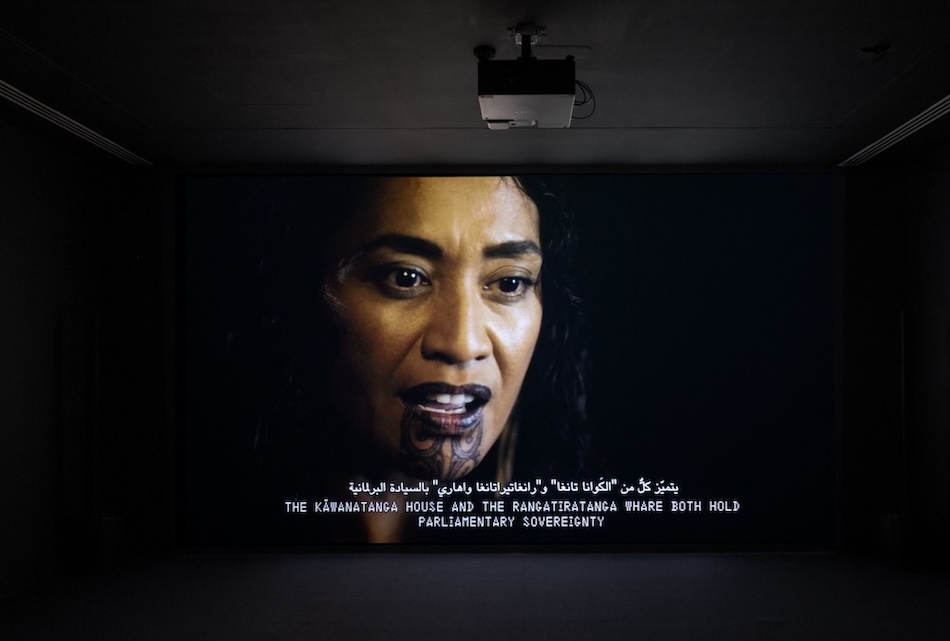
Luke Willis Thompson, Te Moana-nui-a-Kiwa, 2024-2026. Installation view at macLYON. Courtesy of the artist and Nagel Draxler (Berlin/Köln/Meseberg)
Europe has a long history of turning other territories into surfaces onto which it projects difference, exoticism, spirituality, violence, authenticity or whatever its own modernity imagines it has lost. In Orientalism[1]Edward W. Said, Orientalismo, trad. María Luisa Fuentes, Barcelona, Debolsillo, 2008 [1978]., Edward Said showed the extent to which otherness can also be a construction of the viewer. The geography of this Biennale extends far beyond the territory Said studied, and his analysis cannot simply be transposed onto Ghana, India or Aotearoa, but his warning remains productive. Turning our gaze elsewhere does not necessarily mean changing the categories through which we see.
The works themselves spoil that fantasy. What we encounter is not an untouched outside waiting to be discovered by Europe, but histories shaped for centuries by trade, colonisation, migration, wars, industries, technologies and the movement of people and objects.
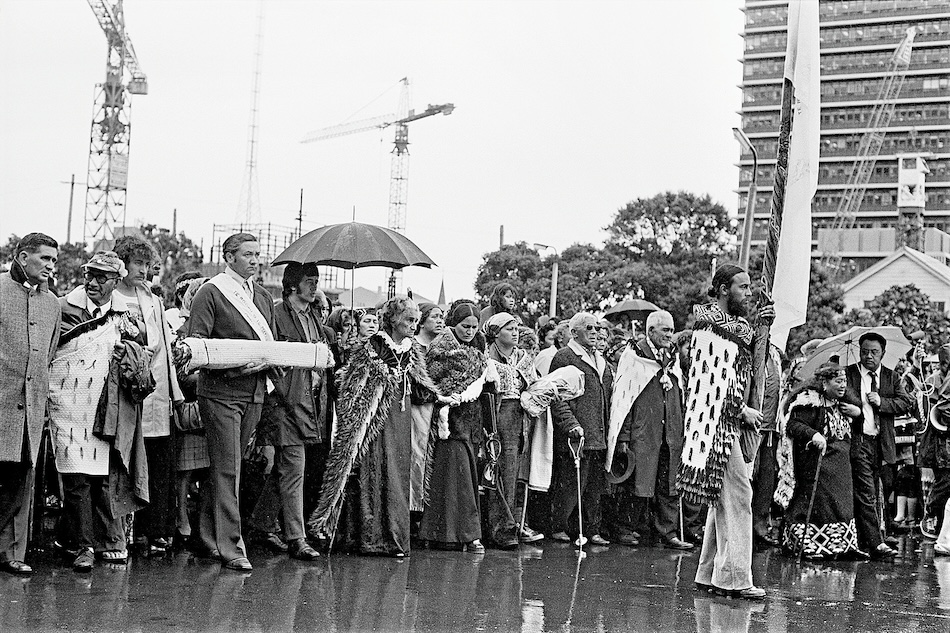
John Miller Hīkoi heading down Lambton Quay to Parliament, Te Whanganui-a-Tara Wellington, 13 October 1975. Courtesy of the artist
And this is where poetic economy begins to turn back on the institution itself. Bourdieu[2]Pierre Bourdieu, Las reglas del arte. Génesis y estructura del campo literario, trad. Thomas Kauf, Barcelona, Anagrama, 1995 [1992]. analyzed how thoroughly the cultural field is also a space in which symbolic capital is produced and distributed. A biennial participates in that process. To be selected, exhibited and placed alongside particular artists produces recognition and value, establishes genealogies and alters positions within the system. Visibility has its own economy, and the institution that alters one map simultaneously participates in constructing the next.
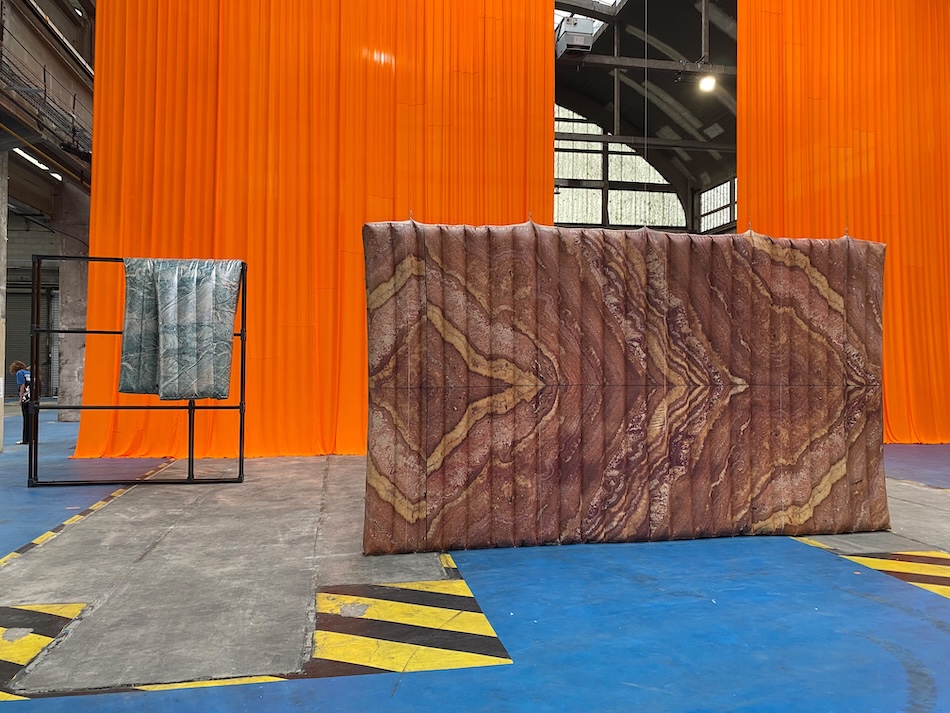
Lúa Coderch, International Style [Pavilion], 2026. Installation view at Les Grandes Locos. Courtesy of the artist, àngels barcelona and The RYDER. Photo: © Xavi Ruiz / Institut Ramon Llull
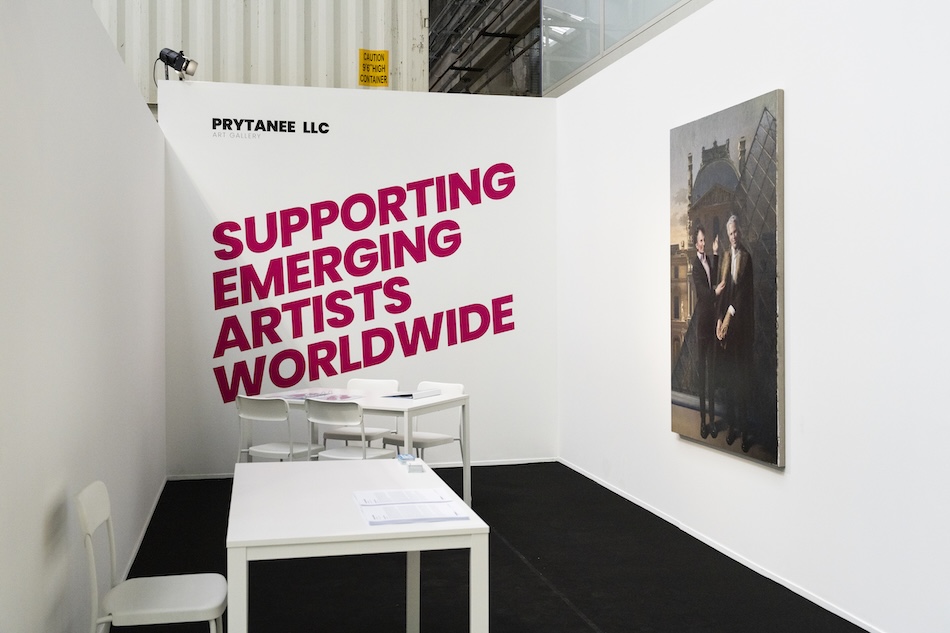
Núria Güell, Degenerate Political Art. Epstein – Lang connection, 2026. Installation view at Les Grandes Locos. Courtesy of the artist. Photo: © Blandine Soulage
Perhaps this is where Passer d’un rêve à l’autre is most convincing. Not when it tries to demonstrate that virtually any human gesture can belong to an economy, but when it uses the institutional capacity of a biennial to interfere, however temporarily, with the circuits of art. According to Nichols, thinking with others does not mean promising harmony, and that no relation is innocent. That uncertainty is more fertile than any pretence of resolving it.
Filliou wanted to imagine other economies. An exhibition can hardly transform the power relations that run through the art world, but it can make them visible, place them under tension and momentarily alter their trajectories.
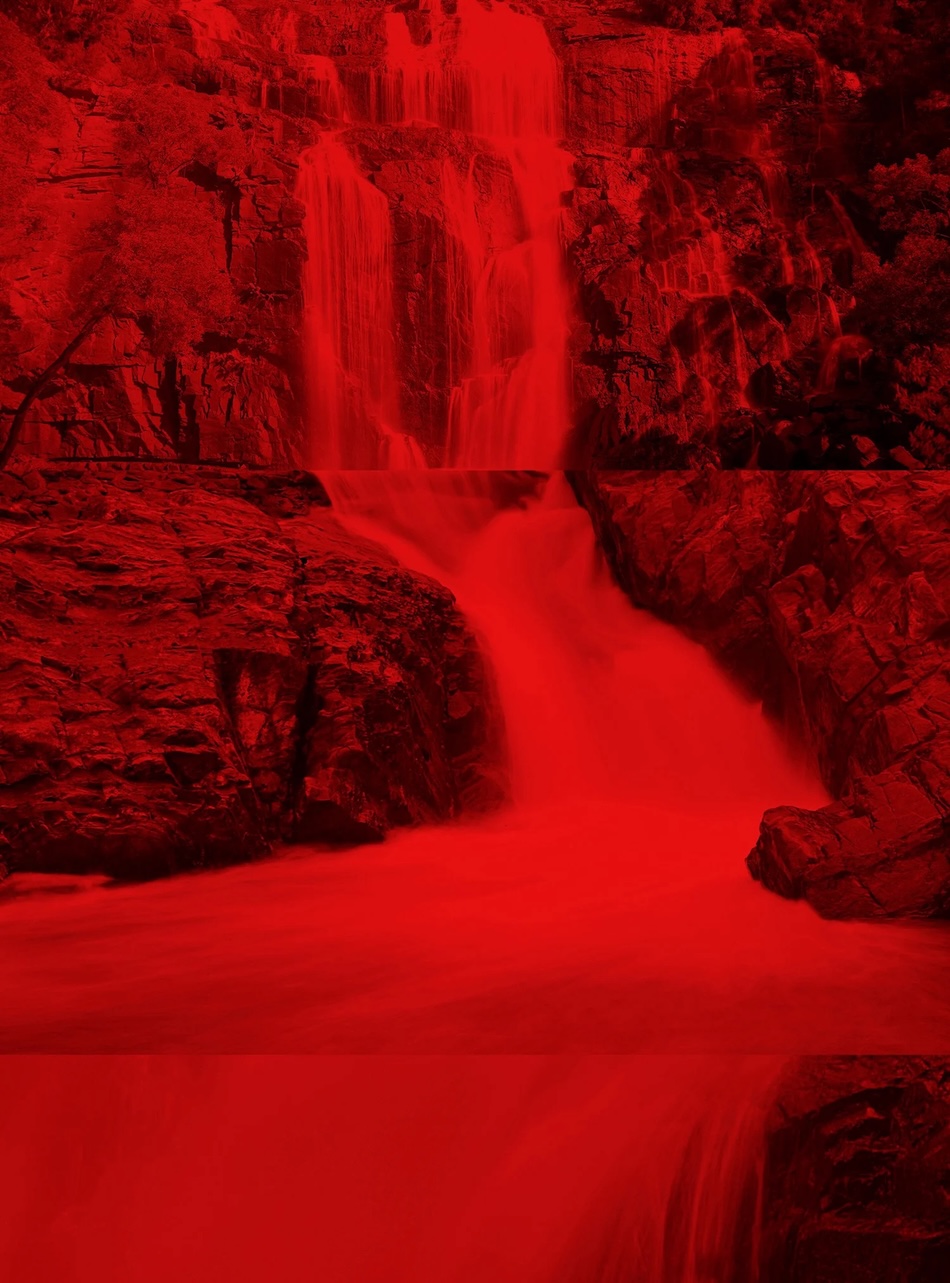
Hayley Millar Baker, She was like the lizard that fell into the water and became a crocodile, 2025, print © Hayley Millar Baker
(Featured image: Kaylene Whiskey, Ngura Pukulpa – Happy Place, 2022, fotograma. Cuortesy of the artist, Iwantja Arts and Roslyn Oxley9 Gallery, Sydney © Adagp, Paris, 2026)
The 18th Lyon Biennale, Passer d’un rêve à l’autre on display till December 13 2026.
María Muñoz-Martínez is a cultural worker and educator trained in Art History and Telecommunications Engineering, this hybridity is part of her nature. She has taught “Art History of the first half of the 20th century” at ESDI and currently teaches the subject “Art in the global context” in the Master of Cultural Management IL3 at the University of Barcelona. In addition, while living between Berlin and Barcelona, she is a regular contributor to different media, writing about art and culture and emphasising the confluence between art, society/politics and technology. She is passionate about the moving image, electronically generated music and digital media.
Portrait: Sebastian Busse
Media Partners:






"A desk is a dangerous place from which to watch the world" (John Le Carré)