Search
To search for an exact match, type the word or phrase you want in quotation marks.
A*DESK has been offering since 2002 contents about criticism and contemporary art. A*DESK has become consolidated thanks to all those who have believed in the project, all those who have followed us, debating, participating and collaborating. Many people have collaborated with A*DESK, and continue to do so. Their efforts, knowledge and belief in the project are what make it grow internationally. At A*DESK we have also generated work for over one hundred professionals in culture, from small collaborations with reviews and classes, to more prolonged and intense collaborations.
At A*DESK we believe in the need for free and universal access to culture and knowledge. We want to carry on being independent, remaining open to more ideas and opinions. If you believe in A*DESK, we need your backing to be able to continue. You can now participate in the project by supporting it. You can choose how much you want to contribute to the project.
You can decide how much you want to bring to the project.
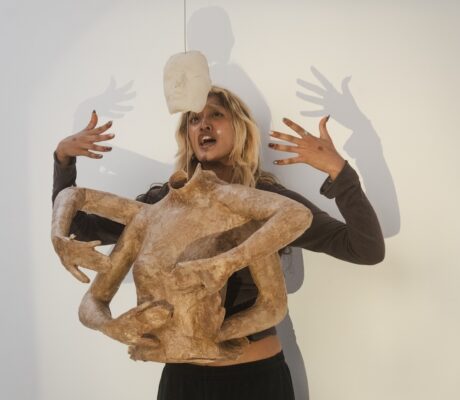
To call something “soft power” is to invoke a term long used by US politicians to describe the strategic influence of culture and diplomacy. The phrase can sound benign—suggesting persuasion, attraction or exchange—while obscuring the power relations and political interests that determine who gets to influence whom. Yet as authoritarian forces gain ground in Germany, soft power takes on a different urgency within Berlin’s cultural landscape. This tension runs through Soft Power, a transdisciplinary festival exploring culture as an infrastructure of encounter, memory and collective transformation. Within its chapter “Remembering / Imagining”, Anousha Payne and Ushara Dilrukshan approach influence through a more elusive figure: the moth.
Their collaborative work Triangle reshapes the O of my mouth, created with Kitty Doherty, moves between installation, opera and concrete poetry. A woman transforms into a moth to escape a domestic space whose walls appear at once protective and oppressive. Wax, batik and sculpture turn the house into a porous body; voice, cello, organ and field recordings activate it as a shifting acoustic environment. Fragments of Bach and Hildegard von Bingen meet experimental vocal techniques, personal journals and diasporic memory. In this conversation, Payne and Dilrukshan discuss how their practices altered one another, what inherited artistic forms can be made to hold, and how tenderness might become a source of authority.
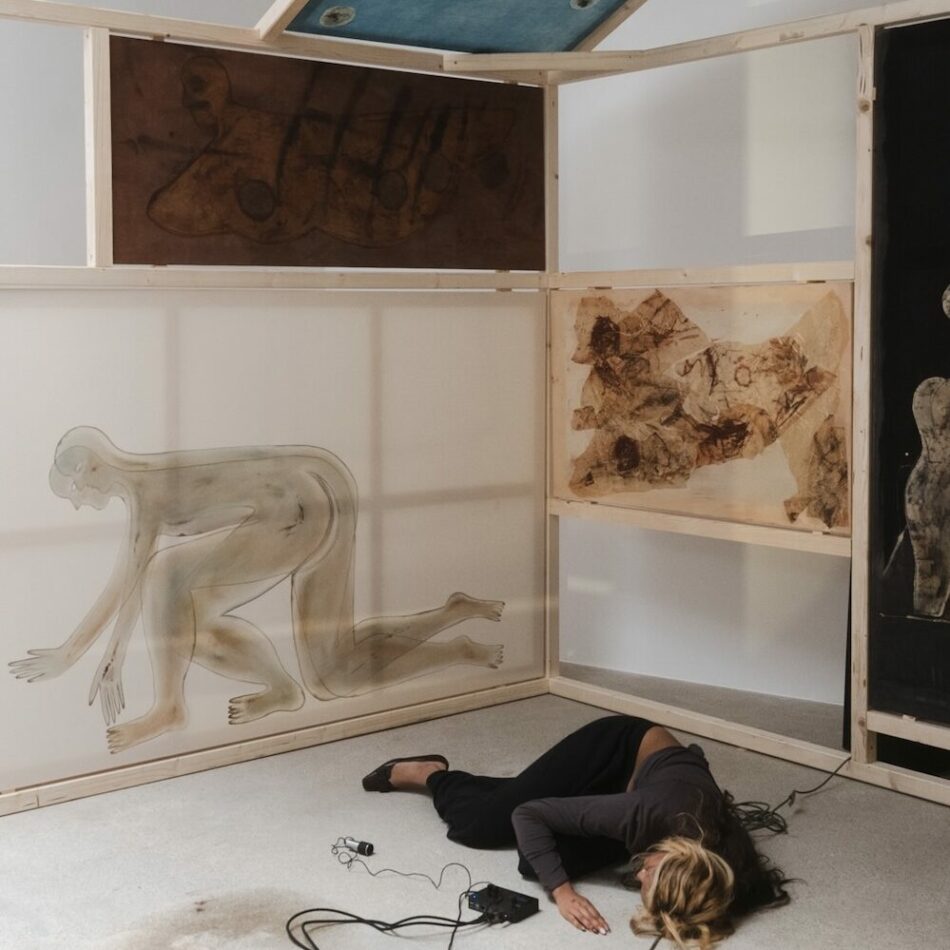
Performance by Ushara Dilrukshan with art works by Anousha Payne at Sperling (Munich). Photo © Pablo Lauf
Octavia Abril: How did the moth become the shared figure connecting installation and opera?
Anousha Payne: I started working with the story of the moth after the breakdown of a long and difficult relationship. As I cleared out my room, I moved my laundry basket and a swarm of moths surrounded me, revealing a perfect circular hole in the carpet. The moths left the house with me when I took the basket to the recycling centre in the back of my car. They remained in my car for years, dormant in winter and returning in the warmth of summer. The experience stayed with me. I began thinking about the moth’s ability to move fluidly between public and private borders, as a silent witness to what may be happening behind closed doors. It became a personal emblem of liberation and autonomy.
Ushara and I met through a workshop organised by the artist Cassie Layton, who brought together a group of us with British Sri Lankan heritage to respond to documents in The National Archives. We later participated in Weather Reports, a residency in Sri Lanka, also organised by Cassie, that brought artists and musicians together to research and collaborate in response to the climate emergency. Although Ushara and I were not in the same group, our collaboration began when I heard her speak about exploring womanhood and trauma through narrative. I became excited by the prospect of working across our different experiences and similar storytelling structures: we shared a heritage and ways of processing trauma and personal experience, but arrived at very different materials and outcomes. I had also seen Cell Deletion, Ushara’s performance with her collaborator Sonnie, and was so moved that I felt shaken. I couldn’t stop thinking about it.
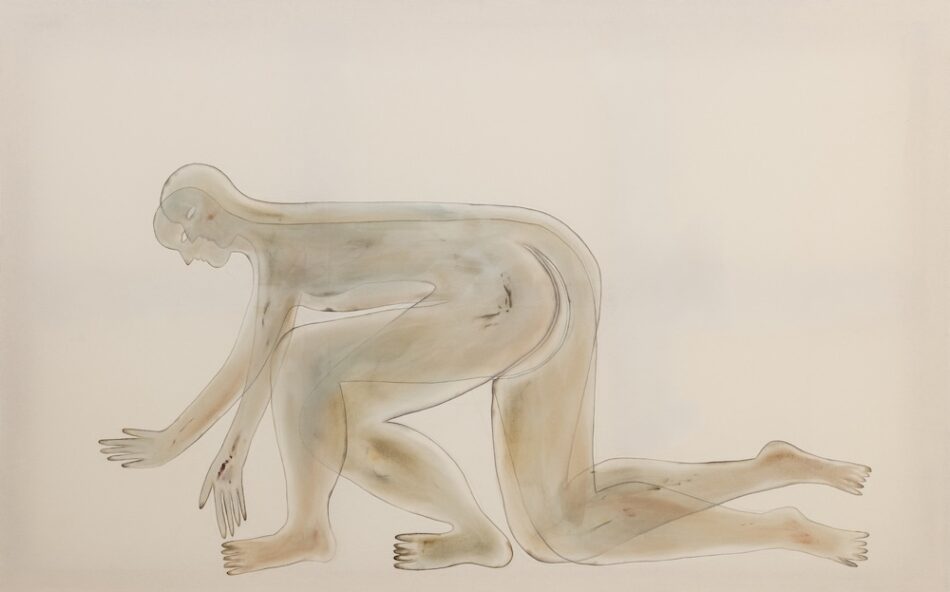
Anousha Payne, In a Time of Desired Calm. Photo: Sebastian Kissel
Ushara Dilrukshan: Anousha and I spoke only briefly, but there was an immediate connection. We were both later selected for the Colomboscope Weather Reports residency in Sri Lanka, where we spent more time together and developed a deeper understanding of each other’s practices.
At the time, Anousha was preparing for the Various Others open studios in Munich. The galleries had suggested creating a collaborative work, and she told me she felt particularly drawn to working with me. I felt the same, although neither of us yet knew what form the collaboration would take.
During a meeting between residency sessions, Anousha shared writings centred on moths. She described them as figures that exist between borders—moving between inside and outside, carrying traces and quietly witnessing different spaces. That image became the conceptual foundation for everything that followed.
Rather than simply making work about the moth, it began to feel as though we were making work for it. It became the central figure connecting Anousha’s installation and my opera. The moth moved between our mediums as it moved between worlds, acting as a shared protagonist across sculpture, sound, voice and performance.
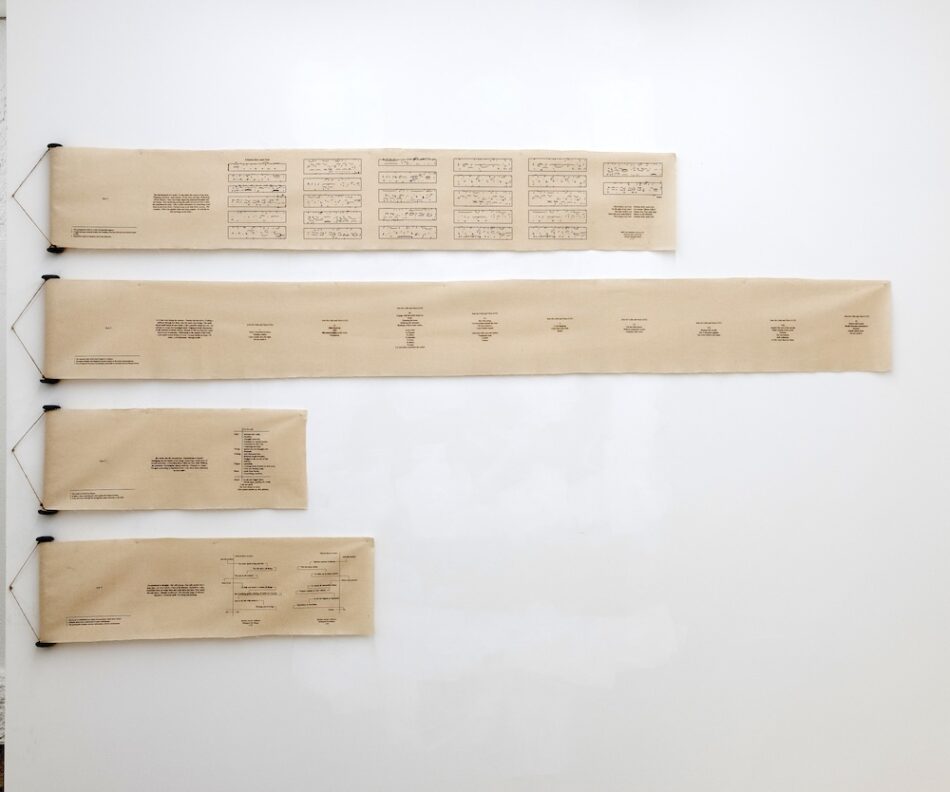
Ushara Dilrukshan, Extended libretto to Triangle reshapes…, 2026
OA: What did each of you allow the other’s work to change?
AP: We were in dialogue throughout and spent a few days working together in my studio in Paris. We were open with each other, honest in our feedback and willing to listen. Some things changed shape naturally; others changed through discussion. It is difficult to define exactly what enabled those changes, but trusting and supporting each other affected how I thought about the project—as a stage, something to be activated. Being supported by a collaborator, and now a friend, reinforced the foundations of our work.
OA: Anousha, how do wax, batik and domestic materials make the home feel both protective and controlling?
AP: At the time, I was reading Anne Duden’s The Opening of the Mouth. A short story in the book describes the experience of being trapped and traumatised in a woman’s body, deprived of a voice or mouth. I began to think of the walls of the house as an extension of the body. There are problematic elements to the text, particularly its presentation of this experience as that of an “everywoman”, removing the cultural, class and racial factors that shape an individual’s experience of their body. As Annette Meusinger writes in The Wired Mouth: On the Positionality of Perception in Anne Duden’s Opening of the Mouth and Das Judasschaf, the political present of the artist is never neutral but charged with the tensions and contradictions of a particular individual and historical moment.
The house in the exhibition is an assemblage of memories, fictions and materials that places the audience in the perspective of a fictional woman transforming into a moth. She is not an “everywoman”, but a figure created from the shared and overlapping experiences of two women.
The house contains openings in its walls, making it feel somewhat permeable. Yet the figures in the paintings and batiks that form those walls are oppressive: the woman is trapped in repetitive daily tasks, cleaning or sitting across the table from herself in conversation. Other sections use batik to depict her transformation into a moth. I associate batik with the home; my mother, my grandmother and I all wear pyjamas made using this technique. It holds memories.
The ceiling uses batik as a form of preservation. Beeswax and pine resin encase small, intuitive drawings and marks on silk, evoking the movement of a moth beating against a wall. The circles also represent parts of the woman’s body, dispersed around the room—leaking and porous, as though extensions of her body were seeping through the walls. This refers to Anne Carson’s Dirt and Desire and her account of women’s boundaries throughout history as porous, mutable and subject to metamorphosis. Circles and dots spread through the ceiling and walls, then continue throughout the exhibition as ceramic discs. Drawn from the markings on a moth’s wing, they represent the moth-woman protagonist dispersing and depositing herself around the room.
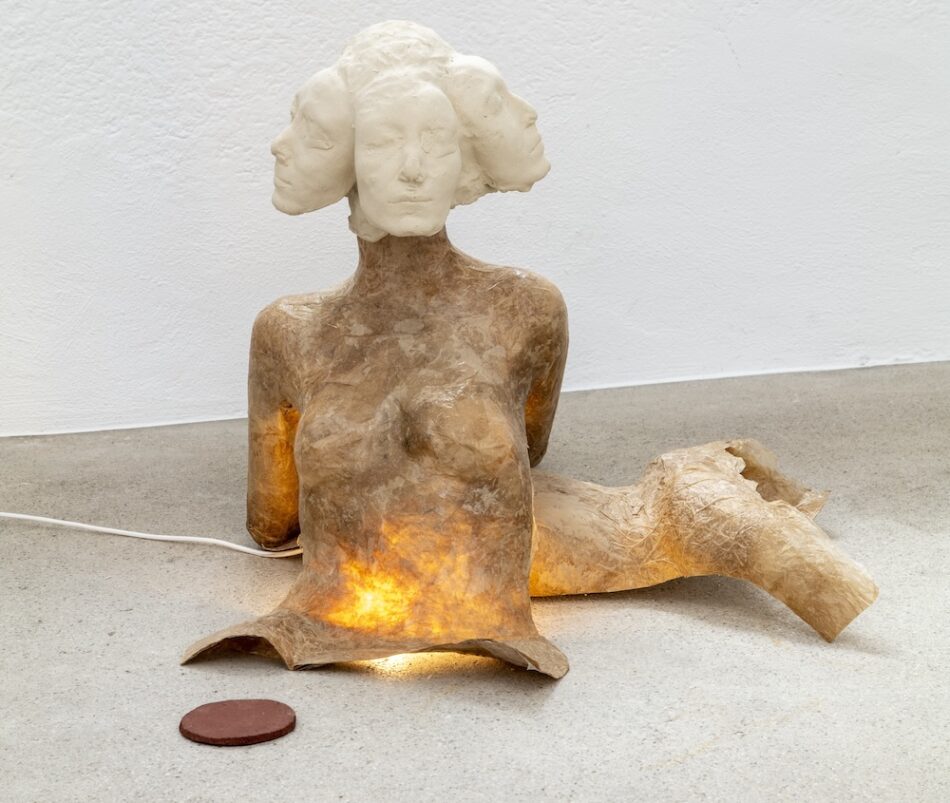
Anousha Payne, Thoughts Like Puddles to the Floor (Past, Present, Future), 2026. Photo: Sebastian Kissel
OA: When you work with Bach or Hildegard von Bingen, do you experience their music as inheritance, material, canon, or something else?
UD: Working with Bach or Hildegard, I take fragments of existing notation and place them alongside my own voice, body and story, creating a dialogue between past and present. I’m not trying to reproduce the music faithfully; I’m interested in what happens when it encounters something it was not written to contain, including electronic treatment and new instrumentation.
“The greatest stories are already written.”
OA: Opera comes with powerful histories of class, institution, nation and cultural legitimacy. What does it mean for you to enter that form rather than reject it?
UD: For me, entering opera is less about rejecting its history than entering into conversation with it. Opera has always been a space for storytelling, music, power and spectacle, so I’m interested in bringing different histories and experiences into that space.
I don’t necessarily want to dismantle the form; I want to see what it can hold. There is something powerful about placing a personal story, expressed through experimental means, alongside established musical traditions and allowing them to coexist without one legitimising the other. This can expand who opera speaks for and who feels the form belongs to them.
OA: What kind of authority does the trained voice carry, and what happens when you deliberately destabilize that authority?
UD: A trained voice carries a certain authority because we associate it with precision, control and tradition. In opera, that authority has historically been tied to ideas of perfection and discipline. I’m interested in what happens when it begins to fracture.
Throughout my work, I move between operatic singing and extended vocal techniques—breath, strain, distortion, whispers and non-verbal sounds. Destabilising the trained voice makes it more human, revealing vulnerability, labour and the body behind the performance. Inspired by artists such as Meredith Monk, Jocelyn Pool and Joan La Barbara, I’m not abandoning classical technique but expanding it, allowing the voice to carry fragility, uncertainty and transformation as well as beauty.
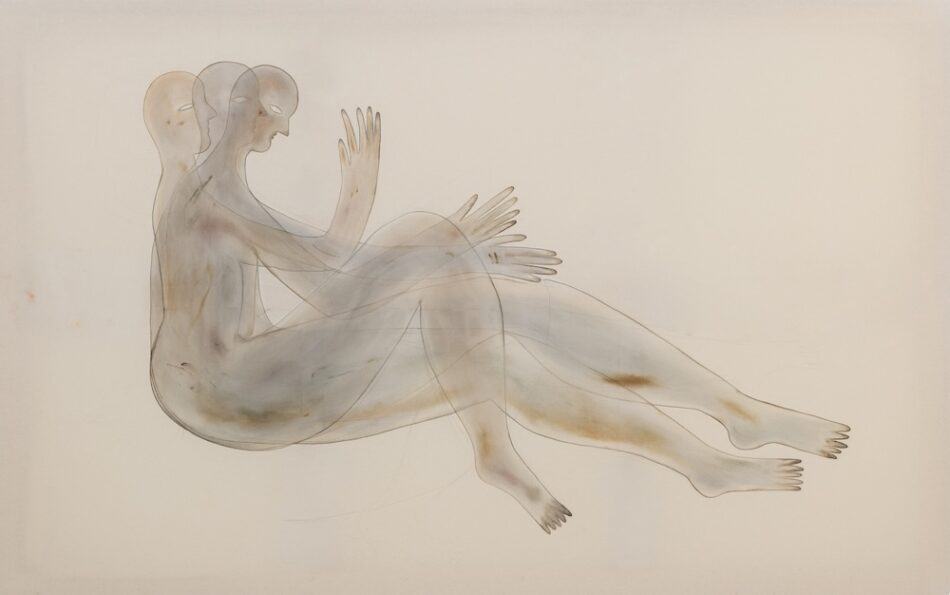
Anousha Payne, Drag my Fingers Along the Soft Wall of Thoughts, 2026. Photo: Sebastian Kissel
OA: Can the voice be understood as a form of soft power—something capable of entering another body without physically touching it?
UD: For me, the voice is perhaps the clearest example of soft power. We use it every day, yet often overlook its ability to move, persuade, comfort, and transform. Our voices carry emotion, history, and memory, while remaining inherently porous—they travel across bodies, languages, and spaces without physical contact.
Even when we don’t understand the language of a song, we can still recognise its emotional weight. That ability to communicate beyond words is a form of soft power. It doesn’t demand attention through force; instead, it invites listening, empathy, and connection.
As a performer, using my voice vulnerably creates space for the audience to encounter their own emotions. Rather than imposing meaning, the voice offers an invitation—a quiet force that encourages others to become softer with themselves. I often work with nonsensical language, using Oulipian forms to transform lyrics while retaining their original emotion. Sometimes words aren’t enough.
AP: It’s funny: before reading Ushara’s response, I had written a brief note—“voices, permeation of porous bodies”. I was thinking about the porosity of our bodies when receiving sound, and how voices can leave imprints on our bodies and memories, provoking joy and sadness.
The voice can be understood as a form of soft power: it permeates our porous bodies, influencing, comforting, calming and inspiring us. Ursula K. Le Guin describes the woman’s voice as “always on the verge of silence, often on the verge of song”. We must continue to sing, tell stories and share our experiences and truths.
OA: Which questions would you prefer the work to leave open?
AP: I’m not sure the work offers clear answers. It is a deeply personal record and interpretation of our overlapping experiences—a story of resistance and courage that I hope people can relate to through their own lives. I hope audiences feel engaged and question positions of power, both within human relationships and between human and non-human life within ecology.
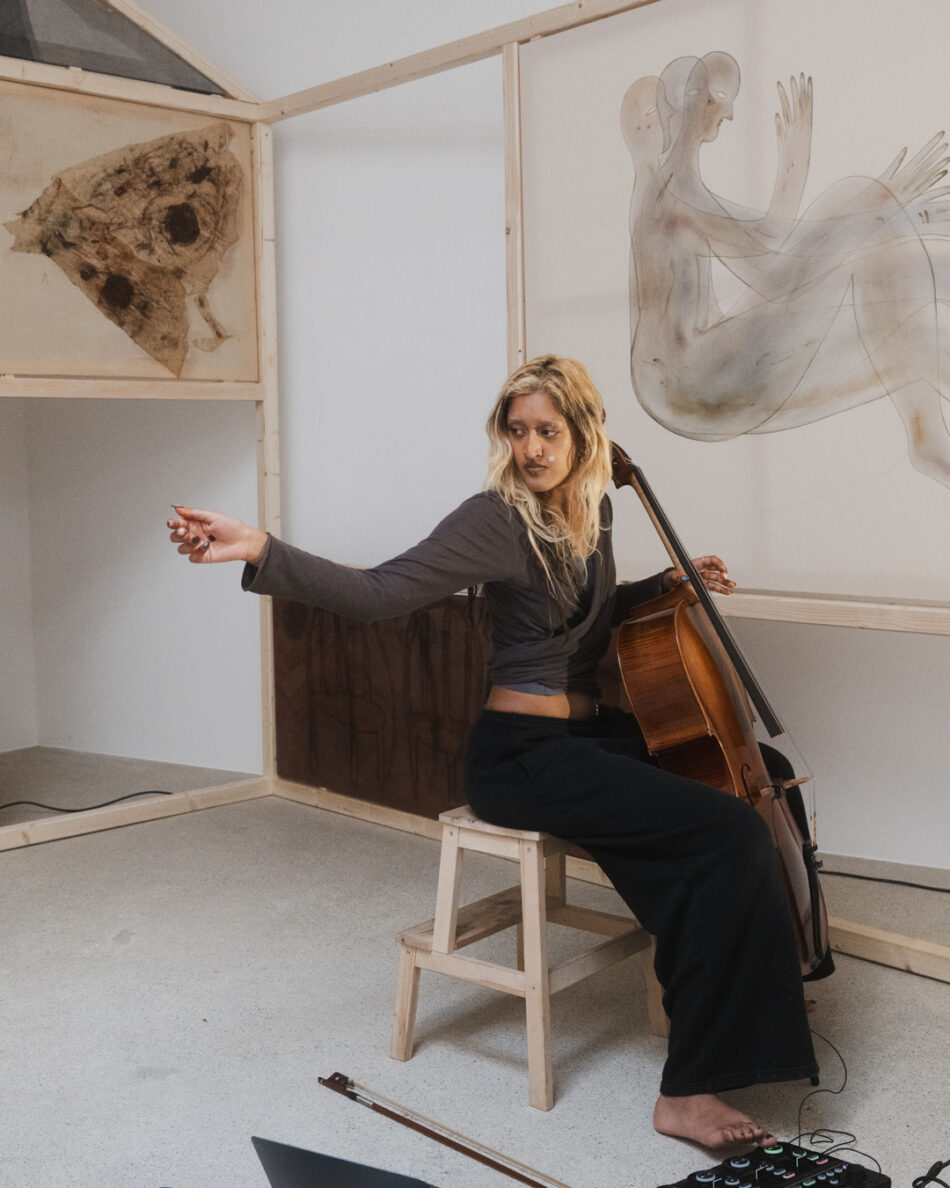
Performance by Ushara Dilrukshan with artworks by Anousha Payne en Sperling (Munich). Photo © Pablo Lauf
Soft Power is a transdisciplinary festival and long-term platform at the intersection of art, music and social dialogue. A special project of Berlin Art Week 2026, the festival was initiated by Anahita Sadighi, curated by María Inés Plaza Lazo and architected by Gonzalez Haase AAS. It takes place from 11 to 13 September at Haus der Visionäre, Eichenstraße 4A, Berlin, bringing together exhibitions, performances, concerts, DJ sets, talks, community radio and shared meals.
On Sunday, 13 September, Ushara Dilrukshan will perform at 7 pm and 9 pm at Haus der Visionäre. At 8 pm, Anousha Payne, Ushara Dilrukshan and Kitty Doherty will take part in a conversation as part of the Refuge Worldwide programme.
[Featured image: Performance by Ushara Dilrukshan in front of Anousha Payne’s artwork, Amma, In Motion, 2026, at Sperling (Munich). Photo © Pablo Lauf]
Octavia Abril is a Chilean writer who responds sensitively to the changing seasons. Affected by the ever-new allergies they experience as a result of climate change and industrially processed foods, their work flourishes in the borderlands between institutions and vineyards. In this bodily condition, they decided to create worlds and words through dangerous kisses. They boycott advertising posters but are always open to a good conversation.
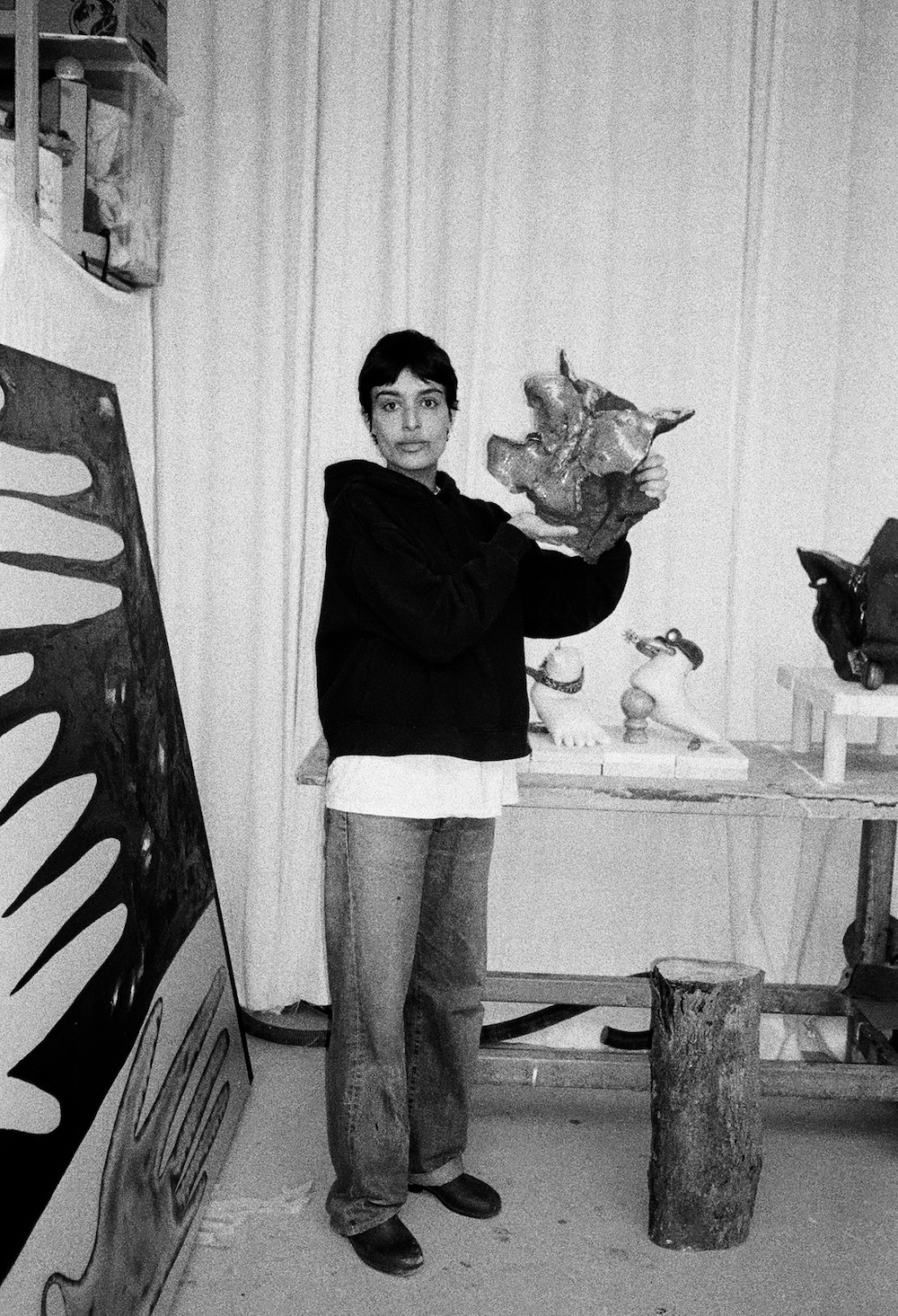
Anousha Payne (b. 1991, Southampton) is an artist working across sculpture, painting, textiles and sound. Drawing on folktales, mythology, personal experience and fictional narratives, her practice explores cultural identity, animism, material hierarchies and the transformative power of objects.
Portrait: Gemma Janes, 2025
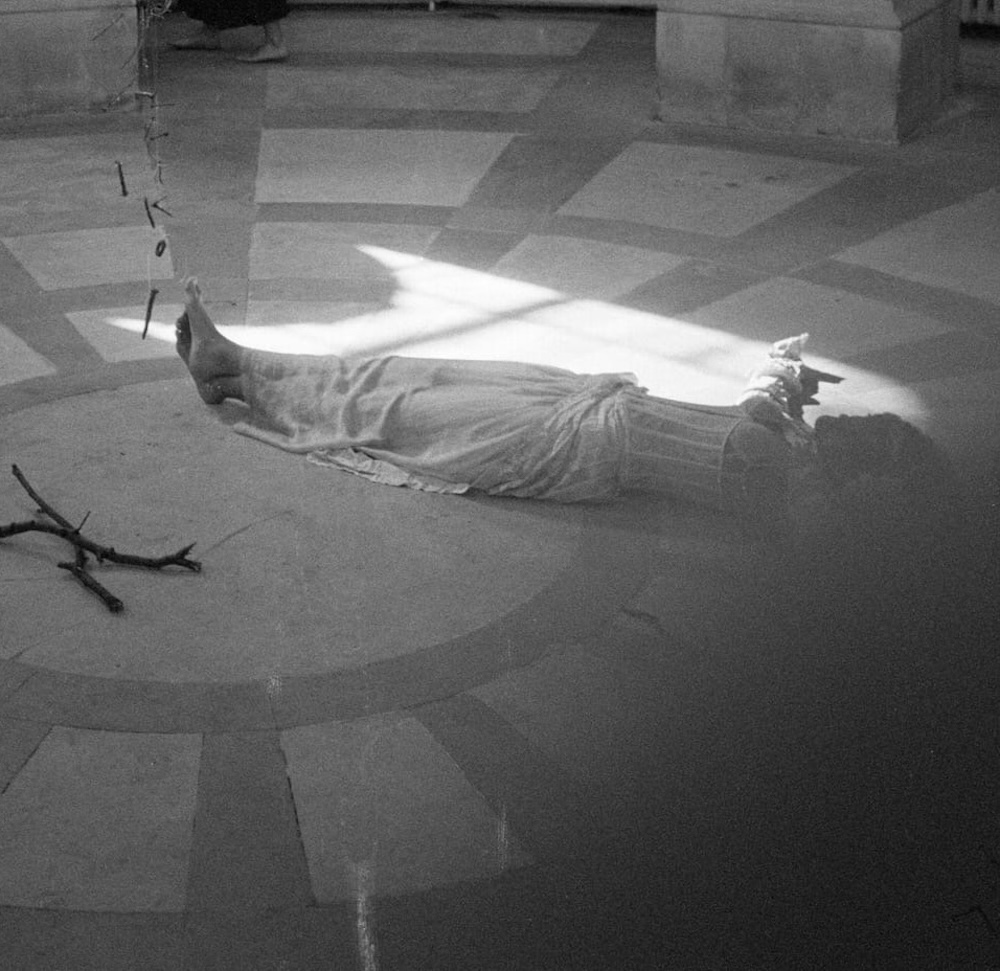
Ushara Dilrukshan is a Sri Lankan sonic performance artist and trained soprano working across expanded opera, composition, pipe organ and experimental theatre. Her narrative-led practice explores cultural identity, womanhood and trauma through sound and performance. She holds an MA from the Royal College of Art.
Media Partners:






"A desk is a dangerous place from which to watch the world" (John Le Carré)