


Search
To search for an exact match, type the word or phrase you want in quotation marks.
A*DESK has been offering since 2002 contents about criticism and contemporary art. A*DESK has become consolidated thanks to all those who have believed in the project, all those who have followed us, debating, participating and collaborating. Many people have collaborated with A*DESK, and continue to do so. Their efforts, knowledge and belief in the project are what make it grow internationally. At A*DESK we have also generated work for over one hundred professionals in culture, from small collaborations with reviews and classes, to more prolonged and intense collaborations.
At A*DESK we believe in the need for free and universal access to culture and knowledge. We want to carry on being independent, remaining open to more ideas and opinions. If you believe in A*DESK, we need your backing to be able to continue. You can now participate in the project by supporting it. You can choose how much you want to contribute to the project.
You can decide how much you want to bring to the project.
There is something symptomatic about a climate biennial adopting as its leitmotif that which language itself can no longer fully articulate. Under the title Unspeakable Worlds, the second edition of the Klima Biennale Wien not only acknowledges the difficulty of representing the climate crisis, but turns it into its primary rhetorical device. What cannot be said — due to excess complexity, semantic saturation, or affective exhaustion — is displaced onto the terrain of experience: the sensory, the relational. But what does it mean, politically and aesthetically, to declare climate as something that human language cannot define?
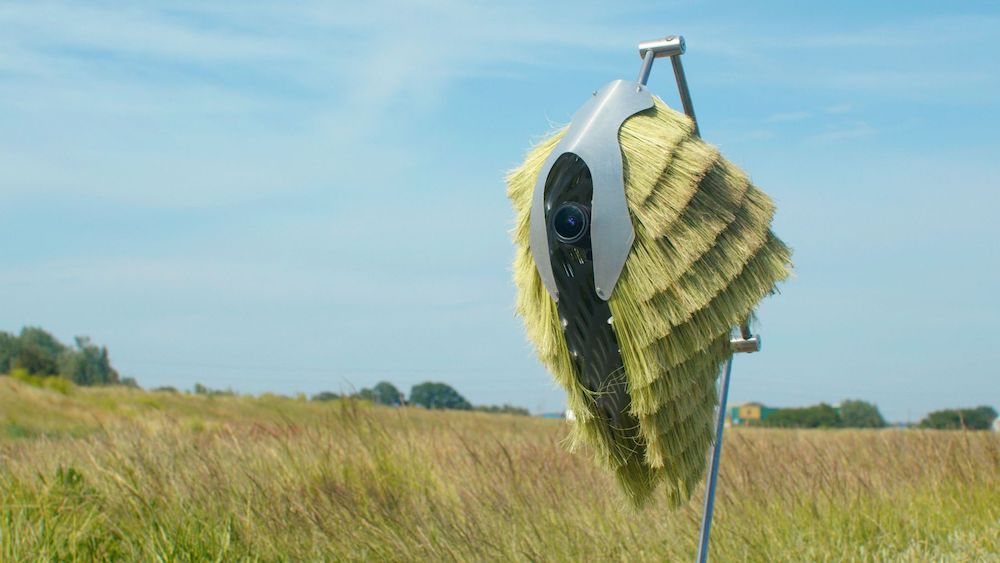
Superflux, Nobody Told Me Rivers Dream, filmstill © Superflux
The biennial unfolds as an extended urban laboratory, with the KunstHausWien as its central hub and the Karlsplatz as one of its main sites of public intervention. This emphasis on public space follows a clear logic: inserting the crisis into everyday life, generating friction between urban infrastructure and ecological narratives. Yet this friction rarely reaches the level of conflict. What emerges instead is a distributed choreography of institutions (partners in climate), artistic interventions, and pedagogies of care, where the viewer is addressed less as a political subject than as a sensitive agent.
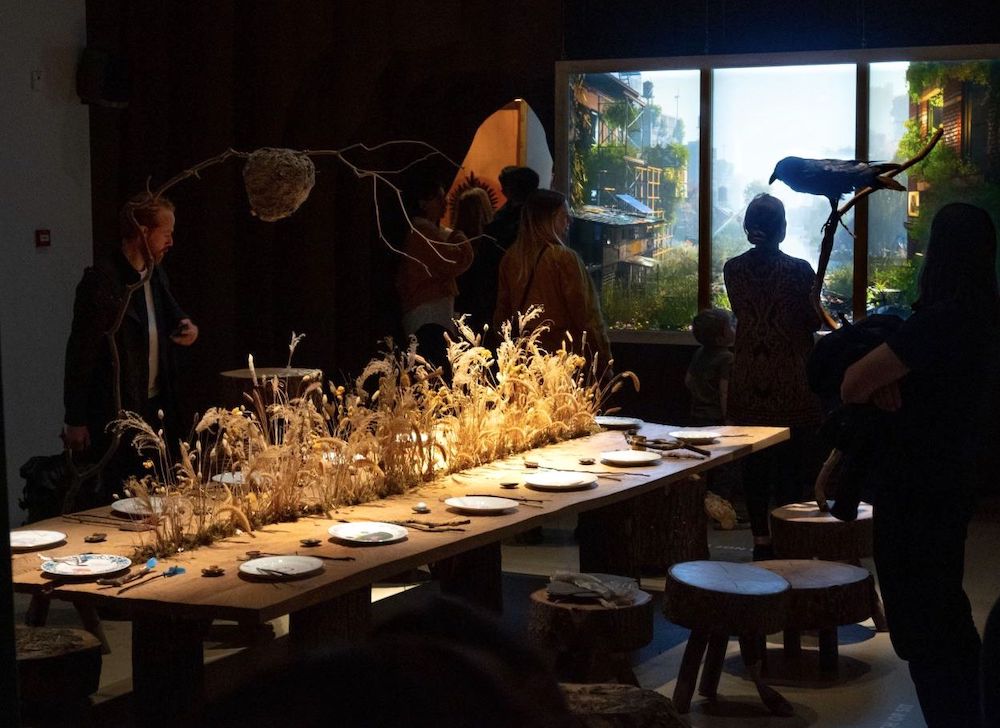
Superflux, Refuge for Resurgence, installation view at Weltmuseum Wien © Superflux
Even when the Klima Biennale Wien extends into partner institutions such as the Weltmuseum o Foto Arsenal Wien, this logic remains intact. In the former, the London-based studio Superflux presents The Craftocene, proposing speculative scenarios in which design, technology, and ecological intelligence rehearse forms of more-than-human coexistence. The exhibition brings together key installations — Refuge for Resurgence (2021), Nobody Told Me Rivers Dream (2025), and the new Relics of Abundance (2026) — alongside objects from the museum’s collection. At the Foto Arsenal Wien, meanwhile, Dutch artist Michelle Piergoelam addresses the Surinamese diaspora — a largely overlooked chapter of colonial memory. The exhibition Across the Water disregards the official record and turns instead to what has survived, this is myths, dreams and family stories. Through photography, textile, and installation, she constructs a visual language in which oral tradition becomes image and historical silence becomes a form of resistance. In both cases, what is activated is not so much conflict as an expansion of perception.
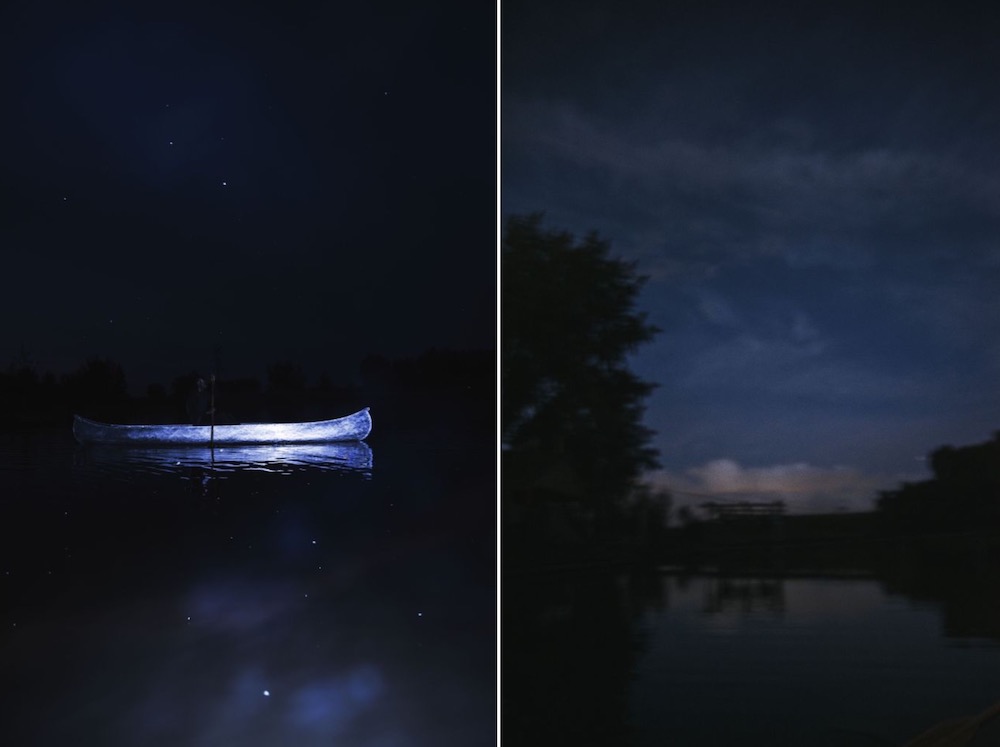
Michelle Piergoelam, left: Nightsongs (2022), right: Moments of the Night (2022) © Michelle Piergoelam
In this sense, the conceptual framework of the biennial echoes Bruno Latour’s call to reconfigure the political through new forms of more-than-human agency, as well as his critique of the limits of modern frameworks of representation. However, whereas Latour proposes a radical rearticulation of these categories, the biennial seems to opt for an aesthetic translation of that crisis —that is, making it visible, yes, but through formats that rarely challenge the institutional frameworks that sustain it.


The exhibition Seeds. Reclaiming Roots, Sowing Futures, at the KunstHausWien, encapsulates this ambivalence. The seed operates here as a total metaphor: archive, promise, resistance, memory. Its polysemy allows for the articulation of colonial histories, food sovereignty, and biodiversity without the need to hierarchize them. Everything is connected — and that is both the project’s strength and its limitation. Interdependence becomes an aesthetic in itself, a way of narrating the crisis without assigning specific responsibility. And yet, certain works introduce moments of friction. In Vivarium: Cytomixis, Kapwani Kiwanga transforms seed beads into a living archive of transatlantic colonial trade, re-inscribing history into the metaphor. Jumana Manna, presents her sculpture group Family (Extended) and film Wild Relatives, which traces the movement of Syrian seeds across contexts of war and conservation, exposing the tension between geopolitical conflict and global biodiversity efforts. Whilst Lucía Pizzani proposal, Flora Totems and Amate Series —a series of collages and sculptures created specifically for the exhibition— and Cecilia Vicuña, the eternal weaver of the precarious, with Semiya —on the collection of endangered native seeds in the foothills of the Andes, reaffirm a more poetic register, where sowing, storing or weaving function as symbolic gestures of resistance. Amidst these shifts, the exhibition does not so much resolve as it does soften the distance between the historical and the affective.
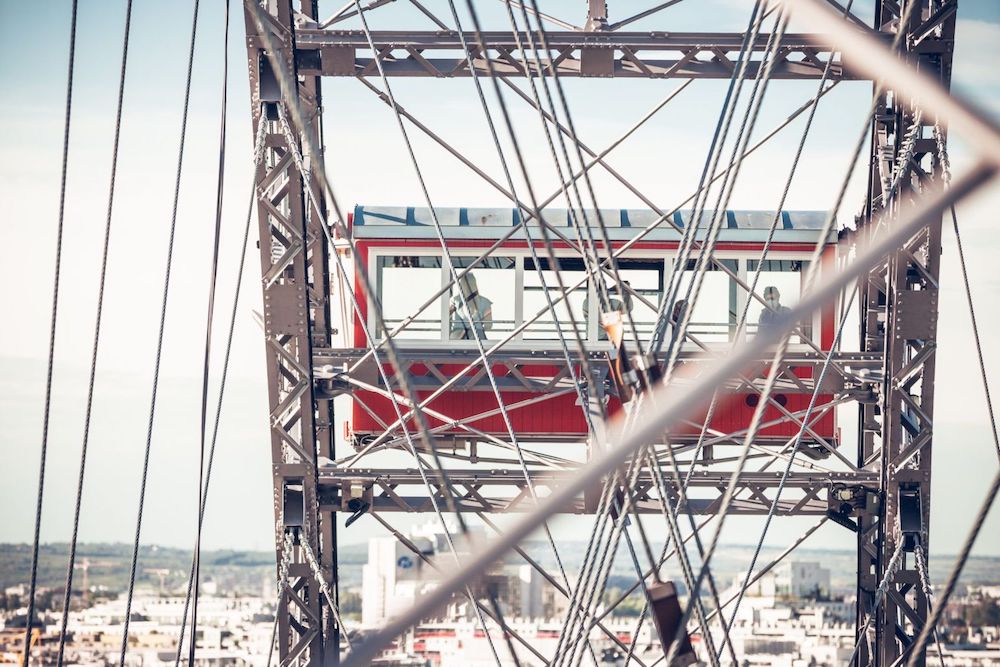
Dominik Eulberg & Marcin Nowicki, Ultrafauna, sound piece at Riesenrad © Wiener Riesenrad
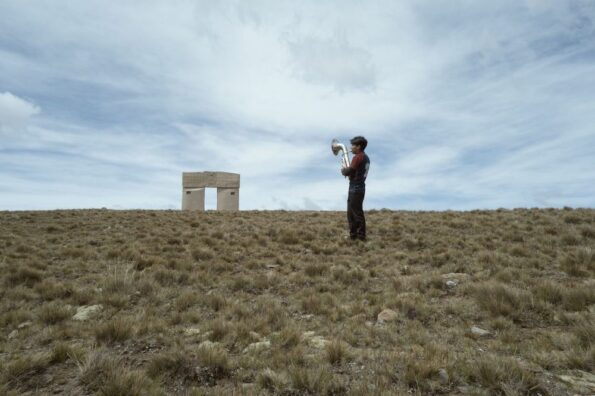
A similar dynamic unfolds in the public interventions gathered under the title (No) Funny Games, where the idyllic and the dystopian intertwine in a carefully calibrated irony. The reference to film Funny Games (1997) by Austrian Michael Haneke is not incidental. One of the most provocative and unsettling films in recent history, it offers a sharp critique of the spectator, and asks us why we keep watching. The biennial similarly seeks to attract the viewer only to then confront them with their own discomfort. A discomfort that is carefully modulated (in the literal sense), as Ultrafauna, a high-tech piece by Dominik Eulberg and Marcin Nowicki, translates in real time the echolocation calls of the bats in the Lobau Reserve (the green lung of the Danube) into a sound experience accessible from a carriage on the Wiener Riesenrad (Vienna Giant Ferris Wheel). An attempt to make the invisible audible and expand perception without necessarily altering its conditions. In contrast, Bolivian artist River Claure introduces a more unsettling fissure with A cuenta de tres, lo destruimos todo (On the Count of Three, We Destroy Everything). This involves the reconstruction and subsequent destruction of the Gate of the Sun at Tiwanaku (a lost monument of a pre-Columbian culture), transported by children across the Altiplano to be installed and, ultimately, detonated. The resulting images, dispersed across multiple venues in Vienna, relocate this gesture to the European context, foregrounding a history of extraction, loss, and collapse where play, memory, and destruction converge without mediation, opening onto the possibility of a decolonial after.

The biennial insists that, in the face of information overload and the collapse of explanatory frameworks, the answer lies not in more discourse, but in more experience. Feeling rather than understanding, connecting rather than analysing. This approach, which could be read as a critique of instrumental rationalism, nevertheless runs the risk of depoliticising that which it seeks to mobilise. For if everything is too complex to be articulated, it may also become too diffuse to be contested.
Perhaps this is where the central paradox of the Klima Biennale Wien lies, in its effort to open spaces of sensitivity and relation, it ultimately produces a relatively consensual regime of affects, in which the crisis is shared but not necessarily confronted. The city becomes an interface, the institution a mediator, and art a translator. But what remains outside that translation?
More than offering answers, the biennial functions as a barometer of a specific cultural moment, one in which the climate crisis can no longer be ignored, yet still resists articulation in terms that might exceed the logic of management. Between the aestheticization of interdependence and the pedagogy of emotion, the “unspeakable” risks becoming an alibi. And yet, it is precisely at that limit — between what can be said and what cannot — that art might still operate as real friction, not as a translation of the crisis, but as an interruption of its dominant narratives.
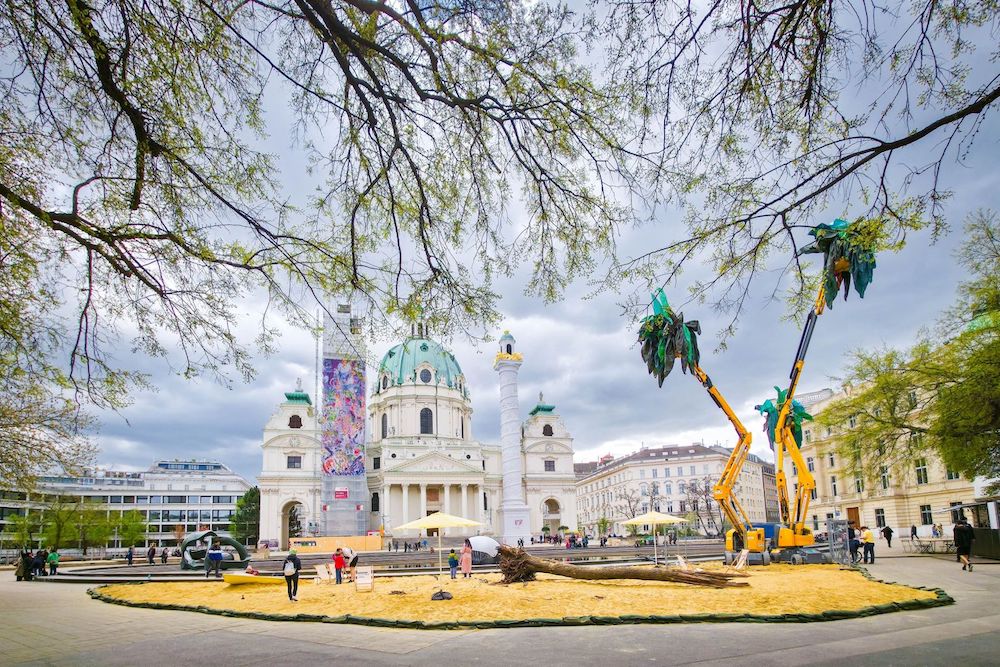
(No) Funny Games. Left, on the church tower: Zheng Mahler. Plague Columns. Centre: Margot Pilz, Kaorle am Karlsplatz, 2026. Right side: Pia Sirén. Palmen am Karlsplatz © Foto: eSeL.at – Joanna Pianka
(Featured image: River Claure, A cuenta de tres, lo destruimos todo, photographic record of the performance © River Claure)
Klima Biennale Wien, Unspeakable Worlds, on display untill May 10.
Programme and diferente locations here.
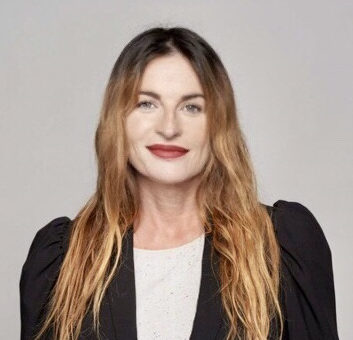
María Muñoz-Martínez is a cultural worker and educator trained in Art History and Telecommunications Engineering, this hybridity is part of her nature. She has taught “Art History of the first half of the 20th century” at ESDI and currently teaches the subject “Art in the global context” in the Master of Cultural Management IL3 at the University of Barcelona. In addition, while living between Berlin and Barcelona, she is a regular contributor to different media, writing about art and culture and emphasising the confluence between art, society/politics and technology. She is passionate about the moving image, electronically generated music and digital media.
Portrait: Sebastian Busse
Media Partners:






"A desk is a dangerous place from which to watch the world" (John Le Carré)