Search
To search for an exact match, type the word or phrase you want in quotation marks.
A*DESK has been offering since 2002 contents about criticism and contemporary art. A*DESK has become consolidated thanks to all those who have believed in the project, all those who have followed us, debating, participating and collaborating. Many people have collaborated with A*DESK, and continue to do so. Their efforts, knowledge and belief in the project are what make it grow internationally. At A*DESK we have also generated work for over one hundred professionals in culture, from small collaborations with reviews and classes, to more prolonged and intense collaborations.
At A*DESK we believe in the need for free and universal access to culture and knowledge. We want to carry on being independent, remaining open to more ideas and opinions. If you believe in A*DESK, we need your backing to be able to continue. You can now participate in the project by supporting it. You can choose how much you want to contribute to the project.
You can decide how much you want to bring to the project.
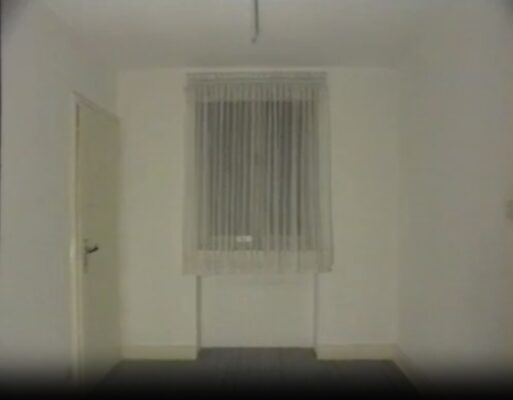
In a historical moment marked by structural uncertainty, hyperconnectivity, and the progressive dissolution of the boundaries between physical reality and the digital environment, backrooms emerge as much more than an internet trend. Their power lies in condensing, beneath the appearance of empty hallways, endless offices, and uninhabited architecture, a generational sensibility permeated by anxiety, disorientation, and the loss of stable points of reference.
The texts gathered in this series stem precisely from the idea that backrooms should not be understood solely as a viral phenomenon of terror but as a cultural symptom. In them, architecture ceases to function as a refuge or rational structure and becomes instead an ambiguous, suspended, and profoundly psychological space, with settings that are both familiar and strange, and in which repetition, emptiness, and absence produce an experience akin to the uncanny described by Freud, disturbing us as they reveal the monstrous hidden within our everyday lives.
Throughout these texts, the exploration moves from a conceptual analysis of liminality to a materialization in artistic practices that explore the representation of space as a reflection of psychological unease. Concepts such as non-place, junkspace, and terrain vague allow us to understand how contemporary life has produced environments defined by constant movement, contributing to the erosion of the agency and identity of those who inhabit them. Similarly, the works of artists such as Serafín Álvarez, Gregor Schneider and Kay Sage have shown that this relationship between architecture, emptiness, and the psyche has a genealogy far broader than the digital phenomenon itself.
These ideas find a suggestive expansion in the final conversation with Eloy Fernández Porta, in which backrooms are also approached from the perspectives of philosophy and cultural criticism. Through references ranging from Piranesi’s imaginary prisons to the writings of Nathaniel Hawthorne and the films of David Lynch, the conversation expands the genealogy of this imagery and reinforces the idea that backrooms crystallize deep tensions permeating contemporary thought and reformulate, through the lens of the digital era, fears that have very deep roots.
This project considers architecture and its representations as an emotional, political, and symbolic device. Understanding backrooms involves questioning the ways in which space shapes our experience of the present and why, in an era marked by invisible crises and abstract threats, the images that best represent our collective fears are precisely those in which nothing seems to happen other than the persistent feeling of having lost our way.
[Featured Image: Gregor Schneider, Haus Ur. Screenshot]
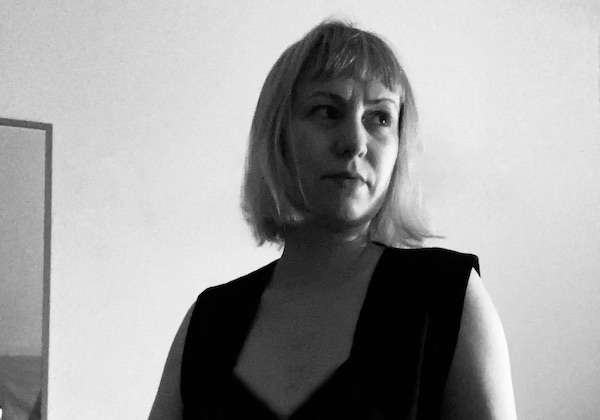
Rosa A. Cruz is a Catalan-Andalusian art historian and cultural communicator. She has worked at the Museu d’Art Contemporani de Barcelona, at ADN Galeria and at the University of Barcelona, where she was part of the AGI Art, Globalization, Interculturality Research Group. She is particularly interested in questions about the double, psychology and biographical discourse. She is currently conducting research on the intersection between contemporary sexual and artistic practices.
Media Partners:






"A desk is a dangerous place from which to watch the world" (John Le Carré)