Search
To search for an exact match, type the word or phrase you want in quotation marks.
A*DESK has been offering since 2002 contents about criticism and contemporary art. A*DESK has become consolidated thanks to all those who have believed in the project, all those who have followed us, debating, participating and collaborating. Many people have collaborated with A*DESK, and continue to do so. Their efforts, knowledge and belief in the project are what make it grow internationally. At A*DESK we have also generated work for over one hundred professionals in culture, from small collaborations with reviews and classes, to more prolonged and intense collaborations.
At A*DESK we believe in the need for free and universal access to culture and knowledge. We want to carry on being independent, remaining open to more ideas and opinions. If you believe in A*DESK, we need your backing to be able to continue. You can now participate in the project by supporting it. You can choose how much you want to contribute to the project.
You can decide how much you want to bring to the project.
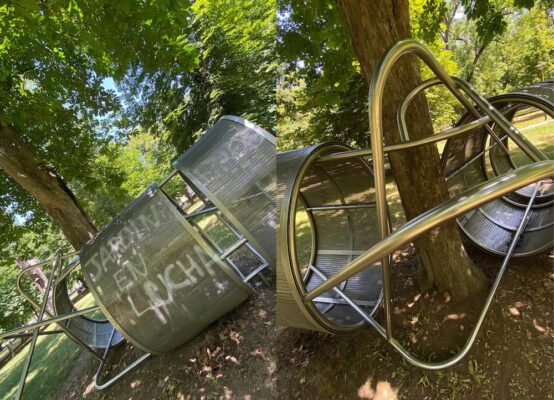
As September’s guest editor for A*DESK, I propose thinking of the stage as a space where something can be rehearsed and begin to exist. Scenography, performance, curating, dance, and ritual are all practices capable of producing relationships and forms of knowledge, but they are also tools for imagining other ways of inhabiting, building community, and remembering the past, present, and future. Staging is representing but it can also create the conditions for something to begin to be constructed and to happen.
The four texts gathered here come from very different places but share a single idea, namely, that the stage and its methodologies are spaces of possibility, existence and, above all, of resistance and memory. Scenography can thus be understood as rehearsal, as displacement, as fiction, or as an infrastructure of care.
We begin this issue with Roger Badia, who discusses the relationship between architecture and scenography and the conditions of rehearsal. Through the architecture of Aldo Rossi, especially his San Cataldo Cemetery and the Teatro del Mondo, the text explores how a temporary or displaced construction, detached from its original function, can still open itself to other uses and other ways of inhabiting. Architecture thus appears as a stage capable of being activated by those who traverse it, while the performative dimension is presented as a tool for anticipating possibilities for the transformation of public space.
Júlia Coelho situates her own curatorial practice within in-between spaces. Drawing on Lygia Clark’s Linha Orgânica and the practices of Susana Solano and Ángeles Marco, she conceives of curating as an interval where the boundaries between inside and outside, body and space, artist and public, past and present, are unstable. Curating thus appears as a performative practice, a way of moving between artworks, archives, places, and temporalities in order to produce knowledge through movement.
Next, Jordi Mani Huesca traces a genealogy of interconnected memories across communities by means of the body, sound, ritual, and what is left behind. Through Bonkó ñánkue and Abakuá, and their connections to Detroit techno and Harlem ballroom, he proposes thinking of dance and music as technologies capable of preserving and updating memory. In contexts of displacement, precarity, violence, and extractivism, these practices allow for the generation of community, protection, belonging, and parallel economies of care.
We end this month with the film Flaming Ears, in which Tendai John Mutambu akes us through the construction of a world via its set design. Faced with a city and a reality that could not contain ways of life imagined by its protagonists, Ursula Pürrer, A. Hans Scheirl, and Dietmar Schipek built the fictional city of Asche using models, sets, costumes, music, effects, and a profoundly collective and DIY production. The set design here ceases to be a mere backdrop and becomes a tool for self-construction. If the existing world doesn’t offer the desired space, there’s always the possibility of building another one, even if it’s made with cardboard, scraps, costumes, with the help of a few accomplices.
From architecture to curatorial practice, from design models to dance floors, these four texts see the stage as a place of transformation. For them, staging is a way of creating and preserving space. It’s also a way of rehearsing what we don’t yet know how to inhabit. Perhaps the theatre, as well as its methodologies and disciplines, isn’t so much about representing a world as it is about generating and imagining the conditions for others to emerge.
(Featured Image: Susana Solano, La linterna I, 2002-2003. Parque del Prado Collection. Vitoria-Gasteiz TownHall)
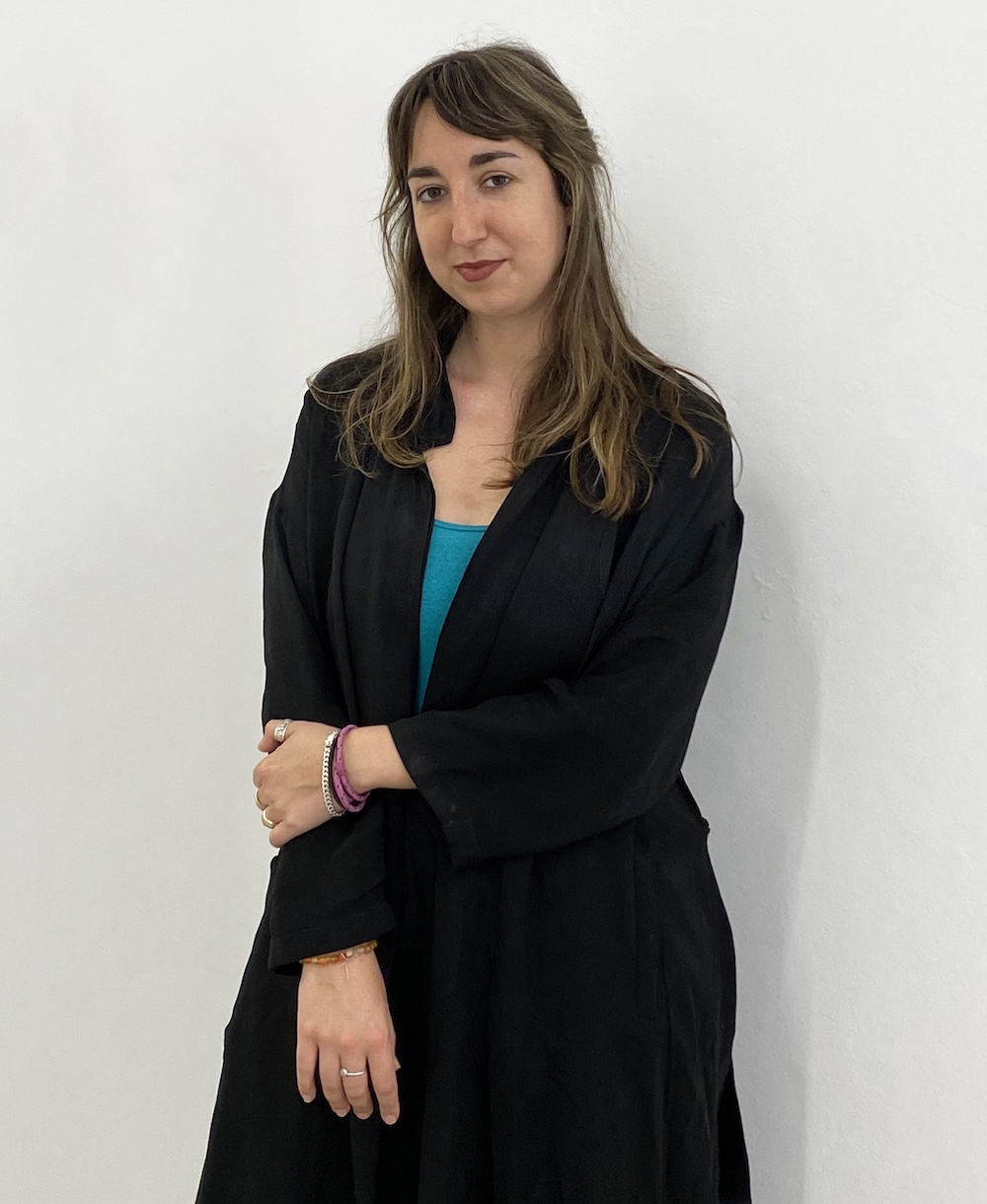
Margot E. Cuevas (Barcelona, 1995) is an art historian and independent curator with a Master’s degree in Advanced Studies in Art History from the UB. Her practice encompasses research, curation and production, with a particular focus on independent contexts. She has been part of the Bombon Projects team since 2019 and in 2021 founded Raccoon Projects, an independent space in Hospitalet de Llobregat focused on new production and collaborative processes with artists. She has developed projects at La Capella, Sant Andreu Contemporani, Àngels Barcelona, Bombon and Okela, and has curated programmes for SWAB. In 2025, she won the Barcelona Producció curatorial prize, with an exhibition at La Capella in 2026, and in 2027 she will curate the Espai 13 programme at the Fundació Joan Miró.
Media Partners:







"A desk is a dangerous place from which to watch the world" (John Le Carré)